
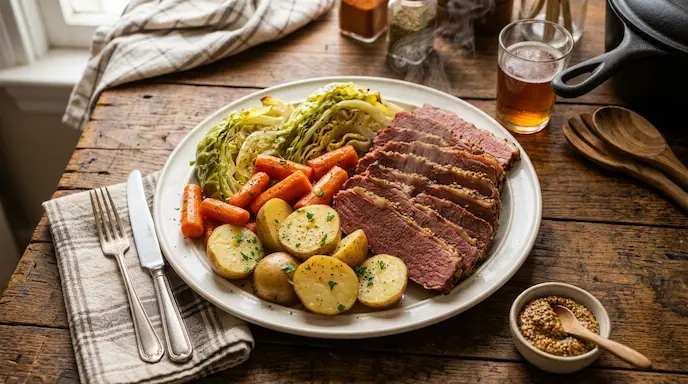
Total Time: 8 hours 15 minutes | Prep Time: 15 minutes | Cook Time: 8 hours | Servings: 6 | Calories: 320 per serving
This corned meat recipe slow cooker method turns a tough cut of corned beef brisket into a fork-tender family dinner with almost no hands-on work. You’ll get rich, savory flavor, soft vegetables, and a meal that practically cooks itself while you go about your day.
Introduction
A good corned meat recipe slow cooker method takes the guesswork out of dinner. Corned beef brisket is naturally tough because of its connective tissue, but hours of low, steady heat in a slow cooker break that tissue down until the meat is soft enough to pull apart with a fork. The slow cooking liquid, packed with pickling spices and aromatics, keeps the meat moist while it simmers all day.
It’s a set-it-and-forget-it dinner that’s perfect for busy weeknights or a relaxed Sunday meal. If you enjoy slow-cooked beef, this method shares a lot of the same logic as a classic beef shank recipe, where long cooking time turns a firm cut into something tender and rich. In this guide, you’ll learn exactly how to prepare, season, and cook corned beef in a slow cooker for consistently tender results.
Why You’ll Love This Recipe
- Minimal hands-on time: Once the ingredients are in the slow cooker, you’re free for hours.
- Deep, savory flavor: The included spice packet infuses the meat and cooking liquid as it simmers.
- Reliably tender results: Low, slow heat is the most forgiving way to cook this cut.
- Family-friendly: Mild, comforting flavor that works well with simple sides kids and adults both enjoy.
- Great for busy days: Start it in the morning and come home to a finished dinner.
- Useful leftovers: The meat holds up well for sandwiches, hash, and more later in the week.
Table of Contents
Before You Start
A few small steps make a big difference in how this recipe turns out.
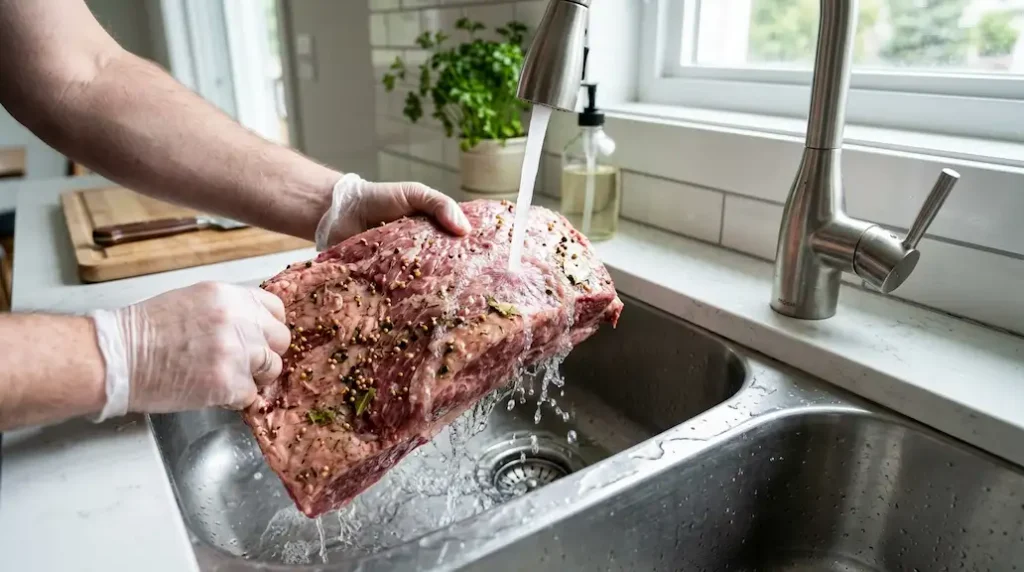
Choose the right cut. Look for a flat-cut corned beef brisket. It’s more uniform in shape, which helps it cook evenly.
Trim excess fat. Corned beef often has a fat cap on one side. Trim it down to about 1/4 inch so the meat doesn’t turn greasy, while still leaving enough fat to keep it moist.
Rinse the meat. Corned beef is cured in a salty brine, so a quick rinse under cold water removes surface brine and helps control saltiness in the final dish.
Prep your vegetables ahead of time. Cutting potatoes, carrots, and onions into similar sizes helps them cook at the same rate.
Measure your seasonings. Corned beef usually comes with a spice packet, but measuring any extra seasoning ahead keeps you from over- or under-seasoning later.
Recipe Success Checklist
- ✓ Meat is trimmed and rinsed
- ✓ Vegetables are cut into even pieces
- ✓ Spice packet and seasonings are measured
- ✓ Slow cooker is at least 6 quarts
- ✓ Vegetables are layered on the bottom, meat on top
- ✓ Liquid comes about halfway up the meat
- ✓ Lid stays closed during cooking
- ✓ Meat is checked for tenderness with a fork before removing
- ✓ Meat rests 10 minutes before slicing
Ingredients
- 1 corned beef brisket (3 to 4 pounds), with spice packet
- 1 1/2 pounds baby potatoes, halved
- 4 medium carrots, cut into 2-inch chunks
- 1 large yellow onion, cut into wedges
- 3 cloves garlic, smashed
- 2 bay leaves
- 1 teaspoon black peppercorns
- 4 cups low-sodium beef broth
- 1 small head green cabbage, cut into wedges (optional, added later)
- 2 tablespoons Dijon mustard, for serving (optional)
Ingredient Notes
Corned beef brisket: This is the star of the dish. It’s a beef brisket that’s been cured in a seasoned brine, which gives it that signature pink color and tangy, savory flavor. Buy the flat cut for even cooking.
Broth: Low-sodium beef broth is important because corned beef is already salty from curing. Using a low-sodium base keeps the final dish balanced.
Garlic and bay leaves: These aromatics infuse the cooking liquid slowly over the long cook time, adding depth without overpowering the meat’s natural flavor.
Potatoes and carrots: These vegetables hold their shape well over a long cook and soak up flavor from the broth and spices.
Cabbage: Cabbage cooks fast and turns mushy if added too early, so it’s best added in the last hour of cooking.
Spice packet: Most corned beef comes with its own seasoning packet, usually a mix of mustard seed, coriander, and other pickling spices. Use it — it’s designed specifically for this cut.
Choosing the Meat
Corned beef brisket comes in two main cuts: flat cut and point cut. The flat cut is leaner, more uniform in thickness, and slices neatly, which makes it the better choice for a slow cooker recipe that will be sliced for serving. The point cut has more fat marbling and connective tissue, so it turns out richer and more shreddable, but it cooks less evenly because of its irregular shape.
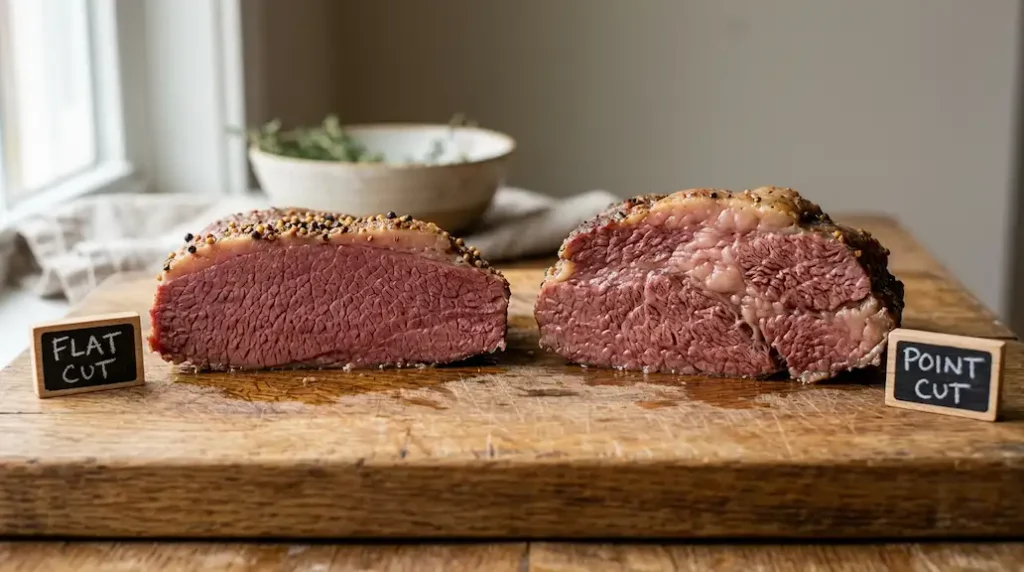
For this recipe, the flat cut is recommended because of how well it holds together after slow cooking while still becoming tender. If you prefer a more shreddable texture, the point cut works too, but expect a slightly shorter cook time since it has more fat to help it break down. This same low-and-slow logic applies to other well-marbled cuts too — if you enjoy exploring different proteins, a lamb loin chops recipe shows how a totally different cut benefits from careful attention to cooking time and temperature.
Slow Cooker Preparation
Use a slow cooker that’s at least 6 quarts so the brisket fits without being folded or crammed. Layer the vegetables on the bottom of the insert since they take longer to soften near the heating element, then place the meat on top, fat side up, so the rendering fat bastes the meat as it cooks. Add just enough broth to come about halfway up the sides of the meat — the meat doesn’t need to be fully submerged because the slow cooker traps steam and moisture under the lid. Keep the lid on throughout cooking. Every time you lift it, heat escapes and can add 15 to 20 minutes to your total cook time.
Kitchen Equipment
- 6-quart or larger slow cooker
- Cutting board
- Chef’s knife
- Measuring cups and spoons
- Tongs
- Meat thermometer
Step-by-Step Instructions
Step 1: Prepare the Meat
What To Do: Remove the corned beef from its packaging and set the spice packet aside. Rinse the brisket under cold water, then pat it dry with paper towels. Trim the fat cap to about 1/4 inch.
Why It Matters: Rinsing removes excess surface brine, which helps control saltiness. Trimming prevents a greasy final dish.
Visual Cues: The meat should look deep pink with an even fat cap.
Timing: About 5 minutes.
Helpful Tip: Don’t trim off all the fat — a thin layer helps keep the meat moist during the long cook.
Step 2: Prepare Vegetables and Aromatics
What To Do: Wash and halve the potatoes, cut the carrots into 2-inch chunks, cut the onion into wedges, and smash the garlic cloves.
Why It Matters: Even-sized pieces cook at the same rate, so nothing turns mushy or stays hard.
Timing: About 10 minutes.
Helpful Tip: Keep potato pieces on the larger side since they cook longer than carrots.
Step 3: Season the Ingredients
What To Do: Sprinkle the included spice packet over the brisket, or mix it directly into the broth. Add bay leaves and peppercorns to the broth.
Why It Matters: Distributing spices through the liquid means every bite gets seasoned as the broth circulates during cooking.
Timing: 2 minutes.
Step 4: Layer Ingredients in the Slow Cooker
What To Do: Place potatoes, carrots, onion, and garlic in the bottom of the slow cooker. Set the brisket on top, fat side up.
Why It Matters: Vegetables closer to the heat source cook more evenly, while the meat benefits from resting above the liquid line.
What To Look For: The meat should sit snugly but not be folded to fit.
Step 5: Add the Cooking Liquid
What To Do: Pour in the beef broth until it reaches about halfway up the sides of the brisket.
Why It Matters: Too much liquid dilutes flavor and can make the meat boil rather than gently braise. Too little risks drying it out.
Visual Cues: Broth should reach the vegetables and come partway up the meat, not fully cover it.
Step 6: Set the Slow Cooker
What To Do: Cover with the lid and set the slow cooker to LOW.
Why It Matters: LOW heat gives the connective tissue in the brisket time to slowly break down into gelatin, which is what makes the meat tender.
Step 7: Cook on the Appropriate Setting
What To Do: Cook on LOW for 8 to 9 hours, or on HIGH for 5 to 6 hours.
Why It Matters: Corned beef needs time for its tough fibers to soften. Rushing the process with too-high heat can leave it chewy.
Timing: 8 to 9 hours on LOW is ideal for the most tender texture.
Step 8: Check Progress
What To Do: Around the 6-hour mark (LOW) or 4-hour mark (HIGH), check the liquid level and vegetables without removing the meat.
Why It Matters: A quick check helps you catch any issues, like liquid running low, before they become a problem.
Helpful Tip: Keep lid-opening brief — a few seconds is enough.
Step 9: Check Meat Tenderness and Temperature
What To Do: Insert a fork or meat thermometer into the thickest part of the brisket. It should read at least 195°F and the fork should twist in easily.
Why It Matters: Corned beef needs to reach a higher internal temperature than most beef cuts because that’s the point where connective tissue fully breaks down.
Texture Cues: The meat should feel soft and give easily under light pressure.
Step 10: Add Cabbage (Optional)
What To Do: If using cabbage, nestle the wedges into the liquid around the meat during the last 45 to 60 minutes of cooking.
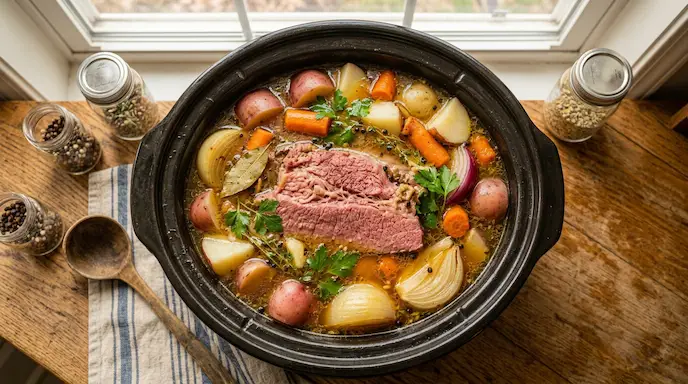
Why It Matters: Cabbage cooks quickly and turns watery and limp if added too early.
What To Look For: Cabbage should be tender but still hold its wedge shape.
Step 11: Remove the Meat
What To Do: Carefully lift the brisket out with tongs and set it on a cutting board.
Why It Matters: After hours of cooking, the meat is very tender and can fall apart if handled roughly.
Step 12: Rest and Slice
What To Do: Let the meat rest for 10 minutes, then slice it against the grain into thin slices.
Why It Matters: Resting allows juices to redistribute, and slicing against the grain shortens the muscle fibers, making each bite easier to chew.
Visual Cues: Slices should hold together but pull apart easily with a fork.
Step 13: Serve
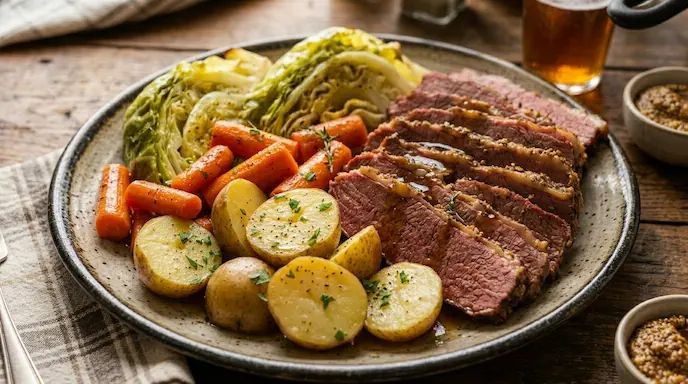
What To Do: Arrange sliced meat with the potatoes, carrots, and cabbage on a platter. Spoon a little cooking liquid over the top before serving.
Why It Matters: A splash of the cooking liquid keeps every component moist and ties the flavors together.
Low vs. High Slow Cooker Setting
LOW is the better setting for this corned meat recipe slow cooker method. It gives the tough connective tissue in the brisket more time to gradually break down, which results in a more tender, evenly cooked piece of meat. HIGH can work if you’re short on time, cutting the cook time to about 5 to 6 hours, but the texture is usually slightly less tender than the LOW setting produces. If you have the time, LOW for 8 to 9 hours gives the most consistent, fall-apart results.
How to Get Tender Meat
Tenderness comes down to a few key factors: the right cut, enough cooking time, and steady low heat. Corned beef brisket is full of collagen-rich connective tissue that needs hours of moist heat to soften into gelatin. Removing the meat too early, before it hits at least 195°F internally, will leave it tough no matter how long it looked like it was cooking. Keep the lid closed to maintain steady heat, and always check for fork-tenderness rather than relying on time alone, since slow cooker performance can vary slightly by model.
Why This Recipe Works
This method works because it matches the cooking technique to the cut of meat. Corned beef brisket is tough and fibrous, so it needs low, moist heat over a long period to become tender. The slow cooker provides that steady environment without requiring any attention. The broth and aromatics slowly season the meat and vegetables from the outside in, while the enclosed environment keeps moisture from escaping. The result is a meal where every component — meat, potatoes, carrots, and cabbage — finishes cooked through and flavorful at the same time.
Recipe Science
Corned beef brisket contains a lot of collagen, a connective tissue protein that’s tough when raw but breaks down into soft gelatin when exposed to prolonged heat above roughly 160°F. That’s why this cut needs hours of cooking rather than a quick sear. The salt used in curing the beef also affects texture by helping the meat retain moisture during the long cook. Aromatics like garlic and bay leaves release flavor compounds slowly into the broth over time, which is why longer cooking produces a more flavorful liquid than a quick simmer would.
Expert Tips
- Always rinse corned beef before cooking to control saltiness.
- Use the included spice packet rather than buying separate seasoning.
- Choose flat cut for even slices, point cut for shreddable texture.
- Keep the fat cap facing up so it self-bastes the meat.
- Don’t fully submerge the meat in liquid — halfway up is enough.
- Resist opening the lid more than necessary.
- Add cabbage late so it doesn’t turn mushy.
- Check temperature with a thermometer instead of guessing by time.
- Let the meat rest before slicing to keep it juicy.
- Always slice against the grain for the most tender bite.
- Save the cooking liquid — it makes an excellent soup base later.
- Store leftovers in the cooking liquid to keep the meat moist.
Common Mistakes
Using the wrong cut: Point cut can work, but if you want neat slices, stick with flat cut.
Adding too much liquid: Fully submerging the meat can dilute flavor and cause it to boil instead of braise. Keep liquid at about the halfway mark.
Opening the lid repeatedly: Each peek adds cooking time and lets steam escape.
Overfilling the slow cooker: Cramming in too many vegetables can prevent even cooking. Stick to the recommended amounts.
Cooking for too little time: Removing the meat before it’s fork-tender leaves it chewy.
Cooking for too long: While corned beef is forgiving, extreme overcooking can make it dry and stringy. Check around the 8-hour mark on LOW.
Under-seasoning: Skipping the spice packet results in bland meat. Always use it.
Slicing too soon: Cutting into hot meat right away lets juices run out. Rest it first.
Not checking tenderness: Always test with a fork before assuming it’s done.
Troubleshooting
Why is my meat still tough? It likely needs more time. Corned beef often needs a full 8 to 9 hours on LOW to fully tenderize.
Why is the meat dry? This usually means it was overcooked past the point of tenderness, or too little liquid was used.
Why is the cooking liquid too salty? The brine from curing can make broth salty. Rinsing the meat well beforehand and using low-sodium broth helps.
Why is there too much liquid? The meat and vegetables release moisture as they cook. Next time, start with less broth.
Why is the meat falling apart too much? This means it’s very tender, which is normal for corned beef — just handle it gently when removing it.
Why did the vegetables become mushy? They were likely added too early or cut too small. Add heartier vegetables at the start and delicate ones like cabbage near the end.
Why does the meat lack flavor? Make sure the spice packet was used and that the broth had enough aromatics like garlic and bay leaf.
How can I improve the leftovers? Store the meat in some of its cooking liquid to keep it moist and flavorful for later meals.
Substitutions
If you can’t find corned beef brisket, a regular beef brisket seasoned with pickling spice can work, though it won’t have the same tangy cured flavor. Chicken or vegetable broth can replace beef broth in a pinch, though the flavor will be lighter. Sweet potatoes can stand in for regular potatoes for a slightly different flavor and softer texture. Any of these swaps will shift the final flavor slightly, so expect a milder or different taste than the classic version.
Recipe Variations
Garlic Herb Version: Add extra smashed garlic cloves and a few sprigs of fresh thyme to the broth for a more herbaceous flavor.
Vegetable-Heavy Version: Add parsnips, turnips, or extra carrots for a heartier, more vegetable-forward meal.
Spicy Version: Stir a teaspoon of crushed red pepper flakes into the broth for a subtle kick.
If you’re in the mood for a quicker beef dinner on a night when the slow cooker isn’t practical, a flat iron steak recipe is a good pantry-friendly option that cooks in a fraction of the time.
Serving Suggestions
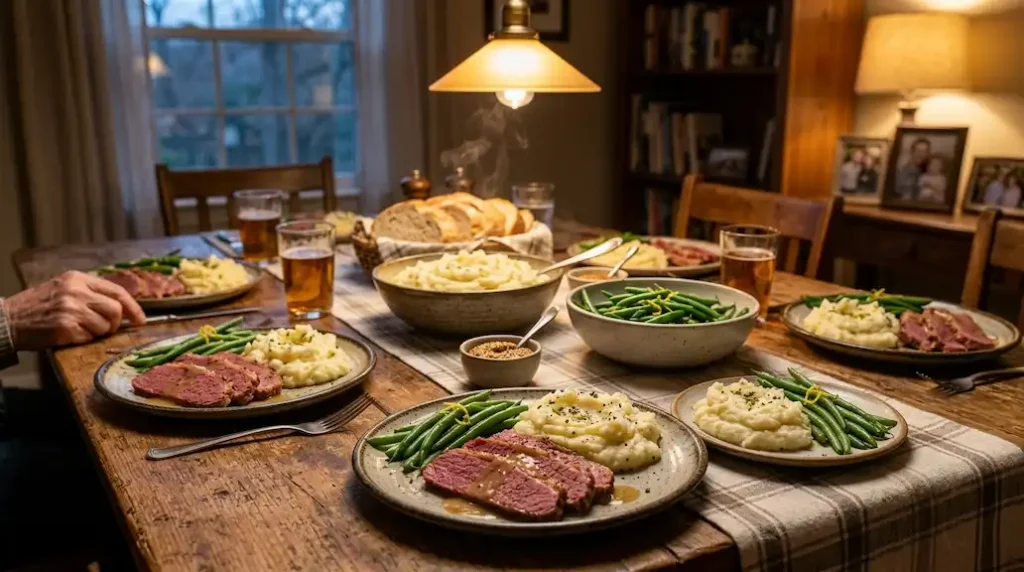
- Creamy mashed potatoes
- Roasted vegetables
- Steamed green beans
- Simple green salad
- Crusty bread
- Buttered rice
Leftovers
Leftover corned beef is versatile. Slice it thin for sandwiches, dice it into a hearty hash with leftover potatoes, or chop it into tacos with cabbage slaw. It also works well diced into a soup with the reserved cooking liquid, or portioned out for easy meal prep lunches throughout the week. If you like turning leftover meat into fresh takes on classic dishes, a parchment gyro meat ground beef recipe is another easy way to repurpose ground or shredded beef into a totally different family meal.
Storage
Let the meat cool slightly, then store it in an airtight container in the refrigerator for up to 4 days. Storing it with a little of the cooking liquid helps keep it moist. For longer storage, freeze sliced or shredded meat in a freezer-safe container or bag for up to 3 months. According to the USDA, cooked beef should be refrigerated within 2 hours of cooking to keep it safe to eat.
Reheating
To reheat without drying out the meat, warm it gently on the stovetop in a covered skillet with a splash of the reserved cooking liquid or broth. The oven works well too — cover the meat with foil and warm at 300°F until heated through. The microwave is the quickest option; use short 30-second intervals with a damp paper towel over the meat to help retain moisture.
Make-Ahead
You can trim the meat, cut the vegetables, and measure your seasonings up to a day ahead, then store everything separately in the refrigerator. This is prep-ahead only — the actual slow cooking should happen the day you plan to serve it, since the recipe relies on a long, uninterrupted cook time for the best texture.
Frequently Asked Questions
Can I cook corned meat in a slow cooker?
Yes. The slow cooker is one of the best methods for corned beef because the long, low heat breaks down tough connective tissue and results in tender meat.
How long should corned meat cook on LOW?
Plan on 8 to 9 hours on LOW for a 3- to 4-pound brisket to reach full tenderness.
Can I cook it on HIGH?
Yes, HIGH takes about 5 to 6 hours, though LOW generally produces a slightly more tender result.
Does corned meat need to be covered with liquid?
No. The liquid should come about halfway up the sides of the meat. The slow cooker traps steam, so full submersion isn’t necessary.
Why is my slow-cooked meat still tough?
It most likely needs more cooking time. Corned beef needs to reach at least 195°F internally and feel fork-tender before it’s done.
Can I add vegetables to the slow cooker?
Yes. Heartier vegetables like potatoes and carrots can cook the whole time, while delicate vegetables like cabbage should go in during the last hour.
Can I make this recipe ahead?
You can prep the meat and vegetables a day in advance, but the actual cooking should happen the day you plan to serve it.
How long does leftover corned meat last?
Leftovers keep in the refrigerator for up to 4 days when stored in an airtight container.
Can I freeze cooked corned meat?
Yes, sliced or shredded corned beef freezes well for up to 3 months in a freezer-safe container.
What is the best way to reheat it?
Reheat gently on the stovetop or in the oven with a little added broth to keep the meat from drying out.
Final Thoughts
This corned meat recipe slow cooker method delivers tender, flavorful beef with very little effort, making it a reliable choice for busy family dinners. Once you’ve mastered the basic method, it’s easy to build on — the leftovers alone are worth it, whether you turn them into sandwiches or fold them into a quick hash.
If you’re looking for another simple weeknight option afterward, a meatball recipe from frozen makes a great next dish since it comes together with just as little hands-on work. Give this slow cooker method a try, and you’ll have a comforting, satisfying dinner ready with barely any effort on your part.