
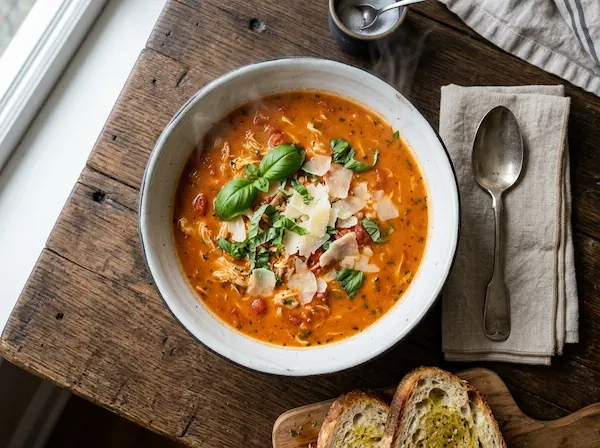
This marry me chicken soup recipe turns a favorite skillet dinner into a warm, spoonable meal. It has a creamy tomato broth, tender shredded chicken, and just enough garlic and herbs to make the whole kitchen smell amazing. If you already love a good shredded chicken recipe for busy weeknights, this soup gives you the same convenience with a lot more comfort.
The broth gets its silky texture from heavy cream and Parmesan, while sun-dried or crushed tomatoes bring a little tang that balances the richness. It comes together in one pot, uses simple pantry ingredients, and reheats beautifully the next day. Below, you’ll learn exactly how to build the broth, cook the chicken so it stays juicy, and avoid the most common mistakes home cooks make with creamy soups.
Quick Recipe Overview
- Description: A creamy tomato-based chicken soup with tender shredded chicken, garlic, herbs, and Parmesan.
- Prep Time: 15 minutes
- Cook Time: 35 minutes
- Total Time: 50 minutes
- Servings: 6 bowls
- Calories: Approximately 410 per serving
Expect a rich, creamy tomato broth with tender chicken in every spoonful, a savory Parmesan finish, and just enough red pepper flakes to keep things interesting. It’s the kind of soup that feels special enough for guests but easy enough for a Tuesday night.
Table of Contents
Why You’ll Love This Soup
- Creamy tomato broth that tastes rich without being heavy.
- Tender chicken in every bite, thanks to gentle simmering.
- One pot, one cleanup. Everything cooks in the same Dutch oven.
- Simple ingredients you likely already have on hand.
- Great leftovers. The flavor deepens overnight in the fridge.
- Easy weeknight dinner that’s ready in under an hour.
Before You Start
A few minutes of setup makes this recipe go much smoother. Cut the chicken into even, bite-sized pieces so it cooks at the same rate. Chop the onion and mince the garlic before you turn on the stove, since garlic burns fast once the pot is hot. Measure the broth, cream, and seasonings ahead of time so you’re not scrambling mid-recipe. Grate the Parmesan fresh if you can. It melts more smoothly than pre-shredded cheese, which is coated in anti-caking starch that can make the broth grainy.
Recipe Success Checklist
- ✓ Chicken is cut into even 1-inch pieces
- ✓ Onion is diced small and garlic is minced
- ✓ Broth and cream are measured and ready
- ✓ Tomato paste and crushed tomatoes are on hand
- ✓ Parmesan is freshly grated
- ✓ Italian seasoning, salt, and pepper are measured
- ✓ Heat is lowered before dairy goes into the pot
- ✓ Soup is not boiled hard once cream is added
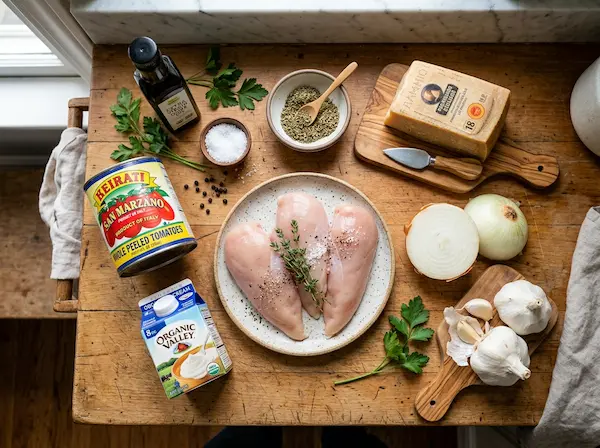
Ingredients
- 2 tablespoons olive oil
- 1½ pounds boneless, skinless chicken breasts or thighs, cut into 1-inch pieces
- 1 teaspoon salt, divided
- ½ teaspoon black pepper, divided
- 1 medium yellow onion, diced
- 4 cloves garlic, minced
- 2 tablespoons tomato paste
- 1 (14.5-ounce) can crushed tomatoes
- 4 cups low-sodium chicken broth
- 1 teaspoon Italian seasoning
- ½ teaspoon crushed red pepper flakes (optional)
- 1 cup heavy cream
- 1 cup freshly grated Parmesan cheese
- 2 tablespoons chopped fresh basil, plus more for garnish
Ingredient Notes
Chicken: Boneless chicken breast keeps the soup lean, while thighs add extra richness and stay juicy longer. Either works well here.
Tomatoes: Tomato paste adds concentrated flavor, and crushed tomatoes give the broth body without making it chunky. Together they build that classic marry me flavor.
Chicken broth: Use a good-quality, low-sodium broth so you can control the salt level yourself. It also forms the base of the soup, so its flavor matters. If you make your own broth, a bone broth soup recipe chicken method is worth trying for extra depth.
Cream: Heavy cream gives the broth its signature silky texture. It’s less likely to curdle than half-and-half or milk when heated gently.
Parmesan: Adds salty, savory depth and helps thicken the broth naturally. Buy a block and grate it yourself for the smoothest melt.
Garlic and herbs: Fresh garlic and Italian seasoning give the soup its aromatic backbone. Don’t skip toasting the garlic briefly before adding liquid.
Choosing the Chicken
Chicken breast cooks quickly and stays lean, making it a good pick if you want a lighter soup. Boneless thighs have more fat, so they stay tender even if they simmer a bit longer, and they bring a slightly richer flavor to the broth. Leftover cooked or shredded chicken also works well here. If you’re using already-cooked chicken, stir it in near the end of cooking, just long enough to warm through, since it doesn’t need to simmer with the broth. For this recipe, thighs are the more forgiving choice, but breast works beautifully if you watch the cooking time closely.
The Creamy Tomato Broth
The broth is really the heart of this soup. Tomato paste, briefly cooked in the pot, deepens and concentrates the tomato flavor before any liquid goes in. Crushed tomatoes add body and a touch of natural sweetness.
The chicken broth then thins everything into a soup consistency while carrying savory flavor throughout. Cream and Parmesan go in only after the tomato base has simmered, which keeps the dairy from curdling over direct high heat. Once the cream is added, keep the heat low and let the soup warm through gently rather than boiling it. If the broth looks too thin, let it simmer a few extra minutes uncovered. If it’s too thick, stir in a splash of warm broth until it loosens up.

Kitchen Equipment
- Dutch oven or large soup pot
- Chef’s knife
- Cutting board
- Measuring cups and spoons
- Wooden spoon
- Ladle
- Box grater or microplane for Parmesan
Step-by-Step Instructions marry me chicken soup recipe
1. Season the Chicken
What To Do: Pat the chicken pieces dry and toss them with ½ teaspoon salt and ¼ teaspoon black pepper.
Why It Matters: Drying and seasoning the chicken first helps it brown instead of steam.
Visual Cues: The chicken should look matte, not wet, before it hits the pot.
Timing: About 2 minutes.
Helpful Tip: A paper towel makes quick work of drying the chicken.
What To Look For: Evenly coated, dry pieces ready for the pot.
2. Brown the Chicken
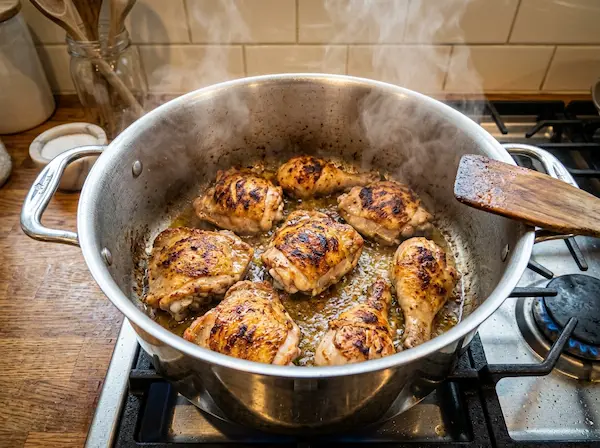
What To Do: Heat olive oil in a Dutch oven over medium-high heat. Add the chicken in a single layer and cook 5 to 6 minutes, turning once, until golden on the outside. It does not need to be fully cooked through yet. Remove to a plate.
Why It Matters: Browning builds a savory base of flavor that carries through the whole soup.
Visual Cues: Look for a golden-brown crust on at least two sides.
Texture Cues: The outside should feel firm, not soft or wet.
Timing: 5 to 6 minutes total.
Helpful Tip: Avoid crowding the pot, or the chicken will steam instead of brown.
What To Look For: Golden edges and a slightly caramelized bottom on the pot, which adds flavor later.
3. Sauté the Onion
What To Do: Lower the heat to medium. Add the diced onion to the same pot and cook 3 to 4 minutes, stirring occasionally.
Why It Matters: The onion softens and picks up the browned bits left behind by the chicken, adding flavor to the broth.
Visual Cues: Onion should turn soft and translucent, not brown.
Timing: 3 to 4 minutes.
Helpful Tip: Scrape the bottom of the pot as the onion cooks to release those flavorful browned bits.
What To Look For: Onion pieces that are soft and slightly golden at the edges.
4. Add Garlic and Tomato Paste
What To Do: Stir in the minced garlic and tomato paste. Cook for 1 minute, stirring constantly.
Why It Matters: Briefly cooking tomato paste deepens its flavor and removes any raw, tinny taste.
Visual Cues: The paste will darken slightly and coat the onions.
Timing: 1 minute.
Helpful Tip: Keep stirring so the garlic doesn’t burn, since burnt garlic turns bitter fast.
What To Look For: A fragrant, slightly deeper red color in the tomato paste.
5. Build the Tomato Base
What To Do: Pour in the crushed tomatoes and stir to combine with the onion mixture.
Why It Matters: This step layers the tomato flavor before the broth thins everything out.
Visual Cues: The mixture should look thick and glossy.
Timing: 1 to 2 minutes.
Helpful Tip: Let it bubble gently for a minute to concentrate the flavor.
What To Look For: A rich, deep red tomato base.
6. Add the Broth and Chicken
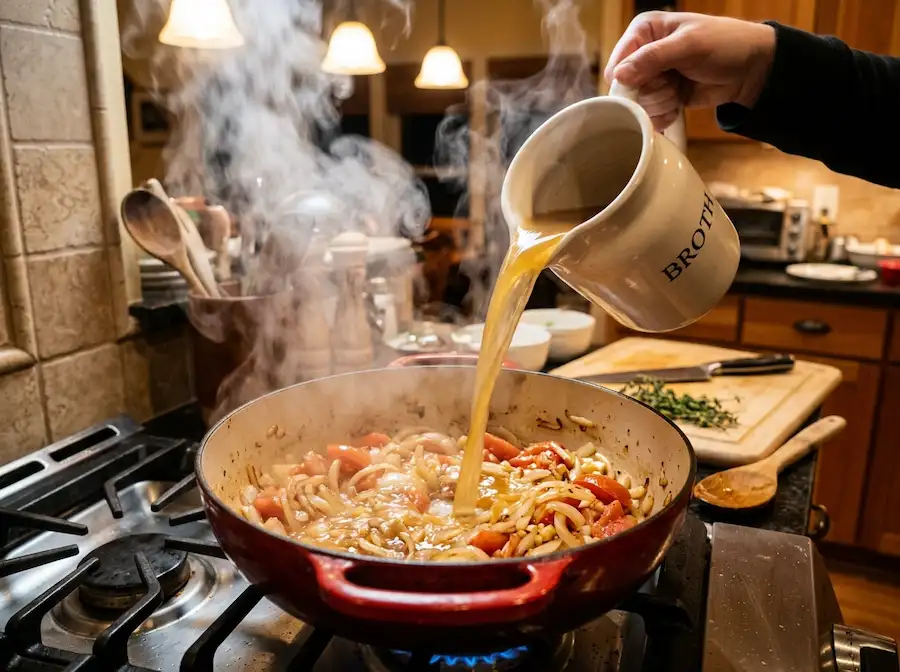
What To Do: Pour in the chicken broth, add the Italian seasoning and red pepper flakes, and return the browned chicken and any accumulated juices to the pot.
Why It Matters: This is where the soup officially comes together, and the chicken finishes cooking gently in the flavorful broth.
Visual Cues: The liquid should look orange-red and slightly thickened.
Timing: 1 minute to combine.
Helpful Tip: Scrape the bottom of the pot one more time to release any leftover browned bits.
What To Look For: An evenly combined broth with chicken fully submerged.
7. Simmer the Soup
What To Do: Bring the soup to a gentle boil, then reduce the heat to low. Cover and simmer for 15 to 18 minutes, until the chicken is cooked through.
Why It Matters: Simmering allows the chicken to finish cooking evenly and lets the broth flavors meld together.
Visual Cues: Small, steady bubbles around the edges of the pot, not a rolling boil.
Texture Cues: Chicken should feel firm but tender when pressed with a spoon.
Timing: 15 to 18 minutes.
Helpful Tip: Chicken is safely cooked when it reaches an internal temperature of 165°F, according to the USDA’s minimum safe temperature guidelines.
What To Look For: Chicken pieces that are opaque all the way through with no pink center.
8. Lower the Heat Before Adding Dairy
What To Do: Once the chicken is cooked, reduce the heat to low or medium-low.
Why It Matters: High heat can cause cream to curdle or separate, breaking the smooth texture of the broth.
Visual Cues: Bubbling should slow to a gentle simmer, almost still.
Timing: Less than a minute.
Helpful Tip: If you’re unsure, pull the pot slightly off the burner for a moment.
What To Look For: Calm, quiet simmering with no vigorous bubbles.
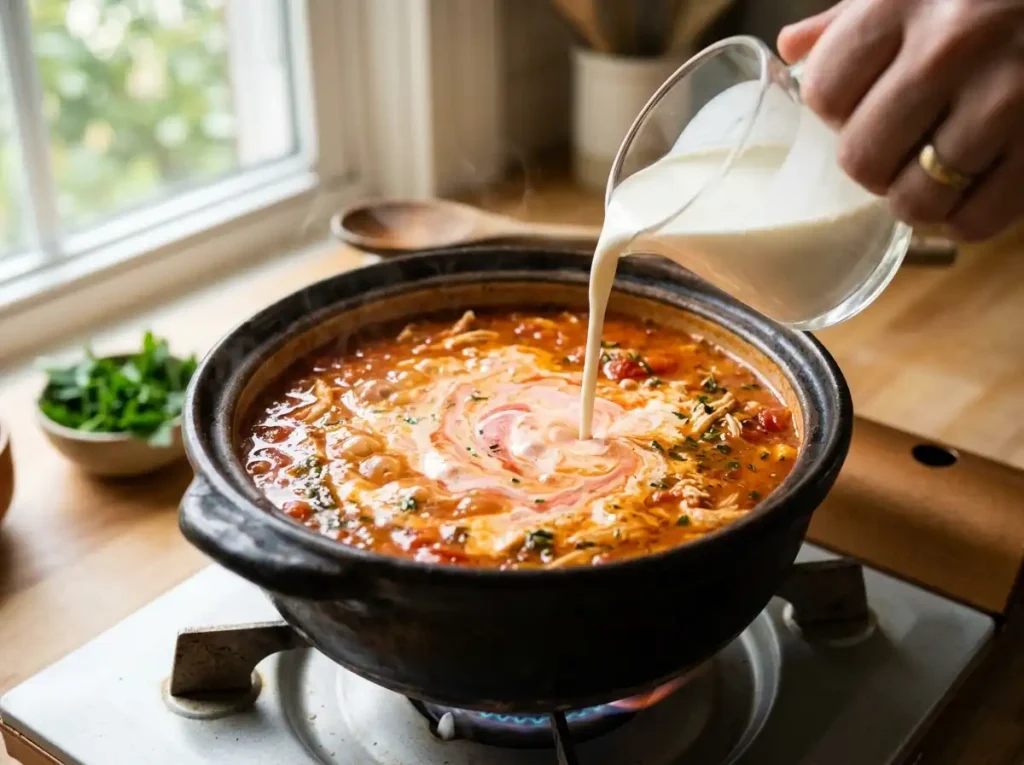
9. Stir in the Cream
What To Do: Slowly pour in the heavy cream, stirring constantly as you add it.
Why It Matters: Adding cream gradually and stirring helps it blend smoothly instead of pooling and curdling.
Visual Cues: The broth will turn from red-orange to a soft peachy pink.
Timing: 1 to 2 minutes.
Helpful Tip: Room-temperature cream blends more smoothly than cream straight from the fridge.
What To Look For: A uniform, creamy color with no streaks.
10. Melt in the Parmesan
What To Do: Add the grated Parmesan a handful at a time, stirring until each addition melts before adding more.
Why It Matters: Adding cheese gradually keeps it from clumping and helps it thicken the broth evenly.
Visual Cues: The broth will thicken slightly and turn glossy.
Timing: 2 to 3 minutes.
Helpful Tip: Keep the heat low during this step to protect the texture.
What To Look For: A smooth, creamy broth with no stringy or clumped cheese.
11. Adjust Seasoning and Consistency
What To Do: Taste the soup and add more salt, pepper, or red pepper flakes as needed. If it’s too thick, stir in a splash of warm broth.
Why It Matters: Dairy and cheese mute seasoning, so a final taste-and-adjust step is essential.
Visual Cues: The broth should coat the back of a spoon lightly.
Timing: 1 to 2 minutes.
Helpful Tip: Add seasoning in small amounts and taste as you go.
What To Look For: A well-balanced, flavorful broth that isn’t flat or overly rich.
12. Finish with Fresh Basil
What To Do: Stir in the chopped fresh basil right before serving.
Why It Matters: Adding herbs at the end keeps their flavor bright instead of dulled by long cooking.
Visual Cues: Bright green flecks throughout the soup.
Timing: 30 seconds.
Helpful Tip: Save a little basil to sprinkle on top of each bowl for a fresh finish.
What To Look For: Fragrant, vibrant basil that hasn’t wilted into the broth.
13. Ladle and Serve
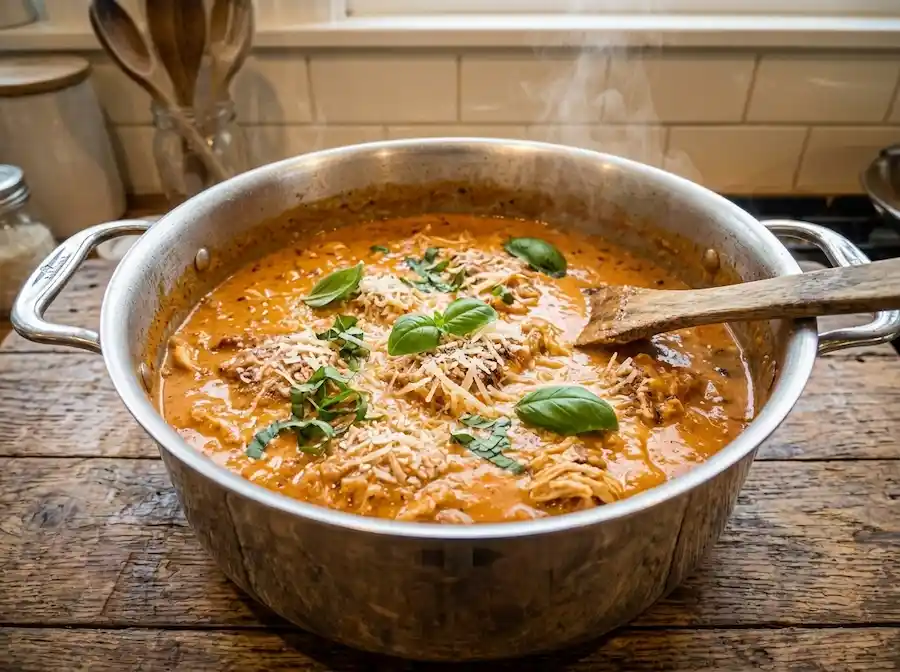
What To Do: Ladle the hot soup into bowls and top with extra Parmesan and basil.
Why It Matters: Serving immediately keeps the texture creamy and the chicken tender.
Timing: Serve right away.
Helpful Tip: Warm the bowls beforehand to help the soup stay hot longer.
What To Look For: A creamy, evenly colored broth with visible chicken in every bowl.
How to Get the Best Flavor marry me chicken soup recipe
Browning the chicken before it simmers is one of the biggest flavor boosters in this recipe, so don’t skip it even if you’re in a hurry. Sautéing the onion and garlic in the same pot picks up those browned bits for extra depth. Briefly toasting the tomato paste concentrates its flavor instead of leaving it tasting raw. Layering seasoning throughout the recipe, rather than adding it all at once, builds a more balanced broth. Finally, adding Parmesan and basil at the very end keeps their flavors fresh and prevents them from turning muddy after long cooking.
How to Make the Broth Creamy
Cream should always go in after the chicken is fully cooked and the heat has been lowered. Adding it too early, or over high heat, is the most common reason a creamy soup turns grainy or separates. One cup of heavy cream is usually enough to create a rich texture without making the soup feel heavy. Parmesan adds even more body as it melts in, so add it gradually rather than all at once.
If your soup ever looks broken or slightly curdled, whisk in a splash of warm cream off the heat, which can often bring it back together. To thin a soup that’s too thick, stir in warm broth a little at a time. To thicken one that’s too thin, let it simmer uncovered for a few extra minutes or stir in a bit more Parmesan.
Why This Recipe Works
This soup works because every ingredient has a job. The tomatoes bring acidity that balances the richness of the cream, so the broth never feels flat or too heavy. Browned chicken adds a savory backbone, while the broth ties everything together into a cohesive soup rather than separate flavors. Cream and Parmesan add richness and body, and the garlic, onion, and herbs round out the flavor with warmth and depth. Simmering slowly gives all of these elements time to blend, which is why the soup tastes even better the next day.
Recipe Science
Browning chicken triggers the Maillard reaction, a chemical process that creates hundreds of new flavor compounds on the surface of the meat. Cooking tomato paste briefly breaks down its raw compounds and intensifies its natural sweetness and umami. Heavy cream contains enough fat to resist curdling at moderate heat, but boiling it hard can still cause the proteins to separate. Parmesan is naturally high in glutamates, which is why it adds such a strong savory, umami quality to the broth. Keeping the heat gentle after dairy is added protects both the texture and the flavor you worked to build.
Expert Tips
- Cut chicken into even pieces so it cooks at the same rate.
- Pat chicken dry before searing for better browning.
- Don’t skip browning the chicken, even if you’re short on time.
- Toast tomato paste for at least a minute for deeper flavor.
- Grate your own Parmesan for the smoothest melt.
- Add cream only after lowering the heat.
- Stir cream in slowly rather than dumping it all at once.
- Add Parmesan gradually to avoid clumping.
- Taste and re-season after the dairy goes in.
- Add basil at the very end to keep it bright.
- Reheat leftovers gently over low heat, not high.
- Store leftovers in an airtight container for the best texture.
Common Mistakes
Boiling the cream aggressively: This can cause the broth to break. Always keep the heat low once dairy is added.
Adding too much liquid: This dilutes the flavor. Stick to the measured broth amount and adjust only at the end if needed.
Making the soup too thick: Too much Parmesan or a long, uncovered simmer can thicken it too much. Thin with warm broth as needed.
Making the soup too thin: Not simmering long enough can leave the broth watery. Let it cook a few extra minutes uncovered.
Under-seasoning: Cream and cheese mute salt. Always taste again after adding dairy.
Overcooking the chicken: This makes it dry and tough. Pull it once it reaches 165°F internally.
Burning the garlic: This adds bitterness to the whole pot. Stir constantly and keep the heat moderate.
Skipping the browning step: This leaves the soup tasting flat. Take the extra five minutes to sear the chicken.
Adding Parmesan at the wrong temperature: Adding it to boiling broth can make it clump. Stir it in over low heat, a little at a time.
Troubleshooting
Why is my soup too thin? It likely needs a longer simmer, or slightly less broth next time.
Why is my soup too thick? Stir in warm broth a little at a time until it reaches the texture you want.
Why did the cream separate? The heat was probably too high. Lower it immediately and whisk in a splash of warm cream to help bring it back together.
Why does the soup taste bland? It usually needs more salt or Parmesan. Taste again after the dairy is fully incorporated.
Why is the chicken dry? It was likely overcooked. Pull it from the heat as soon as it reaches 165°F.
Why is the tomato flavor too strong? Add a little extra cream or Parmesan to balance the acidity.
Why is the broth not creamy enough? Add a bit more Parmesan or a splash more cream, stirred in slowly over low heat.
How can I fix the soup without ruining it? Make small adjustments, one at a time, tasting between each change.
Substitutions
Chicken breast and boneless thighs can be swapped freely, though thighs stay slightly more tender. Half-and-half can replace heavy cream for a lighter soup, though the broth will be a bit less rich. Diced tomatoes can stand in for crushed tomatoes if you don’t mind a slightly chunkier texture. Homemade broth adds deeper flavor than store-bought, but either works well here. Dried herbs can be used in place of fresh basil; just add them earlier in the cooking process since dried herbs need more time to release their flavor.
Recipe Variations
- Spicy Marry Me Chicken Soup: Double the red pepper flakes for extra heat.
- Spinach Marry Me Chicken Soup: Stir in 2 cups of fresh spinach during the last few minutes of cooking.
- Tuscan-Style Version: Add sun-dried tomatoes and a handful of white beans.
- Extra-Creamy Version: Increase the cream slightly and stir in an extra ¼ cup of Parmesan.
- Pasta-Added Version: Stir in cooked small pasta, like ditalini, right before serving.
Serving Suggestions
This soup pairs beautifully with crusty bread or warm garlic bread for dipping. A simple green salad with a light vinaigrette balances the richness of the broth. Roasted vegetables also make a great side if you want something heartier. For drinks, a glass of iced tea or sparkling water with lemon works well alongside the creamy, savory flavors.
Leftovers
Leftover soup often tastes even better the next day, once the flavors have had time to settle. Reheat gently and add a splash of broth if the soup has thickened in the fridge, since the Parmesan continues to firm up as it chills.
Storage
Store leftover soup in an airtight container in the refrigerator for up to 4 days. Let it cool slightly before covering to help it chill evenly and safely. Because this soup contains cream, freezing isn’t ideal. Dairy-based broths can separate and turn grainy once thawed, so it’s best enjoyed fresh from the fridge.
Reheating
On the stovetop, reheat the soup over low to medium-low heat, stirring often, until warmed through. Avoid boiling it, since high heat can cause the cream to separate. In the microwave, use 60 to 70 percent power and stir every minute to heat evenly. If the soup seems thick after chilling, stir in a small splash of broth or cream while reheating to loosen it back up.
Make-Ahead
You can chop the onion, mince the garlic, and cut the chicken up to a day in advance and store them separately in the fridge. It’s best to add the cream and Parmesan fresh when you reheat or finish the soup, since they hold their smooth texture better when added right before serving rather than sitting in the broth overnight.
Frequently Asked Questions
Why is it called Marry Me Chicken Soup?
It’s named after the original Marry Me Chicken recipe, a creamy tomato and garlic chicken dish so good it’s said to inspire marriage proposals. This soup version keeps that same flavor in a cozy, spoonable format.
Can I use chicken breast instead of thighs?
Yes. Chicken breast works well and keeps the soup a bit leaner. Just watch the cooking time closely, since breast can dry out if overcooked.
Can I use leftover shredded chicken?
Yes. Skip the browning step and stir the cooked chicken in near the end, just long enough to warm it through.
Can I make this soup without heavy cream?
You can use half-and-half for a lighter version, though the broth will be slightly less rich and thick.
How do I keep the cream from separating?
Add it only after lowering the heat, pour it in slowly while stirring, and avoid boiling the soup once dairy is added.
Can I add pasta to this soup?
Yes. Stir in cooked small pasta, like ditalini or small shells, right before serving so it doesn’t get mushy.
Can I freeze creamy chicken soup?
It’s not recommended. Cream-based broths tend to separate and turn grainy after freezing and thawing.
How long does this soup last in the refrigerator?
Up to 4 days when stored in an airtight container.
How do I reheat it without breaking the broth?
Reheat gently over low heat on the stovetop, or use the microwave at reduced power, stirring often.
How can I make the soup thicker?
Let it simmer a few extra minutes uncovered, or stir in a little extra Parmesan.
Final Thoughts
This marry me chicken soup recipe takes everything people love about the original skillet dish and turns it into a comforting, easy-to-make soup. The creamy tomato broth, tender chicken, and Parmesan finish make it a meal worth repeating, whether you’re cooking for family or meal-prepping for the week ahead. Once you try it, it’s easy to see why this soup earns its name.