
Why This Combination Works
This chicken pesto pasta recipe pairs a rich, creamy sauce with the bright, herby punch of basil pesto and tender bites of chicken, all tossed with pasta in under 30 minutes. The cream mellows the pesto just enough to coat every noodle without hiding its flavor, while Parmesan adds body and a little salty depth. Chicken makes the dish filling enough for a full dinner instead of a side.
If you’re building out your weeknight chicken recipes, our shredded chicken recipe is another quick option worth keeping in the rotation. Here, you’ll learn exactly how to build a creamy pesto sauce that doesn’t break, cook chicken that stays juicy, and get pasta with the right al dente bite every time.
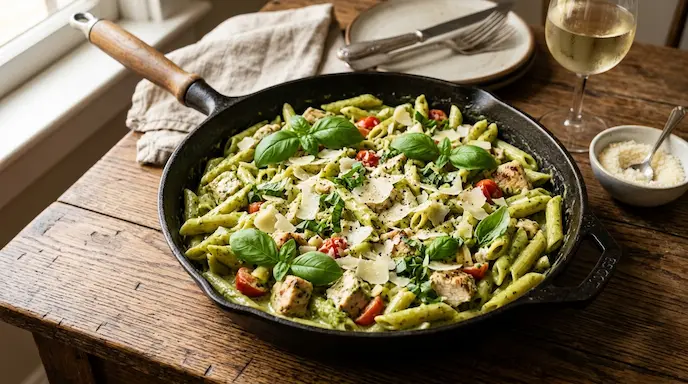
A creamy pesto sauce, tender chicken, and perfectly coated pasta come together in one skillet.
Prep Time: 10 minutes | Cook Time: 20 minutes | Total Time: 30 minutes | Servings: 4 | Calories: approximately 560 per serving.
Expect a rich, creamy sauce with bright basil pesto flavor, juicy chicken pieces, and pasta that’s fully coated instead of clumped or dry — a genuinely fast weeknight dinner that still tastes like it took real effort.
Table of Contents
Why You’ll Love This Recipe
- Ready in about 30 minutes: Simple enough for a weeknight, no advance planning required.
- Creamy without feeling heavy: A modest amount of cream and Parmesan keeps the sauce rich but balanced.
- Bright pesto flavor: Added at the right moment so the basil doesn’t dull or turn bitter.
- Tender, juicy chicken: Cooked separately so it doesn’t overcook while the sauce comes together.
- Simple ingredients: Nothing here requires a special trip to the store.
- Easy to customize: Works with different pasta shapes, veggies, or a spicy kick.
Before You Start
Gather everything before you start cooking, since this recipe moves quickly once the pasta hits the water. Cut the chicken into even, bite-sized pieces so it cooks through at the same rate. Get a large pot of salted water boiling for the pasta first, since it takes the longest of any step. Always scoop out about a cup of pasta water before draining — this starchy water is what helps the sauce cling to the noodles instead of sliding off. Time the chicken and sauce so they’re ready close to when the pasta finishes cooking, since pasta continues to soften if it sits too long before being tossed with sauce.
Recipe Success Checklist
- ✓ Chicken is cut into even, bite-sized pieces
- ✓ Pasta water is well salted
- ✓ Pasta is cooked to al dente, not soft
- ✓ About 1 cup of pasta water is reserved before draining
- ✓ Chicken reaches 165°F and is fully cooked
- ✓ Pesto is stirred in off high heat, not boiled
- ✓ Sauce coats the pasta smoothly, not too thick or thin
- ✓ Pasta and chicken are evenly coated in sauce
Ingredients
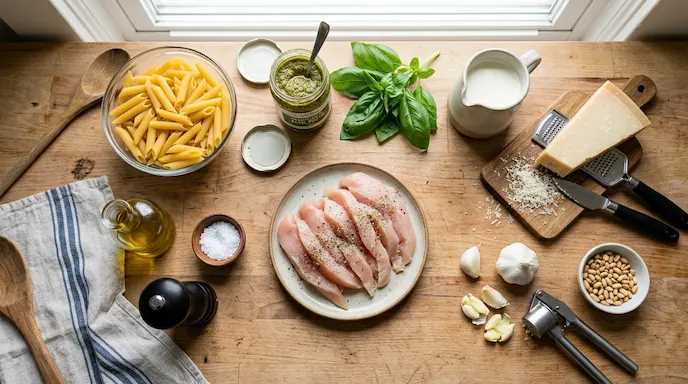
- 12 ounces short pasta, such as penne, rotini, or farfalle
- 1 pound boneless, skinless chicken breast, cut into bite-sized pieces
- 1 teaspoon salt, plus more for the pasta water
- ½ teaspoon black pepper
- 2 tablespoons olive oil
- 3 garlic cloves, minced
- 1 cup heavy cream
- ½ cup prepared basil pesto
- ½ cup grated Parmesan cheese, plus more for serving
- ¼ to ½ cup reserved pasta water, as needed
Ingredient Notes
Chicken: Boneless, skinless chicken breast cooks quickly and stays tender when cut into even, bite-sized pieces. Chicken thighs also work if you prefer a juicier bite.
Pasta shape: Short pasta shapes with ridges or curves, like penne or rotini, hold onto creamy sauce better than very smooth or thin noodles.
Basil pesto: Store-bought pesto works well and saves time; look for one where basil and olive oil are listed as the first ingredients for the best flavor. Homemade pesto works too, if you have it on hand.
Heavy cream: Creates the rich, creamy texture that coats the pasta and mellows the pesto’s sharpness. It also helps carry the sauce evenly over every piece of pasta.
Parmesan: Adds salty depth and helps thicken the sauce slightly as it melts in. Freshly grated Parmesan melts more smoothly than pre-shredded cheese, which often contains anti-caking additives that can make the sauce grainy.
Garlic: Adds savory depth to the base of the sauce before the cream goes in.
Olive oil: Used to cook the chicken and build the base of the sauce with good browning and flavor.
Choosing the Best Pasta
Short, ridged, or curved pasta shapes work best with a creamy pesto sauce because their surface area and grooves trap sauce instead of letting it slide off. Penne is a classic, easy choice with ridges that catch the sauce well.
Rotini and fusilli have spiral shapes that hold even more sauce in every bite. Farfalle (bowtie pasta) works nicely too, offering a fun texture that still holds sauce in its folds. Spaghetti can work in a pinch, but the sauce tends to pool at the bottom of the bowl rather than coating each strand evenly.
How to Choose Pesto
Good pesto should smell like fresh basil, not like dried herbs or old oil. Check the ingredient list on store-bought jars — basil, olive oil, Parmesan, garlic, and pine nuts (or a similar nut) should appear near the top. Pesto with a bright green color and a loose, slightly oily texture usually tastes fresher than pesto that looks dull or overly thick. If the pesto tastes flat straight from the jar, a squeeze of lemon juice or a pinch of salt when it’s added to the sauce can help wake up the flavor.
Kitchen Equipment
- Large pot (for boiling pasta)
- Large skillet (for the chicken and sauce)
- Colander
- Measuring cups and spoons
- Tongs or a wooden spoon
- Cutting board and chef’s knife
Step-by-Step Instructions
Step 1: Prepare the Ingredients
What To Do: Cut the chicken into bite-sized pieces, mince the garlic, and measure out the cream, pesto, and Parmesan.
Why It Matters: This recipe moves fast once the pasta starts cooking, so having everything ready keeps the timing smooth.
Timing: About 10 minutes.
Step 2: Cook the Pasta
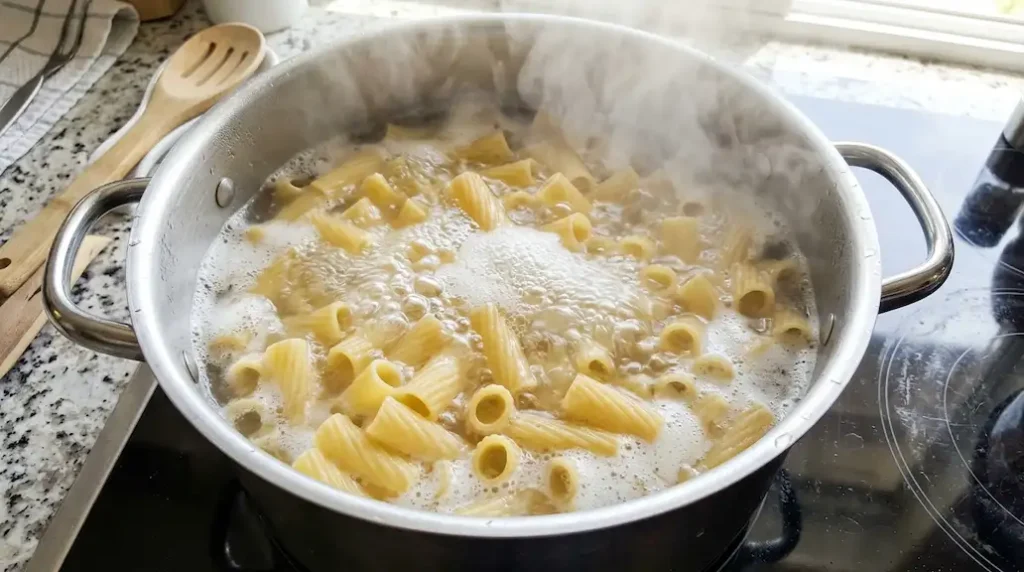
What To Do: Bring a large pot of well-salted water to a boil and cook the pasta until al dente, according to the package directions.
Why It Matters: Salting the water seasons the pasta itself, and al dente pasta holds its texture once mixed with the hot sauce.
Visual Cues: The pasta should look tender but still have a slight bite when you taste a piece.
Timing: 9 to 11 minutes, depending on the pasta shape.
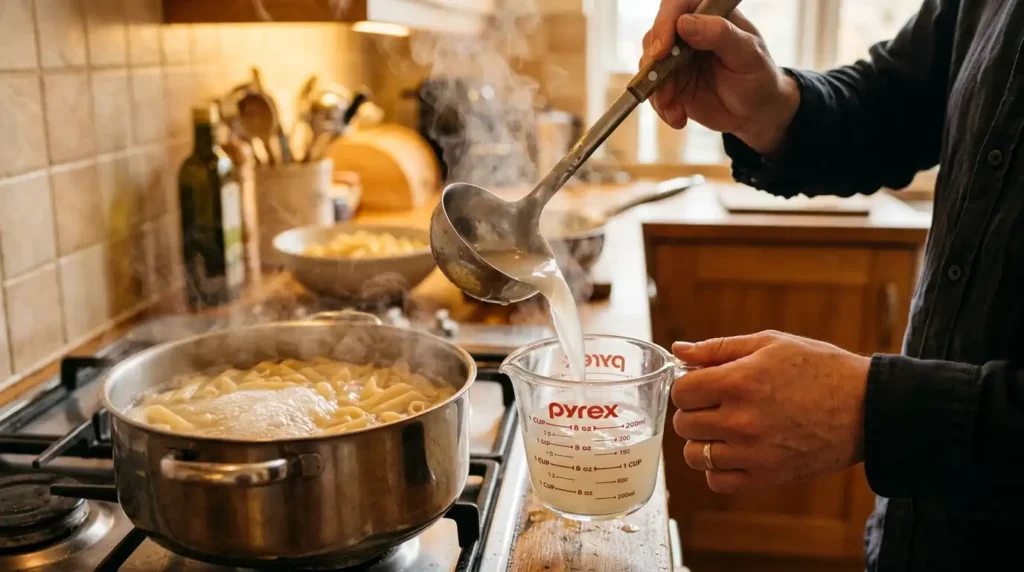
Step 3: Reserve Pasta Water
What To Do: Before draining, scoop out about 1 cup of the starchy pasta water and set it aside.
Why It Matters: This starchy water helps thin and emulsify the sauce later without watering down the flavor.
Timing: A few seconds, right before draining.
Helpful Tip: It’s easy to forget this step once the pasta is ready to drain, so scoop it out first, then drain.
Step 4: Prepare and Season the Chicken
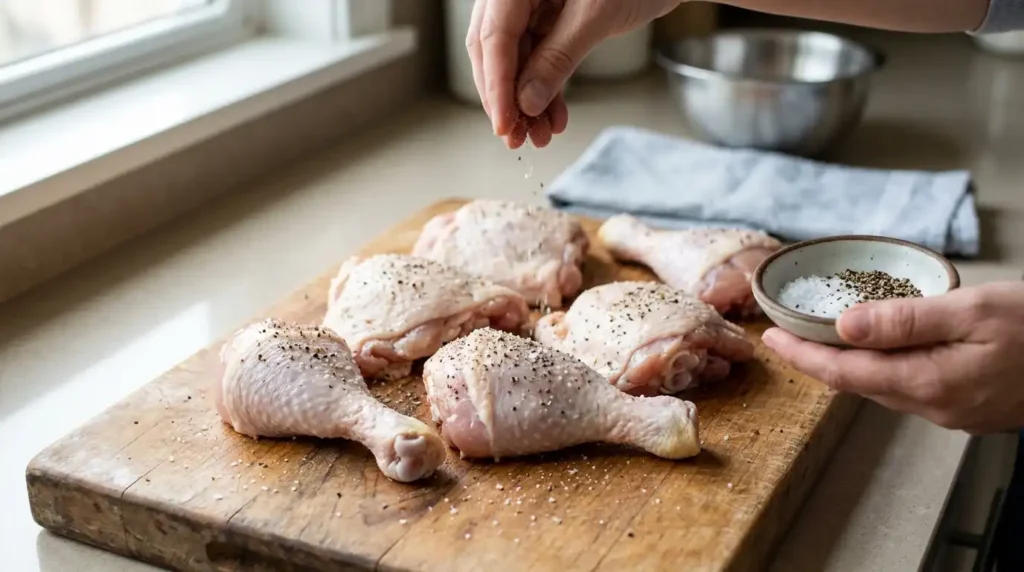
What To Do: Pat the chicken pieces dry and season with salt and pepper.
Why It Matters: Drying the surface helps the chicken brown instead of steam; seasoning builds flavor from the start.
Timing: A couple of minutes.
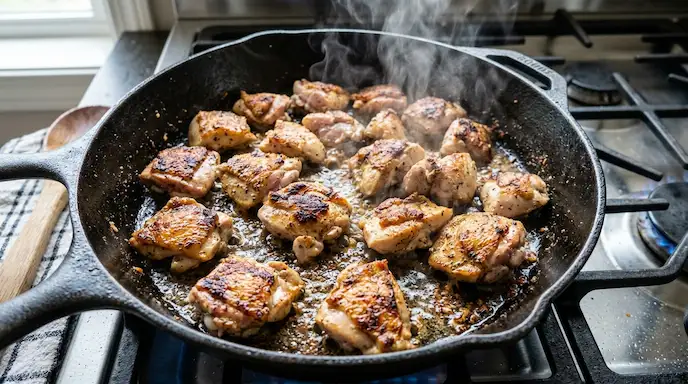
Step 5: Cook the Chicken
What To Do: Heat olive oil in a large skillet over medium-high heat and cook the chicken pieces until golden and cooked through, stirring occasionally.
Why It Matters: Medium-high heat browns the outside for flavor while cooking the chicken through without drying it out.
Visual Cues: The chicken should turn golden brown on the outside with no pink remaining inside.
Texture Cues: Pieces should feel firm, not squishy, when pressed.
Timing: 6 to 8 minutes.
What To Look For: An internal temperature of 165°F. Remove the chicken to a plate once done.
Step 6: Build the Sauce
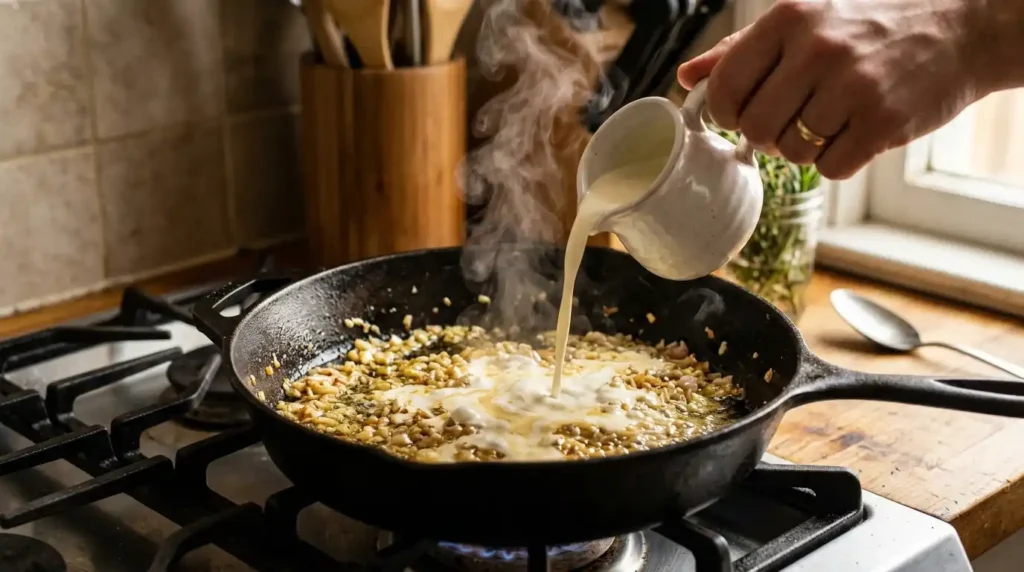
What To Do: In the same skillet, lower the heat to medium and add the garlic, cooking for about 30 seconds until fragrant. Pour in the heavy cream and let it warm gently.
Why It Matters: Using the same skillet picks up the flavorful browned bits left from the chicken. Lower heat prevents the cream from scorching or separating.
Visual Cues: The cream should look smooth and begin to steam gently, not boil hard.
Timing: 2 to 3 minutes.
Step 7: Add Pesto Correctly
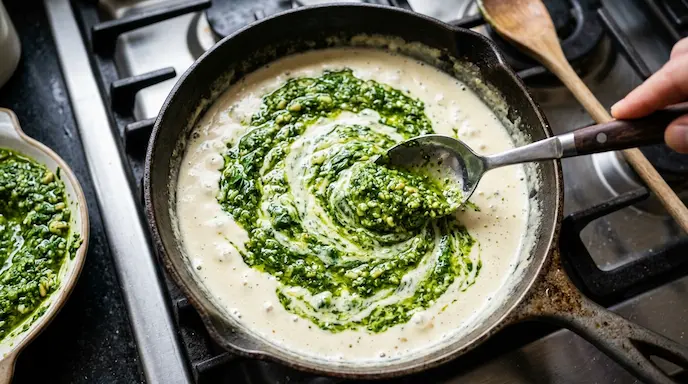
What To Do: Remove the skillet from direct high heat and stir in the pesto until fully combined.
Why It Matters: Pesto loses its bright, fresh flavor and can turn slightly bitter if boiled aggressively, so it should be stirred in gently rather than simmered hard.
Visual Cues: The sauce should turn a light green color and look smooth, not separated.
Timing: About 1 minute.
Step 8: Combine Pasta and Sauce
What To Do: Add the drained pasta directly to the skillet and toss to coat.
Why It Matters: Tossing the pasta in the skillet, rather than pouring sauce over plated pasta, coats every piece evenly.
Timing: 1 to 2 minutes.
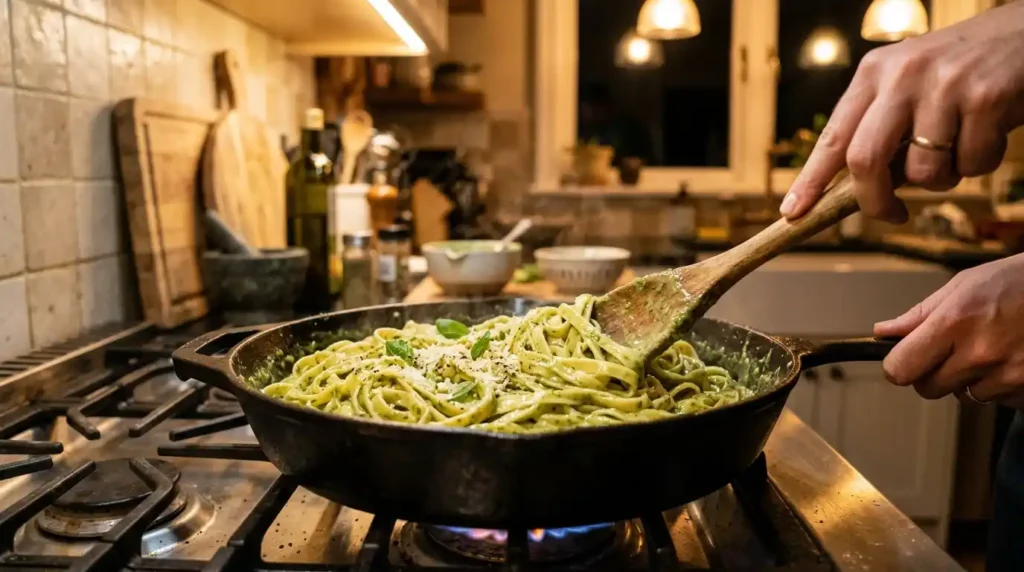
Step 9: Add Chicken
What To Do: Return the cooked chicken to the skillet and stir to combine with the pasta and sauce.
Why It Matters: Adding the chicken back in at the end keeps it from overcooking in the sauce.
Timing: 1 minute.
Step 10: Adjust Consistency
What To Do: If the sauce looks too thick, stir in reserved pasta water a tablespoon at a time until it reaches a smooth, pourable consistency.
Why It Matters: Pasta absorbs sauce as it sits, so a slightly loose sauce at this stage prevents the dish from turning dry.
Visual Cues: The sauce should coat the pasta and chicken smoothly without pooling or looking greasy.
Timing: 1 to 2 minutes.
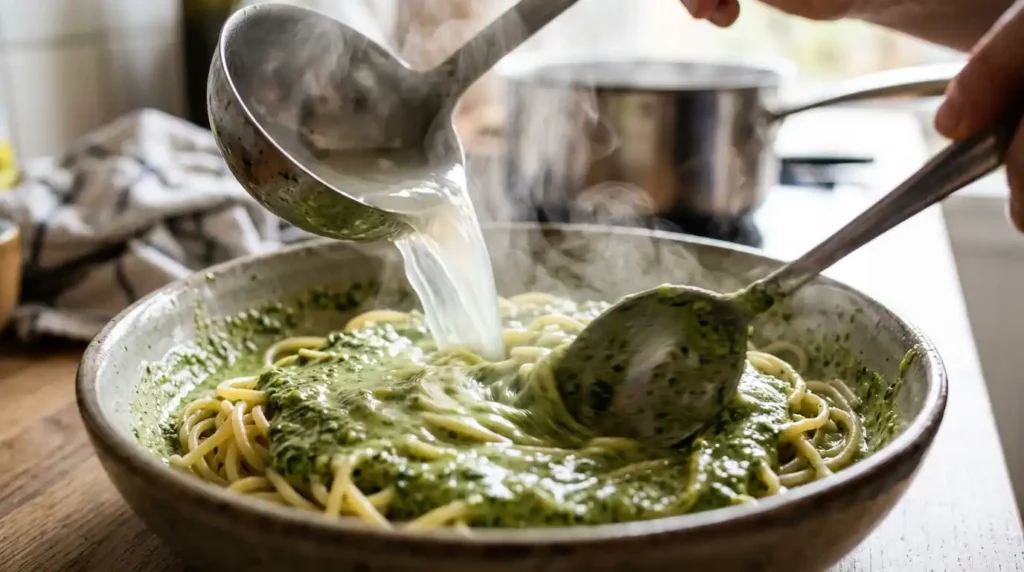
Step 11: Finish with Parmesan
What To Do: Stir in the grated Parmesan until melted and smooth.
Why It Matters: Parmesan adds richness and slightly thickens the sauce as it melts.
Timing: 1 minute.
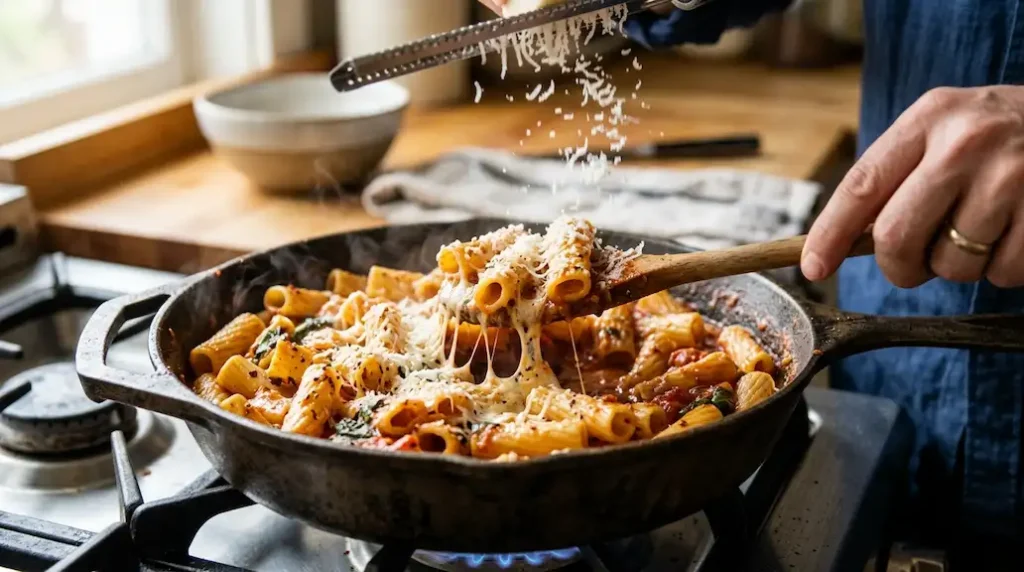
Step 12: Serve
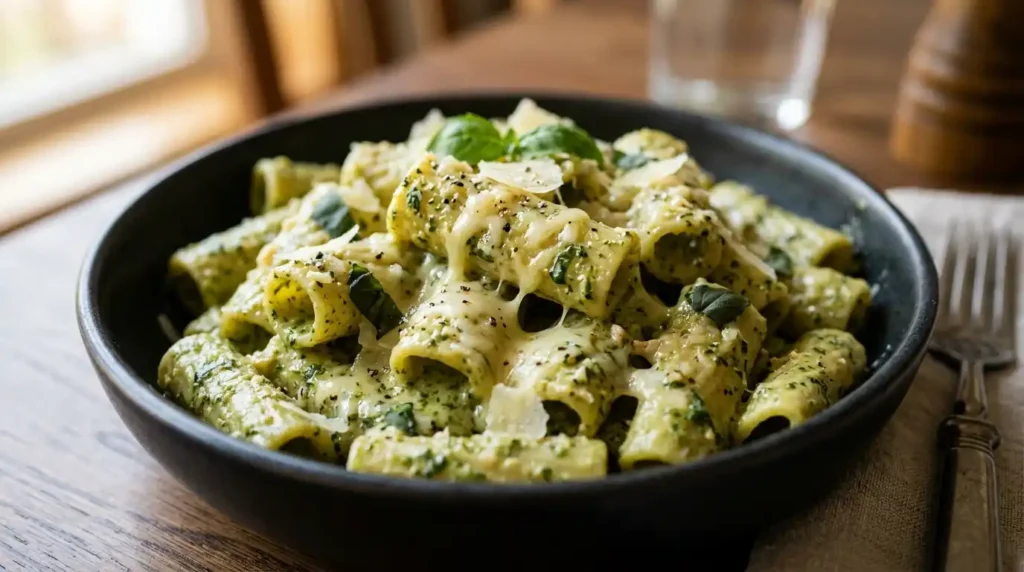
What To Do: Plate immediately and top with extra Parmesan and fresh basil if desired.
Timing: Serve right away for the best texture.
How to Make the Creamy Pesto Sauce
The order matters here. Build a cream base first, then stir the pesto in off high heat, since boiling pesto hard can turn its fresh basil flavor slightly bitter and dull its bright green color. Heavy cream gives the sauce its richness, while Parmesan adds body and helps it thicken naturally as it melts.
Reserved pasta water is the fix for almost every consistency problem: if the sauce turns too thick as it sits, a splash of pasta water loosens it back up without diluting the flavor, since the starch in that water helps everything bind together smoothly. If the sauce ends up too thin, simmer it gently for another minute or stir in a little more Parmesan to thicken it.
How to Cook the Chicken
Chicken breast, cut into bite-sized pieces, works best here because it cooks quickly and evenly. Season with salt and pepper before it hits the pan. Cook over medium-high heat so the outside browns nicely while the inside cooks through in about 6 to 8 minutes. Chicken is done once it’s opaque all the way through and reaches an internal temperature of 165°F. Pulling it from the pan as soon as it’s done, rather than leaving it in while you build the sauce, keeps it from drying out.
How to Get the Perfect Pasta Texture
Al dente pasta — pasta with a slight bite left in the center — matters because it will continue to soften slightly once it’s tossed with hot sauce. Cooking pasta all the way to fully soft before combining it with the sauce almost guarantees mushy results by the time it’s plated. Reserve about a cup of pasta water before draining; you likely won’t need the whole cup, but having extra on hand makes it easy to loosen the sauce exactly as much as needed.
Why This Recipe Works
Pesto brings concentrated basil flavor that a small amount can flavor a whole pan of pasta. Starch from the pasta water helps the sauce cling evenly to every noodle instead of pooling at the bottom of the bowl. Cream and Parmesan add richness and body, while cooking the chicken separately and folding it in near the end keeps it from turning rubbery. Careful heat control throughout — especially keeping the pesto off high, direct heat — keeps the sauce smooth and the flavor bright.
Recipe Science
Pasta releases starch into its cooking water as it boils, and that starchy water helps bind fat (from the cream and oil) and liquid together into a smooth, cohesive sauce instead of one that separates. Parmesan contributes both flavor and body, since its proteins and fats melt into the sauce and thicken it slightly. Basil pesto contains delicate herb oils that break down and turn bitter under prolonged high heat, which is why it’s added off aggressive heat rather than simmered.
Chicken becomes dry when its proteins overcook and squeeze out moisture, which is why pulling it from the heat right at 165°F, rather than cooking it longer “to be safe,” keeps it tender.
Expert Tips
- Reserve pasta water before draining — it’s easy to forget once the pasta looks ready.
- Cut chicken into even pieces so every piece cooks at the same rate.
- Don’t skip salting the pasta water; it’s your only chance to season the pasta itself.
- Keep the heat moderate once pesto goes in — high heat dulls its flavor and color.
- Use freshly grated Parmesan for a smoother-melting sauce.
- Add pasta water a little at a time; you can always add more, but you can’t take it back out.
- Toss the pasta directly in the sauce rather than pouring sauce over a plated bowl.
- Cook the chicken first and set it aside so it doesn’t overcook while the sauce comes together.
- Taste before serving — pesto brands vary in saltiness, so adjust salt at the end.
- Serve immediately; the sauce is at its creamiest right when it’s finished.
- If doubling the recipe, use a very large skillet or two batches so the sauce doesn’t overcrowd and cool too fast.
Common Mistakes
- Overcooking the pasta: Soft, overcooked pasta turns mushy once mixed with hot sauce. Cook to al dente.
- Not saving pasta water: Without it, there’s no easy way to adjust the sauce’s consistency later.
- Boiling pesto aggressively: High heat dulls pesto’s flavor and color. Stir it in off strong heat.
- Sauce too thick: Usually from too much Parmesan or not enough reserved pasta water. Loosen with pasta water gradually.
- Sauce too thin: Simmer briefly or stir in a bit more Parmesan to thicken.
- Dry chicken: Comes from overcooking. Pull chicken from the heat as soon as it hits 165°F.
- Overcrowding the pan: Too much chicken at once steams instead of browns. Cook in batches if needed.
- Adding too much cheese: Excess Parmesan can make the sauce clumpy or overly salty. Add gradually and taste as you go.
- Not seasoning the pasta water: Unsalted pasta water means bland noodles that no amount of sauce can fully fix.
Troubleshooting
Why is my pesto pasta dry?
The sauce likely needed more reserved pasta water, or the pasta sat too long before being tossed with sauce.
Why is my sauce too thick?
Too much Parmesan or not enough pasta water. Stir in reserved pasta water a tablespoon at a time.
Why is my sauce watery?
Not enough Parmesan or cream, or too much pasta water added too quickly. Simmer briefly to reduce, or stir in more Parmesan.
Why does my pesto taste dull?
It was likely boiled at high heat for too long. Stir pesto in off direct high heat next time.
Why is my chicken dry?
It was probably overcooked. Pull it from the pan right at 165°F, not longer.
Why did the Parmesan clump?
Pre-shredded cheese with anti-caking additives melts unevenly. Use freshly grated Parmesan instead.
Why did the sauce separate?
The cream was likely boiled too hard. Keep the heat at a gentle simmer once the cream and cheese are added.
Substitutions
Chicken thighs can replace chicken breast for a juicier, more forgiving option, though they take slightly longer to cook through. Different pasta shapes — rotini, fusilli, or a recipe with orzo pasta and chicken — all work well with this sauce, since the sauce clings to most short or small shapes easily. Half-and-half can replace heavy cream for a lighter sauce, though it will be slightly less rich and thick. Pecorino Romano can substitute for Parmesan for a sharper, saltier flavor.
Recipe Variations
- Spinach chicken pesto pasta: Stir in a couple handfuls of fresh spinach during the last minute of cooking, letting it wilt into the sauce.
- Sun-dried tomato pesto pasta: Add chopped sun-dried tomatoes for a tangy, slightly sweet contrast.
- Spicy chicken pesto pasta: Stir in a pinch of red pepper flakes with the garlic.
- Broccoli chicken pesto pasta: Add steamed broccoli florets when combining the pasta and sauce.
- Mushroom chicken pesto pasta: Sauté sliced mushrooms with the garlic before adding the cream.
Serving Suggestions
A simple green salad with a light vinaigrette balances the richness of the creamy sauce. Garlic bread is a classic pairing for scooping up extra sauce. Roasted or steamed vegetables, like broccoli or green beans, round out the plate without much extra effort. A crisp white wine or sparkling water with lemon pairs nicely with the pesto’s herby flavor.
Leftovers
Leftover chicken pesto pasta reheats well for lunch the next day. It also works cold, tossed into a pasta salad with a little extra olive oil, or repurposed into a baked pasta dish with a sprinkle of extra cheese on top.
Storage
Let the pasta cool before storing to avoid trapping steam and making it soggy. Store in an airtight container in the refrigerator for up to 3 days. The sauce will thicken and the pasta will absorb some of it as it sits, which is expected and easy to fix when reheating.
Reheating
Reheat gently on the stovetop over medium-low heat, adding a splash of water, milk, or cream to loosen the sauce back to a smooth consistency. Stir frequently so it heats evenly without scorching. The microwave also works for a quick reheat — use short 30-second intervals, stirring in a splash of liquid between each, to keep the sauce from drying out or separating.
Make-Ahead
The chicken can be cooked up to 2 days ahead and refrigerated separately. Pasta can also be cooked slightly ahead of time, though it’s best tossed with the sauce shortly before serving so it doesn’t dry out or clump. The sauce itself is quick enough to make fresh, and it tastes best when combined with hot pasta right before serving rather than reheated as a finished dish.
Frequently Asked Questions
What type of chicken is best for pesto pasta?
Boneless, skinless chicken breast cut into bite-sized pieces cooks quickly and stays tender; chicken thighs work too for a juicier option.
Can I use store-bought pesto?
Yes, store-bought pesto works well and saves time — just look for one where basil and olive oil are the first ingredients.
How do I make pesto pasta creamy?
Combine heavy cream with pesto and Parmesan, and use reserved pasta water to adjust the consistency until smooth.
Why is my pesto pasta dry?
Usually from skipping the reserved pasta water or letting the pasta sit too long before adding the sauce.
Can I use another pasta shape?
Yes, short shapes like penne, rotini, or a chicken and penne pasta recipe style all work well with this sauce.
How do I reheat chicken pesto pasta?
Reheat gently on the stovetop with a splash of milk or water to loosen the sauce, or microwave in short intervals, stirring between each.
Can I make chicken pesto pasta ahead?
The chicken can be cooked ahead, but the pasta and sauce taste best combined fresh, right before serving.
Can I freeze chicken pesto pasta?
Freezing is not recommended, since cream-based sauces tend to separate and turn grainy after thawing.
How do I loosen pesto sauce?
Stir in reserved pasta water a tablespoon at a time until the sauce reaches a smooth, pourable consistency.
Final Thoughts
This chicken pesto pasta recipe proves a creamy, restaurant-style dinner doesn’t need a long ingredient list or hours in the kitchen. With tender chicken, a bright pesto-cream sauce, and pasta cooked just right, it’s a reliable weeknight meal that comes together in about 30 minutes and tastes like it took a lot longer.