
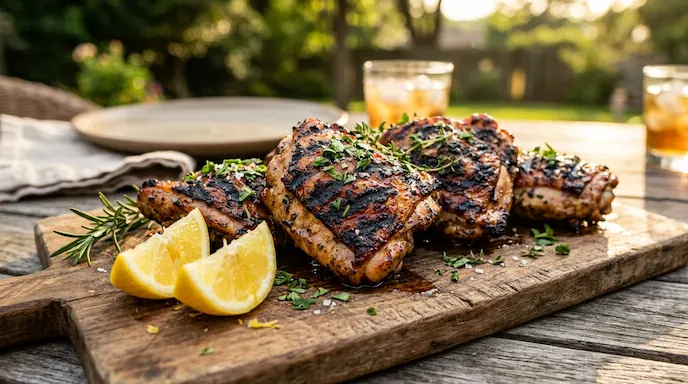
Why Chicken Thighs Are Perfect for the Grill
This grilled chicken thigh recipe starts with a simple truth: chicken thighs are more forgiving on the grill than chicken breast. They have more fat marbled through the meat, so they stay juicy even if they spend an extra minute or two over the flames.
A quick, flavorful marinade adds moisture and seasoning before the chicken ever touches the grate, and high heat gives the outside a light char while the inside stays tender. If you like easy weeknight chicken dinners, our shredded chicken recipe is another simple option worth trying, but this grilled version is built for warm evenings and backyard cookouts. Expect juicy, well-seasoned chicken with a smoky char in about 30 minutes of active time.
Juicy chicken, charred edges, and a marinade that actually soaks in — this is grilling made simple.
Prep Time: 15 minutes | Marinating Time: 2 hours (up to overnight) | Cook Time: 15 minutes | Total Time: 2 hours 30 minutes | Servings: 4 | Calories: approximately 340 per serving.
Expect tender, juicy chicken with lightly charred edges, a flavorful marinade baked right into the meat, and a method simple enough for a busy weeknight or a weekend cookout.
Table of Contents
Why You’ll Love This Recipe
- Juicy every time: The fat in chicken thighs keeps the meat moist, even with a little extra time on the grill.
- Charred, flavorful edges: High heat caramelizes the marinade for real grilled flavor.
- Simple marinade: Just a handful of pantry ingredients, no complicated steps.
- Budget-friendly: Chicken thighs cost less than chicken breast and deliver more flavor.
- Great for meal prep: Grill a big batch and use the leftovers all week.
- Family-friendly: Mild, savory flavor that appeals to picky eaters and adults alike.
Before You Start
A few decisions up front make this recipe easier. First, decide between bone-in or boneless thighs, and skin-on or skinless — each affects cooking time and flavor, covered in detail below.
Trim any large, loose pieces of excess fat so they don’t cause flare-ups on the grill. Mix the marinade completely before adding the chicken, so every piece gets even seasoning. Give the chicken enough time to marinate — even 30 minutes helps, but 2 hours or more lets the flavor really soak in.

Before grilling, preheat the grill fully and let excess marinade drip off the chicken. Wet chicken steams instead of searing, and stray marinade increases the risk of flare-ups.
Recipe Success Checklist
- ✓ Chicken thighs are similar in size
- ✓ Marinade is fully mixed before adding chicken
- ✓ Chicken has marinated for at least 30 minutes, ideally 2+ hours
- ✓ Grill grates are clean and oiled
- ✓ Grill is fully preheated before chicken goes on
- ✓ Chicken is not overcrowded on the grates
- ✓ Internal temperature reaches 165°F
- ✓ Chicken rests 5 minutes before serving
Ingredients
For the chicken:
- 2 pounds boneless, skinless chicken thighs (about 8 thighs)

For the marinade:
- ⅓ cup olive oil
- 3 tablespoons lemon juice
- 4 garlic cloves, minced
- 1 tablespoon smoked paprika
- 1 teaspoon dried oregano
- 1 teaspoon salt
- ½ teaspoon black pepper
- 1 tablespoon honey
Ingredient Notes
Chicken thighs: Dark meat has more fat than chicken breast, which keeps it moist even with slightly imprecise grilling. It also has more flavor on its own.
Olive oil: Carries the fat-soluble flavors from garlic and herbs into the meat, and helps prevent sticking on the grill.
Lemon juice: The acid brightens the marinade and gently tenderizes the surface of the meat. Too much acid or too long a soak can make the texture mushy, so this marinade keeps it balanced.
Garlic: Fresh garlic gives a sharper, more aromatic flavor than garlic powder. Mince it finely so it doesn’t burn on the grill.
Smoked paprika: Adds color and a subtle smoky flavor that pairs naturally with grilling.
Salt: Seasons the meat all the way through, not just the surface, especially with a longer marinating time.
Honey: A small amount balances the acid and helps the outside caramelize, though it can burn if the grill runs too hot for too long.
Choosing the Right Chicken Thighs
Boneless, skinless chicken thighs are the easiest option for this recipe. They cook quickly, are simple to marinate, and require no extra trimming at the table.
Bone-in thighs take a bit longer to cook and need slightly lower, indirect heat to cook through without burning the outside, but many cooks find they stay even juicier.
Skin-on thighs crisp up nicely over direct heat and add extra flavor, though the skin can cause more flare-ups from dripping fat. For this recipe, boneless, skinless thighs give the most consistent, beginner-friendly results, but bone-in or skin-on versions work with small adjustments to grilling time.
The Easy Marinade
This marinade does three jobs at once: the oil carries flavor into the meat and helps it brown, the lemon juice adds brightness and slight tenderizing, and the garlic, paprika, and herbs build savory depth. A touch of honey balances the acidity and helps the outside caramelize on the grill.
Marinating time matters more than most people expect. Thirty minutes adds surface flavor, but 2 hours lets the marinade penetrate further into the meat. Marinating longer than 24 hours isn’t necessary and can start to break down the texture of the chicken, making it slightly mushy instead of tender.
To mix it, whisk the oil, lemon juice, garlic, paprika, oregano, salt, pepper, and honey together in a bowl until fully combined. There’s no special technique here — just make sure the honey is fully dissolved so it doesn’t clump in one spot.
Marinating the Chicken
Place the chicken thighs in a resealable bag or a shallow dish and pour the marinade over them, making sure every piece is coated. A bag makes it easy to turn the chicken partway through marinating for even coverage.
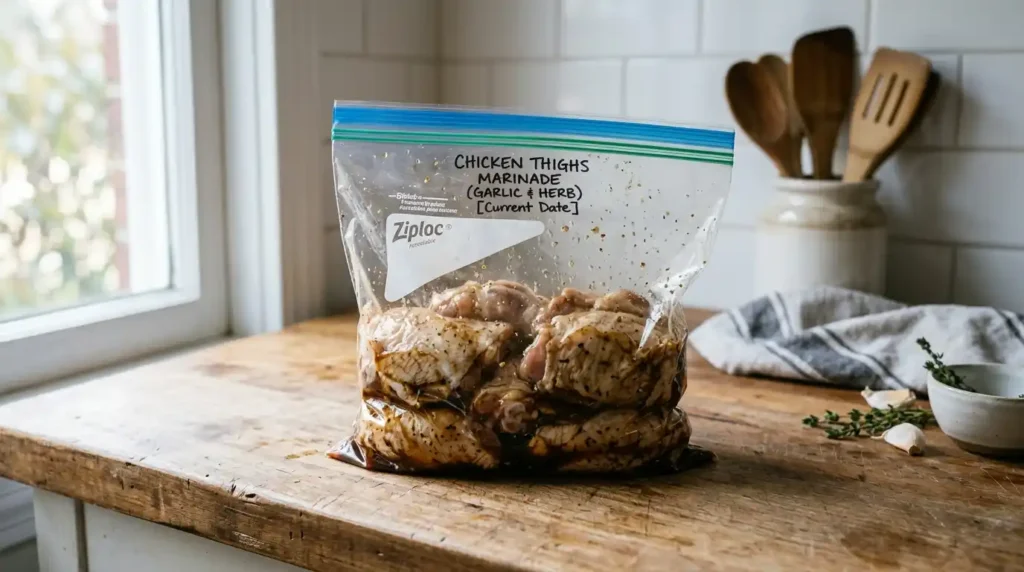
Refrigerate the chicken while it marinates — never leave raw chicken at room temperature for more than about 2 hours, since bacteria multiply quickly at warmer temperatures. Thirty minutes is the minimum for noticeable flavor, 2 to 4 hours is ideal for most home cooks, and overnight (up to 24 hours) works well if you’re planning ahead. Beyond 24 hours, the acid in the marinade can start to affect the texture of the meat.
Kitchen Equipment
- Gas or charcoal grill
- Tongs
- Instant-read thermometer
- Mixing bowl
- Measuring spoons and cups
- Grill brush
- Sheet pan (for carrying chicken to and from the grill)
Step-by-Step Instructions
Step 1: Make the Marinade
What To Do: Whisk together the olive oil, lemon juice, garlic, paprika, oregano, salt, pepper, and honey in a mixing bowl.
Why It Matters: A fully combined marinade coats every piece of chicken evenly.
Visual Cues: The marinade should look smooth and slightly thickened, with no separated honey clumps.
Timing: About 3 minutes.
Helpful Tip: Taste a small spoonful — it should taste well-seasoned on its own since it’s flavoring raw chicken, not finished food.
Step 2: Prepare the Chicken
What To Do: Trim any large pieces of excess fat from the chicken thighs. Pat them dry with a paper towel.
Why It Matters: Removing loose fat reduces flare-ups on the grill; drying the surface helps the marinade adhere.
Timing: About 5 minutes.
What To Look For: Chicken should look trimmed and dry, not dripping wet.
Step 3: Marinate the Chicken
What To Do: Place the chicken in a resealable bag, pour the marinade over it, seal, and refrigerate.
Why It Matters: Marinating adds flavor and moisture before the chicken ever touches the heat.
Timing: At least 30 minutes; 2 to 4 hours is ideal.
Helpful Tip: Turn the bag once halfway through so both sides soak evenly.
Step 4: Preheat the Grill
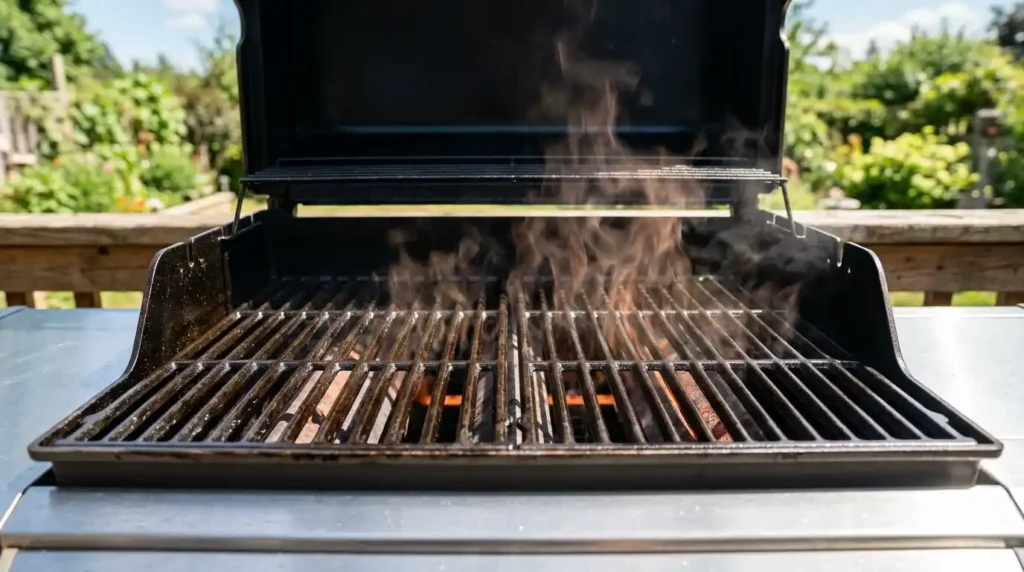
What To Do: Heat the grill to medium-high, about 400°F to 450°F.
Why It Matters: A properly preheated grill sears the chicken quickly instead of letting it stick and steam.
Timing: 10 to 15 minutes.
What To Look For: You should be able to hold your hand a few inches above the grate for only 3 to 4 seconds.
Step 5: Prepare the Grill Grates
What To Do: Scrape the grates clean with a grill brush, then lightly oil them using a paper towel dipped in oil and held with tongs.
Why It Matters: Clean, oiled grates prevent sticking and tearing the skin or surface of the chicken.
Timing: 2 minutes.
Step 6: Place Chicken on the Grill
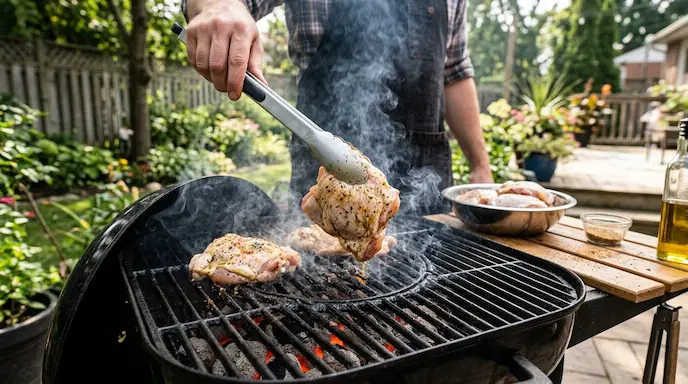
What To Do: Remove the chicken from the marinade, letting excess drip off, and place it directly on the hot grates.
Why It Matters: Excess marinade dripping onto the flames causes flare-ups and uneven cooking.
Visual Cues: The chicken should sizzle immediately when it touches the grate.
Timing: Work quickly, placing each piece with space around it.
Step 7: Grill the First Side
What To Do: Grill undisturbed for 6 to 7 minutes.
Why It Matters: Leaving the chicken alone lets a proper sear and grill marks form.
Visual Cues: The edges should look opaque and grill marks should be visible when you check.
Timing: 6 to 7 minutes.
Helpful Tip: Resist the urge to move the chicken around — constant flipping prevents good char.
Step 8: Flip the Chicken
What To Do: Flip each piece once, using tongs.
Why It Matters: One flip is enough to cook both sides evenly without drying out the meat.
Visual Cues: The grilled side should show golden-brown to lightly charred grill marks.
Timing: A quick, single motion.
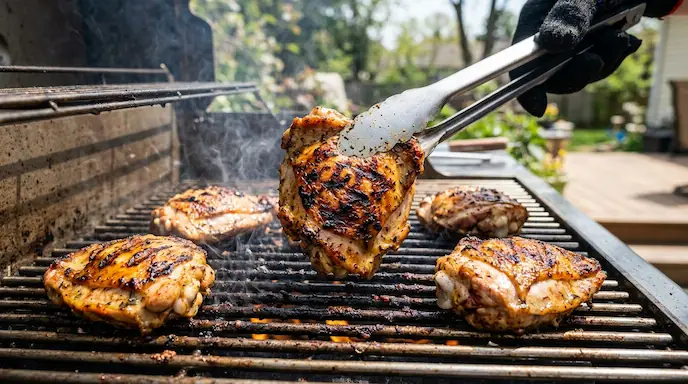
Step 9: Finish Cooking
What To Do: Grill the second side for another 6 to 7 minutes.
Why It Matters: This finishes cooking the chicken through while building char on the second side.
Timing: 6 to 7 minutes, for about 12 to 14 minutes total grill time.
What To Look For: Juices should run clear, and the chicken should feel firm, not squishy, when pressed gently with tongs.
Step 10: Check Internal Temperature
What To Do: Insert an instant-read thermometer into the thickest part of a thigh.
Why It Matters: Temperature is the only reliable way to confirm the chicken is safe to eat.
Timing: A few seconds per piece.
What To Look For: The thermometer should read at least 165°F.
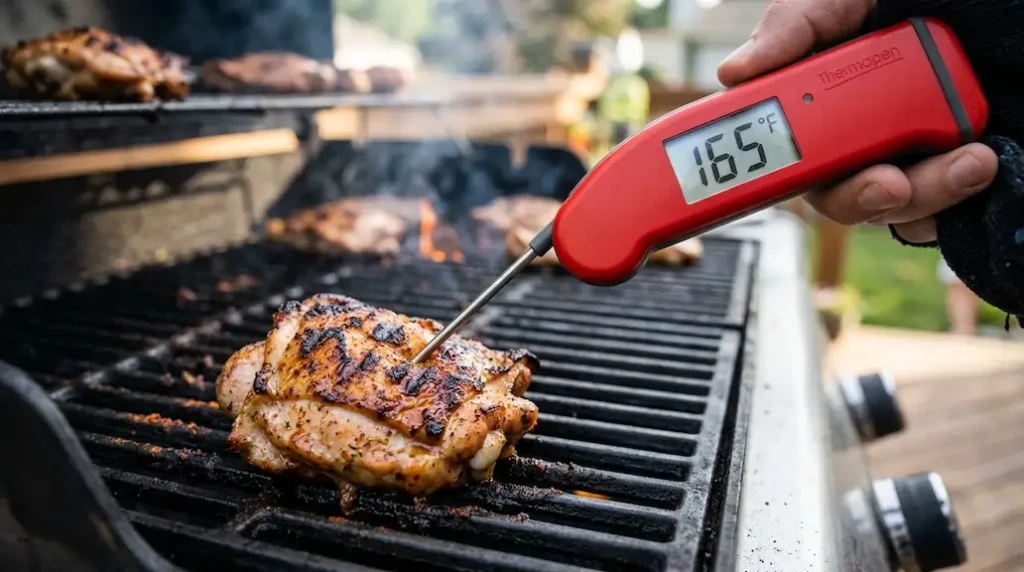
Step 11: Rest the Chicken
What To Do: Move the chicken to a plate or sheet pan and let it rest for 5 minutes before cutting or serving.
Why It Matters: Resting allows the juices to redistribute through the meat instead of running out when cut.
Timing: 5 minutes.
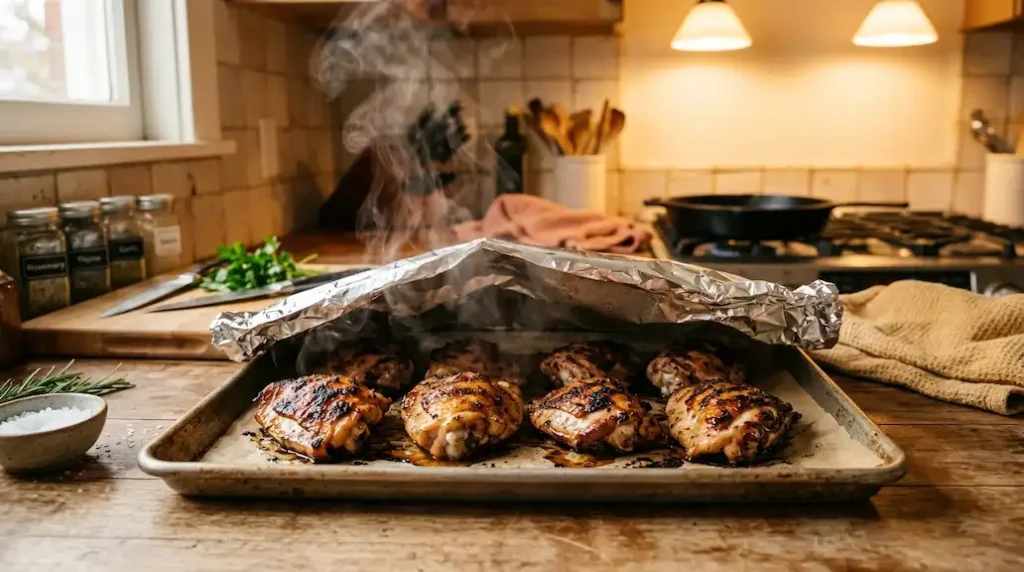
Step 12: Serve
What To Do: Plate the chicken and serve warm with your favorite sides.
Timing: Serve immediately after resting for the best texture.
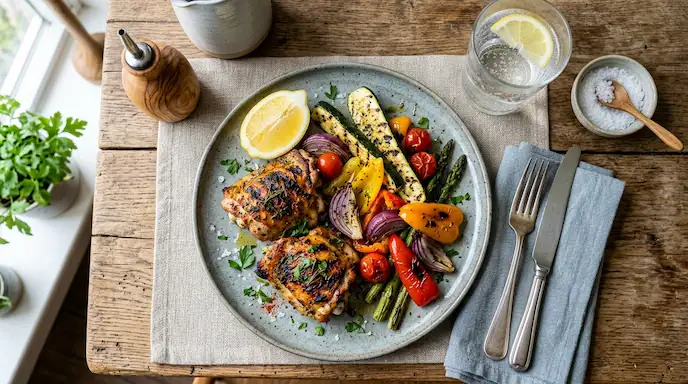
Grilling Technique
Use direct heat over medium-high temperature, around 400°F to 450°F. This range is hot enough to sear the outside and build char without burning the marinade before the inside cooks through.
Flip the chicken only once, since constant flipping prevents a proper crust from forming. If flare-ups happen from dripping fat or marinade, move the chicken to a cooler part of the grill for a few seconds rather than spraying it with water, which can create dangerous steam and ash.
How to Get Juicy Chicken Thighs
Start with chicken thighs, which have more built-in fat than chicken breast. Marinate for at least 30 minutes to add moisture and flavor.
Grill over consistent medium-high heat rather than very high heat, which can dry out the surface before the inside finishes.
Most importantly, pull the chicken off the grill right at 165°F rather than cooking “a little extra to be safe,” and let it rest for 5 minutes so the juices settle back into the meat instead of spilling out when cut.
How to Get Charred Edges Without Burning
A little char adds flavor, but burnt marinade tastes bitter. If the outside is browning too fast, move the chicken to a slightly cooler section of the grill and let it finish cooking more gently.
The honey in this marinade caramelizes well at medium-high heat, but it can scorch if the grill runs too hot or the chicken sits too long on one spot. Keep an eye on the color in the last few minutes of grilling and adjust the heat down if needed.
How to Know Chicken Thighs Are Done
Color is not a reliable way to check doneness — a well-charred outside can still hide undercooked meat inside, especially with bone-in pieces.
Insert an instant-read thermometer into the thickest part of the thigh, avoiding the bone if there is one, since bone conducts heat differently and can give a false reading. According to USDA guidance, chicken is safe to eat once it reaches an internal temperature of 165°F.
Bone-in thighs typically take a few minutes longer than boneless thighs to reach that temperature. Resting the chicken afterward improves juiciness, but it does not continue cooking the meat to a safe temperature — that has to happen on the grill.
Why This Recipe Works
Chicken thighs bring natural fat that keeps the meat moist even with a small margin of error in timing. The marinade adds flavor and light tenderizing from the acid, while the oil helps the outside brown instead of sticking. Medium-high, direct heat sears the surface quickly, and a single flip lets real grill marks form on both sides. Resting for a few minutes afterward lets the juices settle, so the first bite is juicy instead of dry.
Recipe Science
Salt in the marinade draws moisture to the surface of the chicken, then gets reabsorbed along with the salt itself, seasoning the meat from the inside out. The lemon juice’s acid loosens the structure of surface proteins slightly, which is why marinating too long can make chicken feel mushy instead of tender.
Oil helps conduct heat evenly at the chicken’s surface and promotes browning through the Maillard reaction, the same browning process responsible for a seared steak’s crust.
High heat creates those signature grill marks by rapidly caramelizing sugars and proteins where the meat touches the hot grates. The honey in the marinade can burn if it sits directly over high heat too long, which is why moving the chicken to lower heat when needed helps.
Chicken thighs are more forgiving than chicken breast because their higher fat content buffers against overcooking, while lean breast meat dries out much faster past 165°F.
Expert Tips
- Let the chicken sit out for about 10 minutes before grilling so it isn’t ice-cold in the center.
- Pat off excess marinade before grilling to avoid flare-ups.
- Preheat the grill fully before adding the chicken — a cold grill causes sticking.
- Oil the grates, not just the chicken, for the best release.
- Flip only once for the best char and juiciest texture.
- Keep a cooler zone on the grill to move chicken if flare-ups occur.
- Always confirm doneness with a thermometer, not color or time alone.
- Let the chicken rest for 5 minutes before cutting into it.
- Use tongs instead of a fork to flip, so you don’t pierce the meat and lose juices.
- Marinate in a bag instead of an open dish for more even coverage.
- Don’t press down on the chicken while it grills — this squeezes out the juices.
- If using bone-in thighs, move them to indirect heat for the last few minutes to finish cooking without burning the skin.
Common Mistakes
- Grilling cold, uneven chicken: Cold chicken straight from the fridge cooks unevenly. Let it sit out briefly before grilling.
- Over-marinating: More than 24 hours can make the texture mushy from too much acid exposure.
- Using excessive heat: Very high heat burns the marinade before the inside cooks through.
- Burning the marinade: The honey and sugars in the marinade can scorch over direct high heat for too long.
- Flipping too often: Constant flipping prevents a good sear and proper grill marks.
- Pressing the chicken: Pressing down forces out the juices that keep the meat moist.
- Crowding the grill: Too many pieces at once lowers the grill temperature and causes uneven cooking.
- Skipping the thermometer: Relying on time or color alone risks undercooked or overcooked chicken.
- Cutting immediately after grilling: This lets the juices run out onto the cutting board instead of staying in the meat.
Troubleshooting
Why are my chicken thighs dry?
They were likely grilled too long past 165°F, or cut into right after cooking instead of resting first.
Why did the marinade burn?
The grill was probably too hot, or the honey in the marinade sat directly over high heat too long. Move chicken to lower heat if it’s browning too fast.
Why didn’t I get grill marks?
The grill likely wasn’t hot enough, or the chicken was flipped too many times before a sear could form.
Why is the chicken cooked outside but raw inside?
The heat was too high, cooking the surface faster than the inside. Lower the heat and consider moving to indirect heat, especially for bone-in pieces.
Why did the chicken stick to the grill?
The grates likely weren’t clean or oiled enough, or the chicken was flipped before a proper sear had formed.
Why are the edges too dark?
Sugar in the marinade can scorch quickly over high heat. Reduce the heat slightly or move chicken to a cooler spot.
Why is the chicken not flavorful enough?
The marinating time may have been too short. Aim for at least 2 hours for deeper flavor.
Substitutions
Bone-in thighs can replace boneless thighs, but they need a few extra minutes and work best finished over indirect heat. Skin-on thighs add extra flavor and crisp texture but increase the risk of flare-ups, so watch the heat closely. Lime juice can replace lemon juice for a slightly different citrus flavor, and apple cider vinegar can work in place of citrus for a more tangy, less bright marinade. Maple syrup can substitute for honey with a similar sweetness and browning effect.
Recipe Variations
- Spicy grilled chicken thighs: Add ½ to 1 teaspoon of red pepper flakes or cayenne to the marinade.
- Lemon herb chicken thighs: Increase the lemon juice slightly and add fresh rosemary or thyme.
- Honey garlic grilled chicken: Double the honey and garlic for a sweeter, more pronounced flavor.
- BBQ-style grilled chicken thighs: Brush with your favorite BBQ sauce during the last 2 minutes of grilling.
- Mediterranean grilled chicken thighs: Add dried oregano, a splash of red wine vinegar, and a pinch of crushed fennel seed.
Serving Suggestions
Grilled chicken thighs pair well with rice, grilled vegetables, or a simple green salad. They also work great alongside roasted potatoes, grilled corn, or a scoop of coleslaw for a classic cookout plate.
For a lighter meal, slice the chicken and tuck it into a wrap or sandwich with lettuce and tomato. Iced tea or a citrus-based drink pairs naturally with the marinade’s bright, lemony flavor. If you’re planning a bigger cookout spread, a grilled chicken wings recipe or a chicken wings recipe for grill makes a great appetizer to serve alongside these thighs.
Leftovers
Leftover grilled chicken thighs are versatile. Slice them over a green salad for a quick lunch, chop them into a rice bowl with vegetables, or toss them into pasta with a light sauce. They also work well cold or reheated in a wrap or sandwich, making them an easy meal-prep option for the week.
Storage
Let the chicken cool to room temperature before storing to avoid trapping steam in the container. Store in an airtight container in the refrigerator for up to 4 days. For longer storage, freeze cooked chicken thighs in a freezer-safe bag or container for up to 3 months. Label with the date so you know how long it’s been stored.
Reheating
An oven or air fryer keeps the chicken from drying out better than a microwave. Reheat in a 350°F oven for about 10 minutes, or in an air fryer at 350°F for 5 to 6 minutes, until warmed through.
A skillet over medium-low heat with a splash of water or broth, covered, also works well and helps keep the chicken moist. Microwaving is fine in a pinch for quick reheating, but it tends to make the texture slightly rubbery.
Make-Ahead
The marinade can be mixed up to 2 days ahead and stored in the refrigerator in a sealed container. You can also marinate the chicken up to 24 hours in advance, which actually improves the flavor.
If grilling for a group, trim and portion the chicken the day before so all you need to do on cookout day is marinate briefly and fire up the grill.
Frequently Asked Questions
How long should I marinate chicken thighs?
At least 30 minutes for light flavor, 2 to 4 hours for best results, and up to 24 hours if planning ahead.
What temperature should chicken thighs be grilled at?
Medium-high heat, around 400°F to 450°F, works best for direct grilling.
How long do chicken thighs take on the grill?
Boneless thighs typically take 12 to 14 minutes total, flipping once.
Should I grill chicken thighs with the lid open or closed?
Either works, but a closed lid helps maintain consistent heat, especially on windy days.
How do I stop chicken thighs from sticking?
Make sure the grates are clean, oiled, and fully preheated before adding the chicken.
How do I prevent flare-ups?
Trim excess fat, let extra marinade drip off before grilling, and keep a cooler zone on the grill to move chicken if needed.
Can I use boneless chicken thighs?
Yes, this recipe is written for boneless, skinless thighs and they cook faster than bone-in versions.
How do I keep grilled chicken thighs juicy?
Marinate first, avoid overcooking past 165°F, and let the chicken rest for 5 minutes before cutting.
Can I freeze grilled chicken thighs?
Yes, cooked chicken thighs freeze well for up to 3 months in an airtight container or freezer bag.
Final Thoughts
This grilled chicken thigh recipe is proof that a short marinade and a hot grill can turn an affordable cut of chicken into something genuinely craveable.
Juicy meat, a bit of char, and a marinade that actually flavors the chicken all the way through make it worth adding to your regular dinner rotation, whether it’s a Tuesday night or a Saturday cookout.