
Meta Description:
Learn how to make a smoked salmon recipe with simple brining, gentle smoking, serving ideas, storage tips, and expert techniques for great results.
Recipe Snapshot
| Detail | Time / Information |
|---|---|
| Prep Time | 15 minutes |
| Brine Time | 4–8 hours |
| Smoking Time | 1.5–3 hours |
| Total Time | 6–11 hours |
| Servings | 6 |
| Course | Appetizer or Main Dish |
| Cuisine | American |
| Main Method | Smoking |
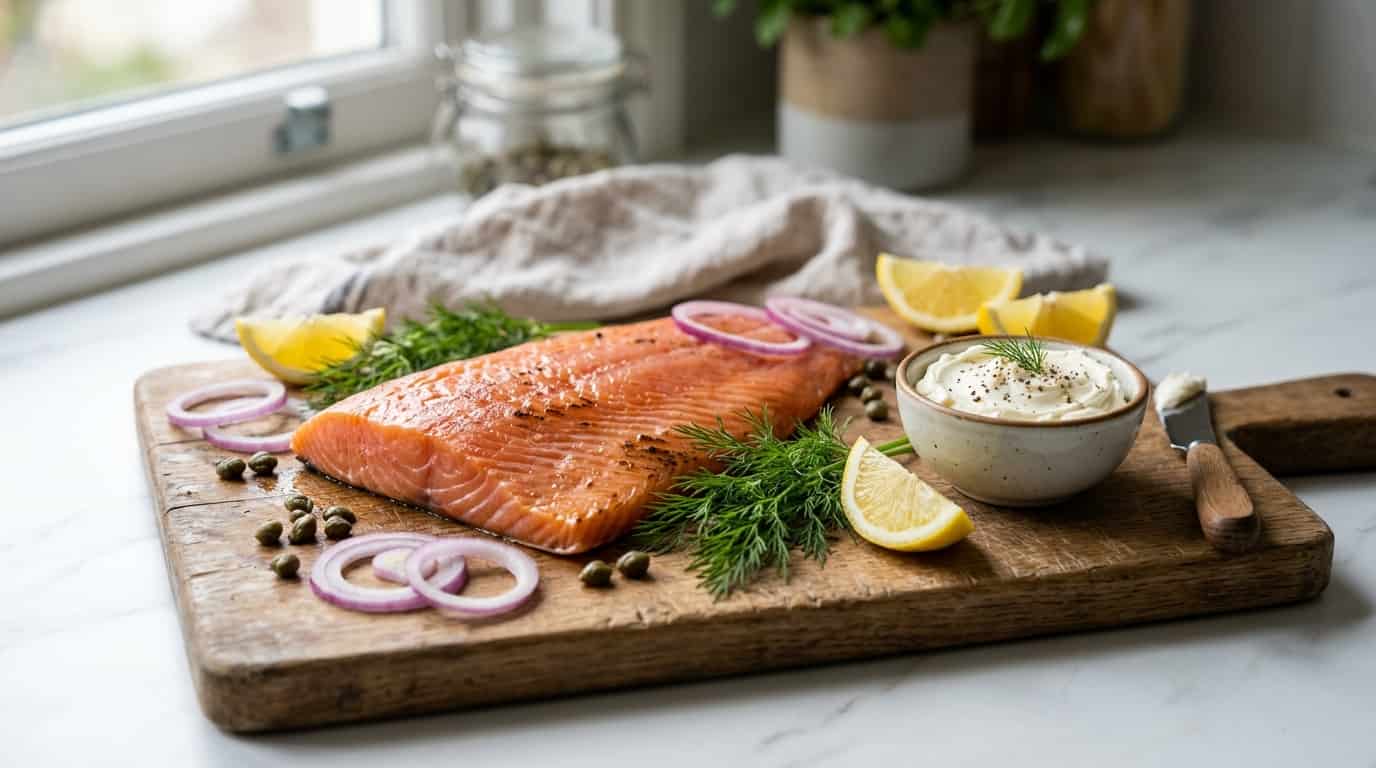
A good smoked salmon recipe turns a simple salmon fillet into something that works for nearly any occasion. It can be served on bagels for brunch, added to salads and grain bowls, layered into sandwiches, tossed with pasta, or arranged on a holiday appetizer board.
Smoked salmon remains popular in American kitchens because it offers rich flavor without requiring complicated ingredients. With a few basic steps—brining, drying, smoking, and resting—you can create salmon with a balanced smoky taste and a moist texture.
If you enjoy seafood cooking, you might also explore a cajun seafood boil recipe for another crowd-pleasing meal. In this guide, you’ll learn how to select quality salmon, season it properly, smoke it at the right temperature, serve it in different ways, store leftovers safely, and avoid common mistakes that can affect texture and flavor.
Table of Contents
Quick Answer
A smoked salmon recipe typically begins with a quality salmon fillet, a simple salt-and-sugar brine, and enough resting time for the fish to absorb seasoning. After brining, the salmon is dried until it develops a slightly tacky surface called a pellicle, which helps smoke adhere more effectively. The fish is then smoked at a controlled temperature until it reaches the desired internal temperature.
There are two main styles of smoked salmon. Hot-smoked salmon is cooked through and flakes easily, making it suitable for salads, sandwiches, pasta, and main dishes. Cold-smoked salmon has a silky texture and is smoked at much lower temperatures under carefully controlled conditions. For most home cooks, hot smoking is the safer and more practical method.
What Is Smoked Salmon?
Smoked salmon is salmon that has been seasoned and exposed to wood smoke to add flavor and improve texture.
Hot-Smoked Salmon
Hot-smoked salmon is cooked while it smokes. The smoker temperature is typically high enough to fully cook the fish, resulting in a flaky texture.
Cold-Smoked Salmon
Cold-smoked salmon is smoked at much lower temperatures and is not fully cooked during the smoking process. It has a softer, more delicate texture commonly served on bagels and canapés.
For this article, the focus is on hot-smoked salmon because it is easier to prepare at home and requires less specialized temperature control.
Why This Recipe Works
Several practical techniques contribute to better smoked salmon:
- Brining seasons the fish throughout and improves texture.
- Air-drying creates a pellicle that helps smoke cling to the surface.
- Low, steady heat helps prevent moisture loss.
- Mild wood smoke complements salmon instead of masking it.
- Resting after smoking allows the texture to settle before serving.
These simple steps create salmon that remains moist while developing a balanced smoky flavor.
Ingredients You’ll Need
Salmon
The best choice is a center-cut, skin-on salmon fillet.
Consider the following:
- Even thickness promotes consistent cooking.
- Skin helps protect the fish from direct heat.
- Wild-caught and farm-raised salmon can both work well.
- Fresh salmon should smell clean and mild rather than strongly fishy.
Salt and Sugar
This recipe uses:
- Kosher salt
- Brown sugar
Salt seasons the fish and helps remove excess moisture during brining. Sugar balances the saltiness and encourages attractive color development.
Seasonings
Simple seasonings are often all that’s needed:
- Black pepper
- Garlic powder
- Onion powder
- Paprika
- Dill
- Lemon zest
The salmon and smoke should remain the primary flavors.
Wood Chips or Pellets
Good options include:
- Alder
- Apple
- Cherry
- Maple
These woods provide mild smoke that pairs naturally with salmon. Stronger woods can dominate the flavor.
Equipment Needed
You’ll need:
- Smoker or pellet grill
- Sheet pan
- Wire rack
- Paper towels
- Instant-read thermometer
- Small bowl for seasoning
- Plastic wrap or covered container
- Cutting board
- Sharp knife
Temperature control matters more than expensive equipment.
Smoked Salmon Ingredients List
- 2 pounds salmon fillet, skin-on
- 1/4 cup kosher salt
- 1/4 cup brown sugar
- 1 teaspoon black pepper
- 1 teaspoon garlic powder
- 1/2 teaspoon paprika
- 1 teaspoon lemon zest (optional)
- Fresh dill (optional)
- Alder, apple, cherry, or maple wood chips or pellets
How to Make Smoked Salmon Recipe
Step 1: Choose and trim the salmon
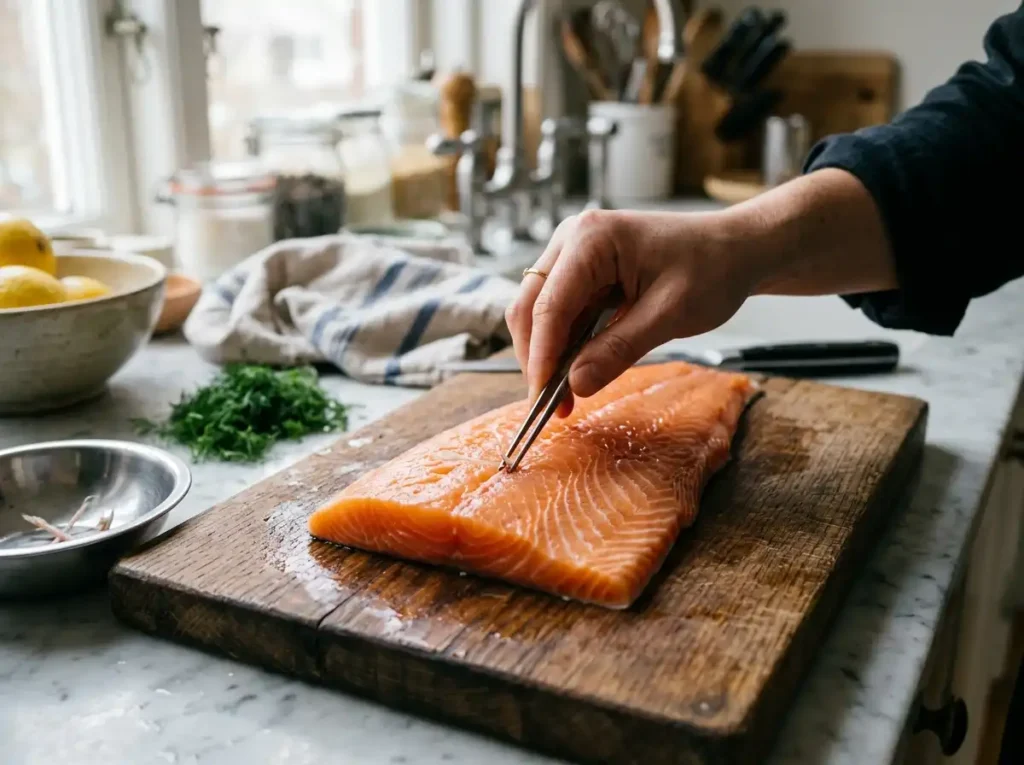
Select a fresh salmon fillet with fairly even thickness. Remove any pin bones using fish tweezers or clean kitchen pliers. Pat the fish dry with paper towels.
Step 2: Prepare the dry brine
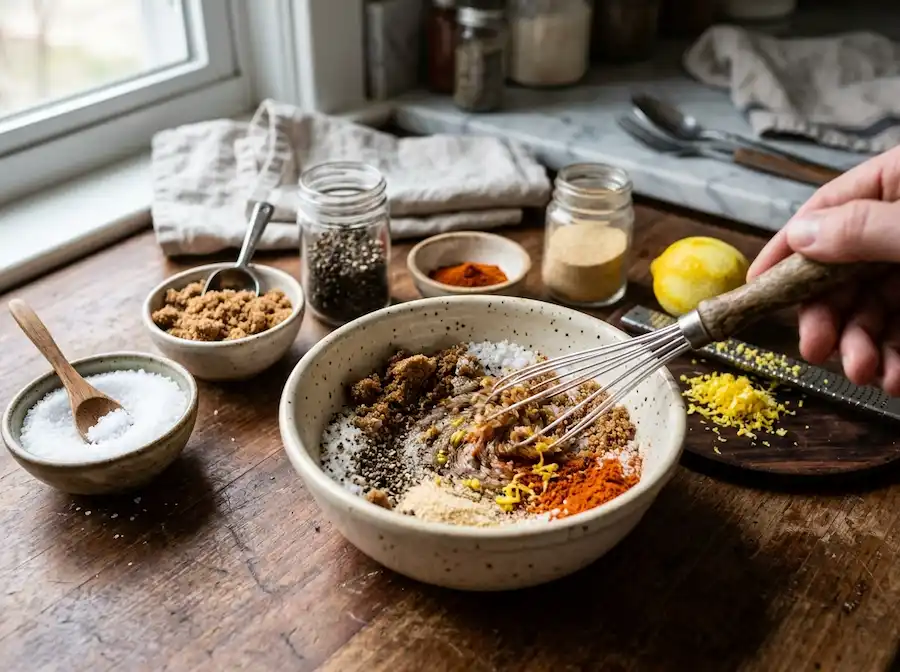
Combine the kosher salt, brown sugar, black pepper, garlic powder, paprika, and lemon zest if using.
The salt-to-sugar balance provides seasoning without making the salmon excessively salty.
Step 3: Brine the salmon
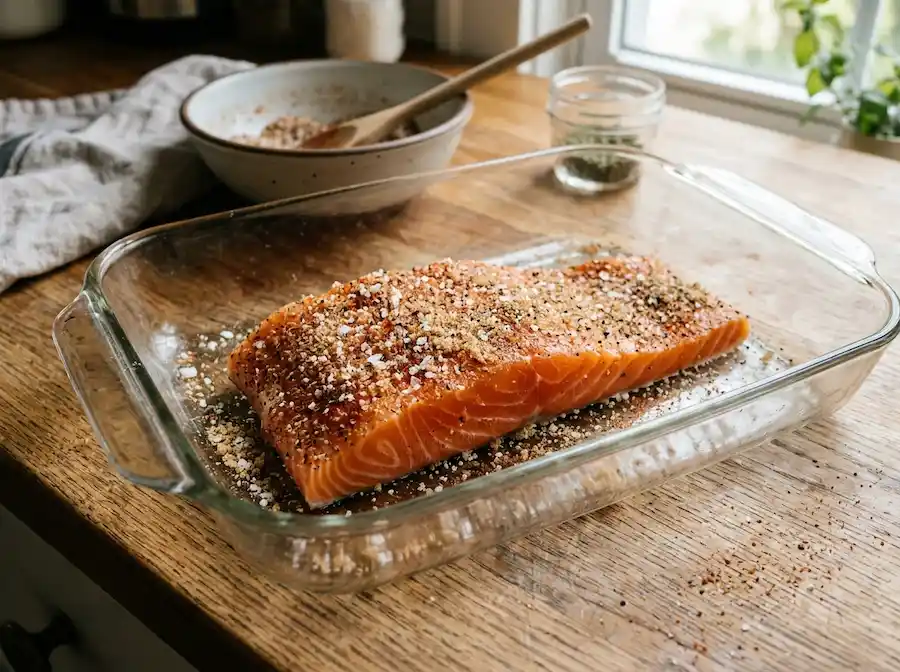
Coat the salmon evenly with the dry mixture.
Place it in a covered container or wrap loosely and refrigerate for 4–8 hours. Thin fillets require less time than thick center-cut portions.
Step 4: Rinse and dry
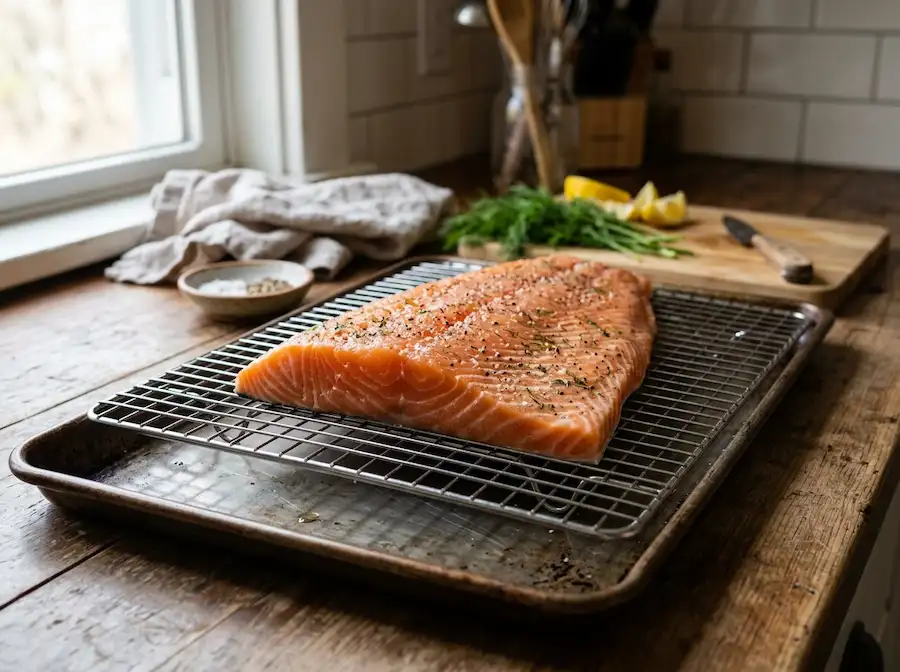
Lightly rinse away excess brine if desired.
Pat the salmon thoroughly dry and place it on a wire rack over a sheet pan.
Step 5: Form the pellicle
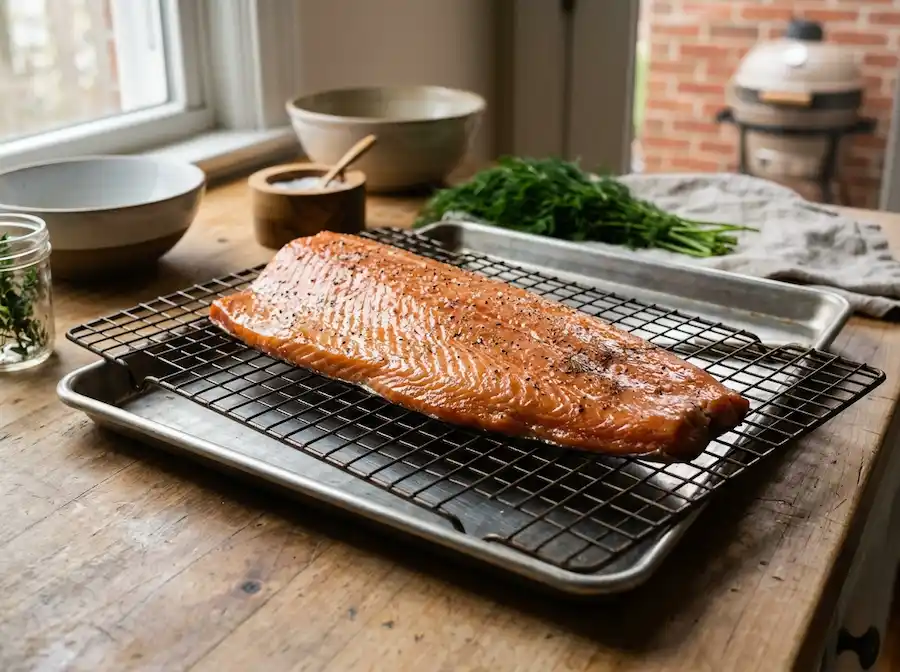
Leave the salmon uncovered in the refrigerator for 1–2 hours.
The surface should feel slightly tacky rather than wet. This pellicle helps attract and hold smoke during cooking.
Step 6: Prepare the smoker
Preheat the smoker to approximately 180°F–200°F.
Add alder, apple, cherry, or maple wood. Moderate smoke production is generally better than excessive smoke.
Step 7: Smoke the salmon
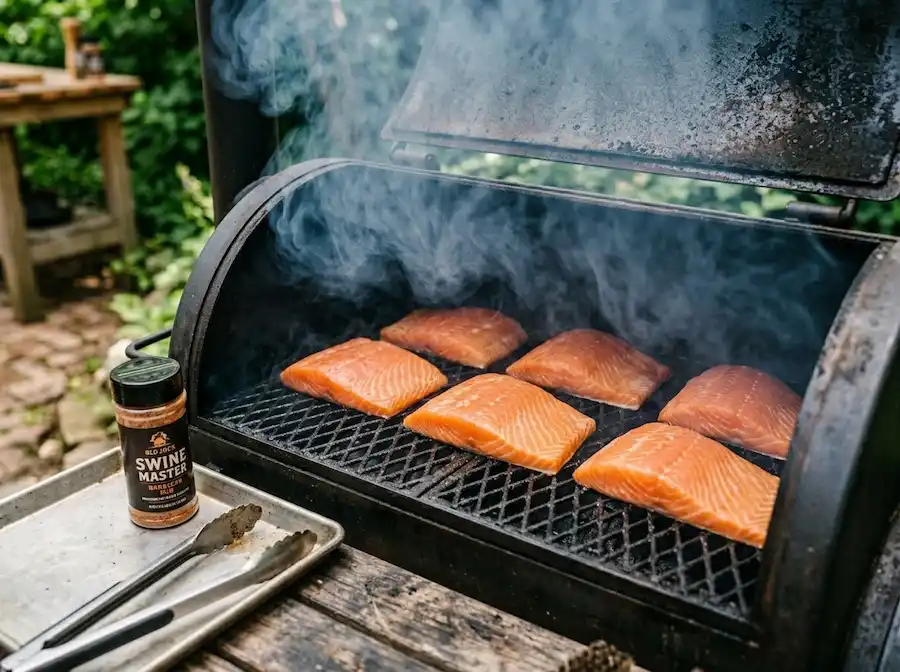
Place the salmon skin-side down on the smoker grate.
Smoke until the internal temperature reaches approximately 135°F–145°F, depending on your preferred texture and food-safety goals. Thin sections will finish sooner than thicker portions.
If you enjoy exploring different salmon flavor profiles, an asian salmon recipe can be another excellent option for weeknight meals.
Step 8: Rest and serve
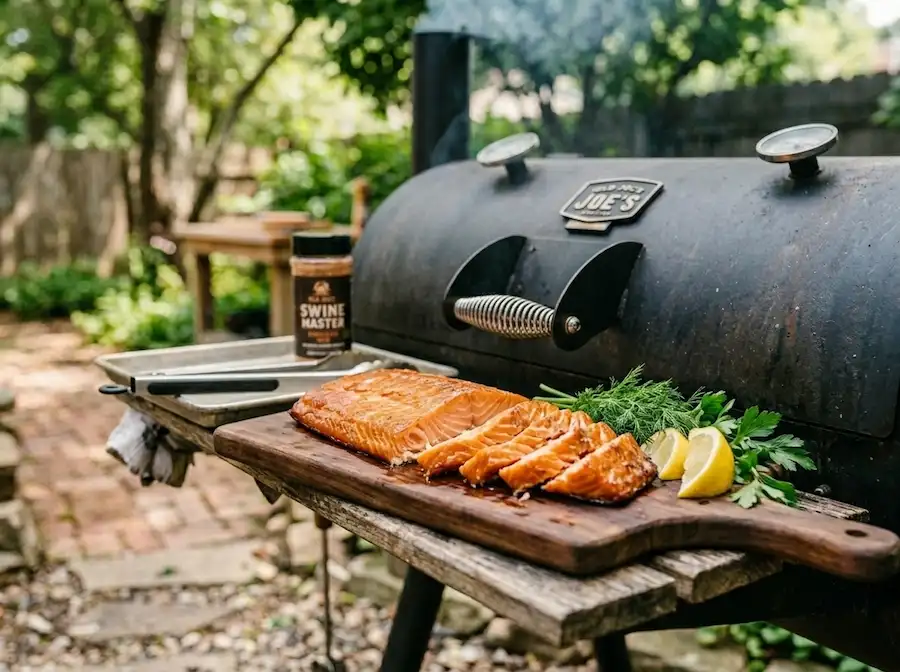
Allow the salmon to rest for 10–15 minutes.
Serve warm, chilled, or at room temperature depending on the dish you’re preparing.
Smoking Time and Temperature Table
| Smoker Temperature | Approximate Smoking Time | Texture Result |
|---|---|---|
| 160°F–175°F | 2.5–4 hours | Softer, more delicate |
| 180°F–200°F | 1.5–3 hours | Moist and flaky |
| 225°F | 1–2 hours | Firmer and faster-cooked |
Timing varies based on salmon thickness, weather conditions, smoker design, and the starting temperature of the fish.
How to Serve Smoked Salmon
Smoked salmon works in many dishes:
- Bagels with cream cheese, capers, and red onion
- Crackers or crostini
- Breakfast plates with eggs
- Green salads
- Pasta dishes
- Rice bowls
- Sandwiches
- Charcuterie boards
- Brunch platters
It can function as an appetizer, lunch, or full dinner depending on portion size.
How Much Smoked Salmon to Serve Per Person
Use these practical serving guidelines:
| Occasion | Amount Per Person |
|---|---|
| Appetizers | 2–3 ounces |
| Brunch boards | 3–4 ounces |
| Main meal | 5–6 ounces |
Adding bread, potatoes, vegetables, eggs, or salad can help round out the meal.
Recipe Variations and Substitutions
Try these variations:
- Maple smoked salmon
- Lemon dill smoked salmon
- Spicy smoked salmon
- Brown sugar pepper smoked salmon
- Garlic herb smoked salmon
- Honey glazed smoked salmon
When using glazes, apply them near the end of cooking. Adding sugary glazes too early may cause scorching or an overly sticky surface.
Recipe Notes
Keep these practical points in mind:
- Do not skip the drying step after brining.
- Use mild woods whenever possible.
- Avoid excessive salt on thin fillets.
- Check temperature with a thermometer.
- Rest the salmon before serving.
- Refrigerate leftovers promptly.
- Thaw frozen salmon safely in the refrigerator before use.
Expert Tips for Better Results
Use skin-on salmon
The skin acts as a protective barrier against heat and makes handling easier.
Keep the temperature low and steady
Large temperature swings can dry out the fish and create uneven cooking.
Do not over-smoke
Salmon absorbs smoke efficiently. Excessive smoke can overwhelm its natural flavor.
Let the pellicle form
A proper pellicle helps create better color and more even smoke coverage.
Watch thin edges
The thin tail section often cooks faster than the center. Monitor it carefully.
Rest before serving
A short rest improves slicing and helps the fish retain moisture.
Common Mistakes to Avoid
Skipping the brine
The salmon may taste less seasoned and can dry out more easily.
Brining too long
Excessive brining can make the fish overly salty and firm.
Using strong wood
Heavy smoke flavors may overpower the salmon.
Smoking at too high a temperature
The fish can become dry, chalky, and less appealing.
Not checking internal temperature
Visual cues alone are not always reliable.
Slicing immediately
Resting improves texture and creates cleaner slices.
Storage and Reheating
To maintain quality and safety:
- Store smoked salmon in an airtight container.
- Refrigerate for up to 3–4 days.
- Do not leave it at room temperature for more than about 2 hours.
- Freeze for longer storage if needed.
- Thaw frozen portions in the refrigerator.
- Reheat gently when serving warm.
- Avoid prolonged microwave reheating, which can dry out the fish.
Nutrition Notes
Smoked salmon can be part of a balanced diet.
General considerations include:
- It provides high-quality protein.
- It contains beneficial omega-3 fats.
- Sodium levels are often higher because of the brining process.
- The sugar used in the brine contributes some sweetness, though much of the excess is removed before smoking.
- Nutrition varies depending on salmon variety, serving size, and seasonings used.
Comparison Section: Hot-Smoked vs. Cold-Smoked Salmon
| Type | Texture | Method | Best Uses | Home Cooking Notes |
|---|---|---|---|---|
| Hot-smoked salmon | Flaky and cooked through | Smoked with heat | Salads, bowls, pasta, main dishes | Easier for home cooks |
| Cold-smoked salmon | Silky and delicate | Smoked at low temperatures without fully cooking | Bagels, canapés, brunch boards | Requires stricter temperature control |
This recipe focuses on hot-smoked salmon because it is more practical and accessible for most home kitchens.
Best Practices
For consistent results:
- Buy fresh, quality salmon.
- Keep fish refrigerated until ready to use.
- Measure salt carefully.
- Dry the salmon thoroughly after brining.
- Choose mild smoking woods.
- Monitor internal temperature closely.
- Allow a short resting period.
- Store leftovers safely.
Advanced Insights
Understanding the pellicle
A pellicle is a slightly tacky protein layer that develops on the fish surface during drying. It helps smoke adhere more effectively and encourages even color.
Thickness matters more than weight
A thick two-pound fillet may require more cooking time than a thinner fillet of similar weight. Always evaluate thickness rather than relying solely on weight.
Sugar balances salt
Sugar does not make the salmon taste sugary. Instead, it softens the perception of salt and helps create a balanced finished product.
Why mild smoke works best
Salmon has a naturally rich flavor. Mild woods enhance rather than dominate that flavor.
Carryover cooking
Even after removal from the smoker, residual heat continues cooking the fish briefly. Removing salmon slightly before the highest desired temperature can help preserve moisture.
Reducing albumin
Albumin is the white protein that sometimes appears on cooked salmon. Lower cooking temperatures and gentle handling can help reduce it.
Scaling the recipe
For larger fillets, maintain the same ratio of salt and sugar rather than simply estimating. Consistent proportions help maintain predictable results.
When to glaze
Use a glaze near the end of smoking if you want sweetness or shine. Skip the glaze when you prefer a cleaner smoke-forward profile.
Using leftovers creatively
Leftover smoked salmon works well in salads, pasta, grain bowls, and sandwiches. It can also be incorporated into an old fashioned salmon patties recipe for an economical second meal.
Frequently Asked Questions
1. What is the best salmon for smoking?
Center-cut, skin-on fillets are often the easiest to smoke evenly. Fresh fish with consistent thickness generally produces the best results.
2. Is this smoked salmon recipe hot-smoked or cold-smoked?
This recipe is designed for hot-smoked salmon, which is fully cooked during smoking.
3. How long should salmon be brined before smoking?
Most fillets benefit from 4–8 hours of dry brining. Thinner pieces require less time.
4. What temperature should smoked salmon reach?
Many cooks target an internal temperature between 135°F and 145°F depending on preferred texture and food-safety considerations.
5. What wood is best for smoking salmon?
Alder is a classic choice. Apple, cherry, and maple also work well.
6. Can I use frozen salmon?
Yes. Thaw it completely in the refrigerator before brining and smoking.
7. How do I keep smoked salmon moist?
Use a proper brine, avoid excessive heat, monitor internal temperature, and do not overcook.
8. How long does smoked salmon last in the refrigerator?
When stored properly in an airtight container, it typically lasts 3–4 days.
9. Can I freeze smoked salmon?
Yes. Freeze it in well-sealed packaging and thaw in the refrigerator before use.
10. What can I serve with smoked salmon?
Popular choices include bagels, cream cheese, eggs, salads, potatoes, crackers, rice bowls, vegetables, and pasta.
Conclusion
Making a great smoked salmon recipe starts with quality fish and a straightforward process. A balanced dry brine seasons the salmon, proper drying creates a pellicle that attracts smoke, and steady temperatures help preserve moisture. Mild wood choices support the flavor of the fish without overwhelming it.
Avoid over-brining, over-smoking, and overcooking. Monitor the internal temperature, allow the salmon to rest before serving, and store leftovers properly. With these techniques, you’ll have a versatile smoked salmon that works equally well for brunch spreads, appetizers, salads, and family meals.