
Meta Description:
Make this cajun seafood boil recipe with shrimp, crab legs, sausage, corn, potatoes, and garlic butter sauce for a crowd-pleasing meal.
Recipe Snapshot
| Detail | Value |
|---|---|
| Prep Time | 20 minutes |
| Cook Time | 35 minutes |
| Total Time | 55 minutes |
| Servings | 6–8 |
| Course | Main Dish |
| Cuisine | Cajun-Inspired / American Southern |
| Main Method | Boiling |
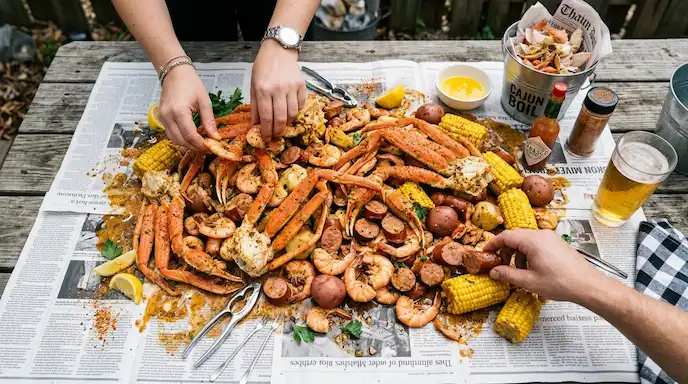
A cajun seafood boil recipe is one of those meals that turns dinner into an event. Instead of serving separate dishes, everything comes together in one large pot: shrimp, crab legs, sausage, corn, potatoes, garlic, lemon, and plenty of seasoning. Once cooked, it’s often spread across a large tray or paper-covered table for easy serving and sharing.
This style of seafood meal has become especially popular across the United States for family dinners, summer cookouts, game-day gatherings, and backyard parties because it feeds a crowd and creates a relaxed, communal dining experience.
If you enjoy seafood-focused meals, you might also like a smoked salmon recipe for another flavorful option to add to your meal rotation.
In this guide, you’ll learn exactly how to make a Cajun seafood boil at home, including ingredient selection, cooking order, seasoning techniques, garlic butter sauce preparation, serving ideas, storage tips, common mistakes to avoid, and answers to frequently asked questions.
Quick Answer
A Cajun seafood boil is made by cooking potatoes, corn, sausage, seafood, aromatics, and seasonings in a heavily seasoned broth. The cooking order matters because different ingredients require different amounts of time.
Potatoes go into the pot first because they take the longest to cook. Sausage follows to add smoky flavor to the broth, then corn is added to absorb the seasoned liquid. Crab legs are typically already cooked and only need a few minutes to heat through. Shrimp should always be added last because they cook quickly and can become tough if overcooked.
After draining, everything is usually tossed or served with a warm Cajun garlic butter sauce for extra richness and flavor.
What Is a Cajun Seafood Boil?
A Cajun seafood boil is a Louisiana-inspired meal that combines seafood, sausage, vegetables, lemon, garlic, and bold seasonings in a large pot of boiling water.
While seafood boils exist in several regional forms throughout the United States, the Cajun-inspired version is known for its robust seasoning profile. Cajun seasoning, garlic, paprika, cayenne, lemon, and other spices create a broth that flavors every ingredient as it cooks.
A basic seafood boil may rely primarily on salted water and seafood, while a Cajun-style boil emphasizes layered seasoning and often includes a garlic butter sauce served after cooking.
Why This Recipe Works
The success of this recipe comes down to timing.
- Potatoes need the longest cooking time.
- Sausage releases smoky flavor into the broth.
- Corn absorbs seasoned liquid very effectively.
- Crab legs are usually pre-cooked and only need reheating.
- Shrimp cook rapidly and should be added near the end.
- Garlic butter sauce adds richness after draining.
Following the correct sequence ensures every ingredient reaches the ideal texture without becoming overcooked.
If you’re looking for another seafood favorite that highlights shrimp in a different way, a bang bang shrimp recipe makes a great appetizer before the main meal.
Ingredients You’ll Need
Seafood
The seafood is the centerpiece of this recipe.
Large shell-on shrimp
- Hold their texture well during boiling
- Add flavor to the broth
- Easier to avoid overcooking
Snow crab legs
- Mild, sweet flavor
- Widely available
- Usually sold pre-cooked
Crawfish (optional)
- Popular in Southern seafood boils
- Seasonal availability varies
Optional additions
- Lobster tails
- Clams
- Mussels
Fresh seafood is ideal when available, but quality frozen seafood works very well. If using frozen seafood, thaw it completely in the refrigerator before cooking.
Sausage
Smoked sausage contributes depth and richness to the broth.
Smoked sausage
- Mild smoky flavor
- Family-friendly option
Andouille sausage
- Traditional Cajun influence
- More spice and smoke
- Stronger flavor profile
Vegetables and Aromatics
These ingredients add substance and flavor.
- Corn on the cob
- Baby potatoes or red potatoes
- Onion
- Garlic
- Lemon
The potatoes and corn help absorb the seasoned cooking liquid, creating a balanced meal.
Seasonings
You’ll need:
- Cajun seasoning
- Old Bay seasoning
- Paprika
- Cayenne pepper
- Bay leaves
- Salt
Many store-bought Cajun seasonings already contain salt. Taste the broth before adding extra salt.
Cajun Garlic Butter Sauce
The finishing sauce includes:
- Unsalted butter
- Garlic
- Cajun seasoning
- Lemon juice
Using unsalted butter provides better control over the final seasoning level.
Kitchen Equipment
You’ll need:
- Large stockpot – Essential for boiling all ingredients.
- Strainer basket or large colander – Makes draining easier.
- Tongs – Useful for handling seafood safely.
- Long-handled spoon – For stirring hot broth.
- Large tray, sheet pan, or paper-lined table – Traditional serving method.
- Small saucepan – For garlic butter sauce.
A 30-quart pot is helpful for large gatherings, but smaller batches can be cooked successfully in a standard stockpot.
Cajun Seafood Boil Ingredients List
For the seafood boil
- 2 pounds large shrimp, shell-on
- 2 pounds snow crab legs
- 1 pound crawfish, optional
- 1 pound smoked sausage or andouille sausage, sliced
- 6 ears corn, halved
- 1½ pounds baby potatoes
- 1 large onion, quartered
- 1 whole garlic bulb, halved
- 2 lemons, sliced
- ½ cup Cajun seasoning
- 2 tablespoons Old Bay seasoning
- 2 teaspoons paprika
- 1 teaspoon cayenne pepper, optional
- 4 bay leaves
- Salt, to taste
For the Cajun garlic butter sauce
- 1 cup unsalted butter
- 4 garlic cloves, minced
- 1 tablespoon Cajun seasoning
- 1 teaspoon lemon juice
How to Make Cajun Seafood Boil Recipe
Step 1: Prepare the seasoned broth
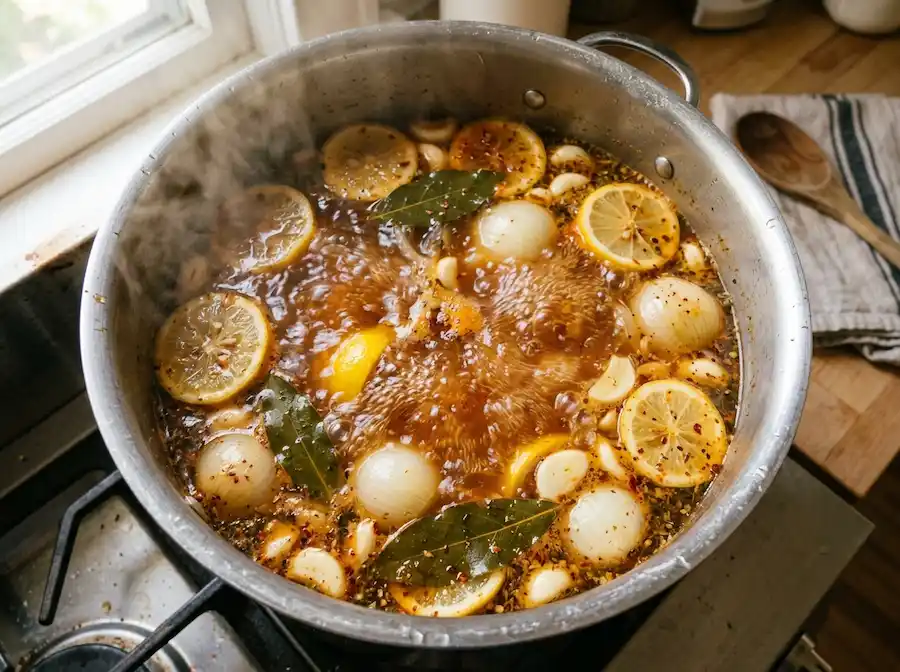
Fill a large pot about two-thirds full with water.
Add:
- Onion
- Garlic
- Lemon slices
- Bay leaves
- Cajun seasoning
- Old Bay seasoning
- Paprika
- Cayenne, if using
Bring everything to a rolling boil.
Taste the broth carefully once seasoned. It should taste bold because it must flavor potatoes, corn, sausage, and seafood.
Step 2: Cook the potatoes first
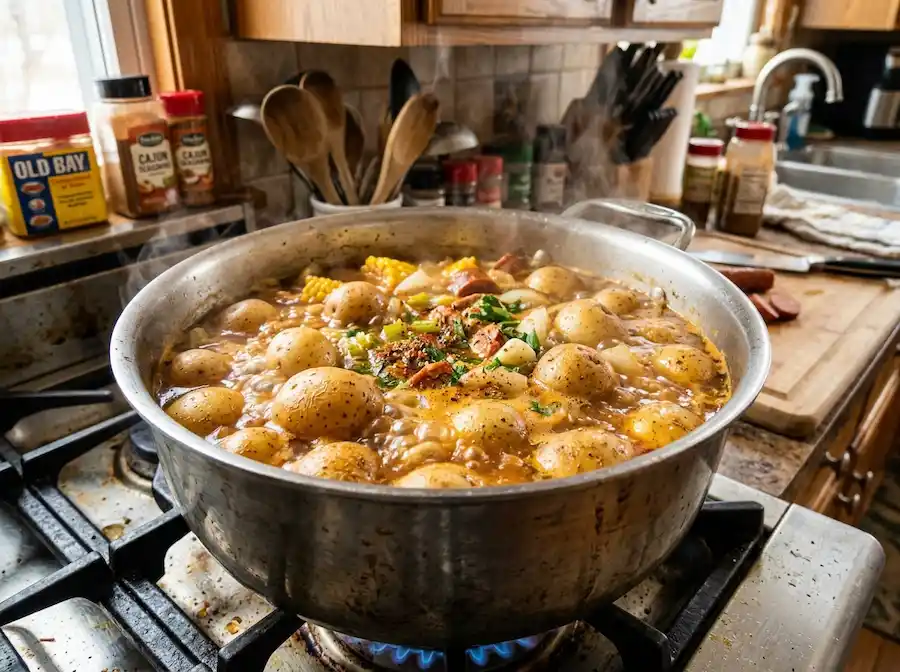
Add the baby potatoes.
Cook for 12–15 minutes.
The potatoes should become nearly fork-tender while still holding their shape.
Step 3: Add the sausage
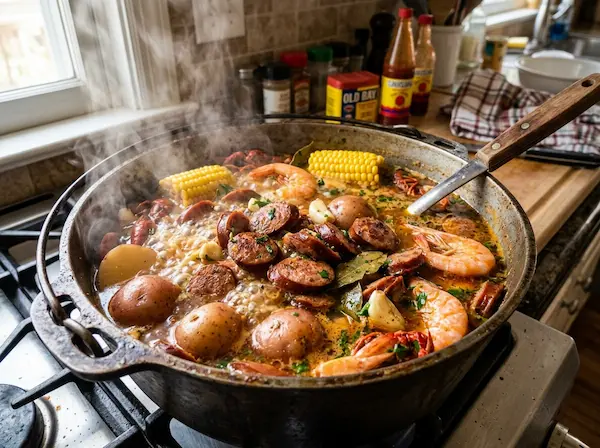
Add the sliced sausage.
Cook for about 5 minutes.
As the sausage cooks, some of its smoky flavor releases into the broth, helping season the remaining ingredients.
Step 4: Add the corn
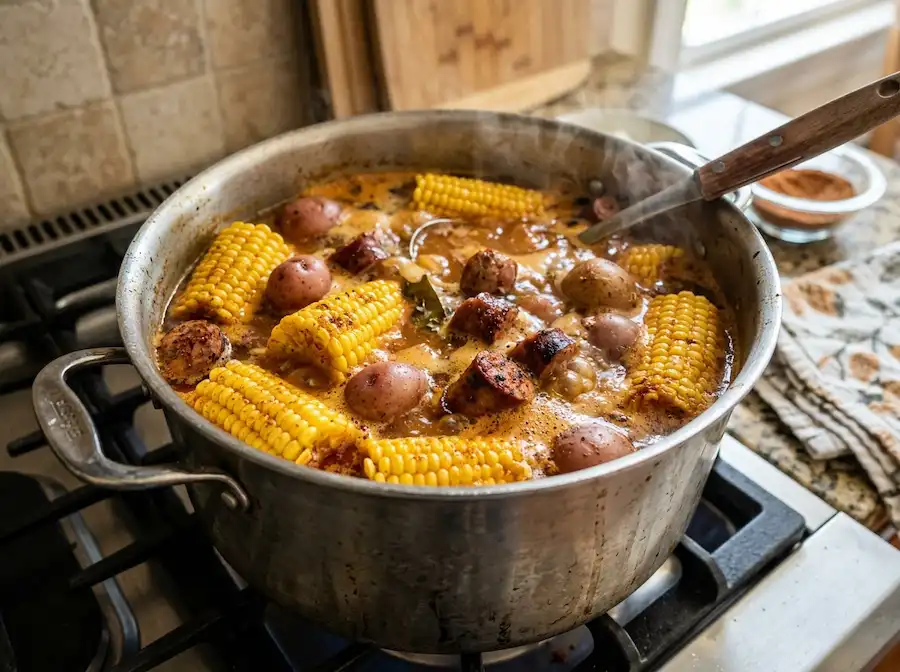
Add the corn halves.
Cook for about 5 minutes.
This allows the corn to absorb the seasoned liquid while remaining tender.
Step 5: Add the crab legs
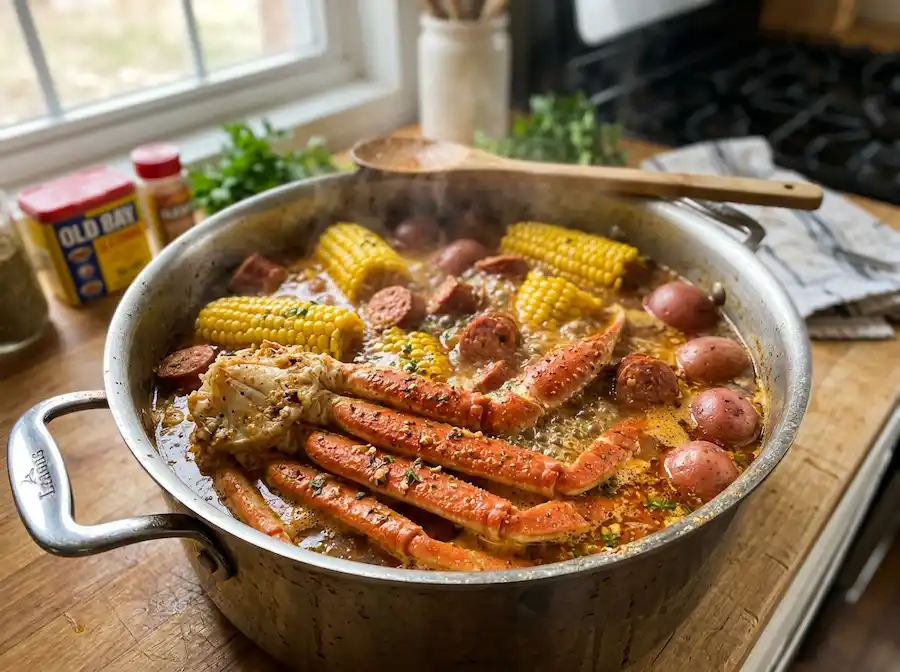
Add the snow crab legs.
Cook for approximately 5 minutes.
Most crab legs sold in U.S. grocery stores have already been cooked, so the objective is simply to heat them thoroughly.
Step 6: Add the shrimp last
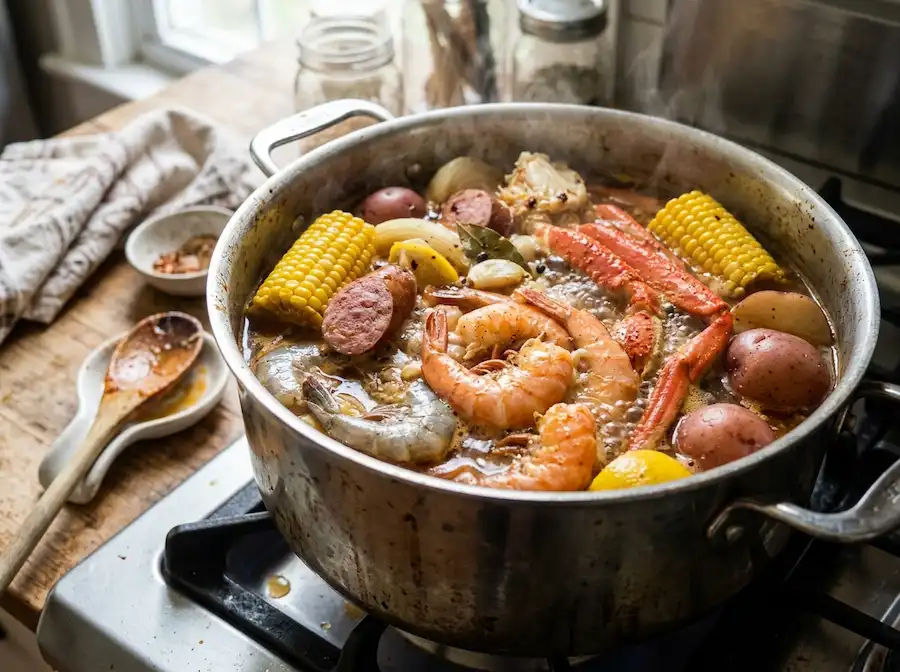
Add the shrimp during the final 2–3 minutes.
Cook just until pink and opaque.
Avoid extending the cooking time because shrimp can quickly become firm and rubbery.
Step 7: Drain and serve
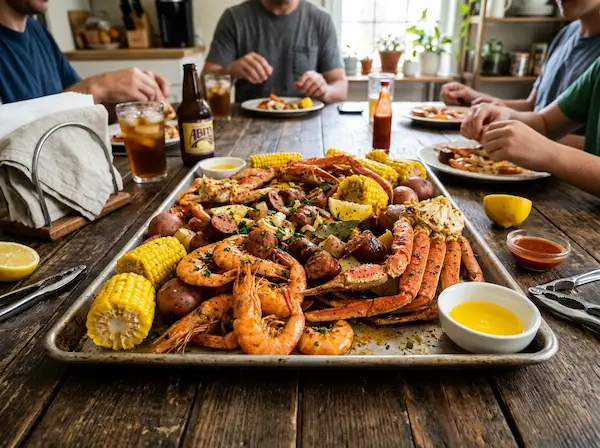
Carefully drain the pot using a colander or strainer basket.
Because the pot and liquid are very heavy, use caution when moving and draining.
Transfer the seafood boil to:
- A large tray
- Sheet pans
- A paper-covered table
Step 8: Make the Cajun garlic butter sauce
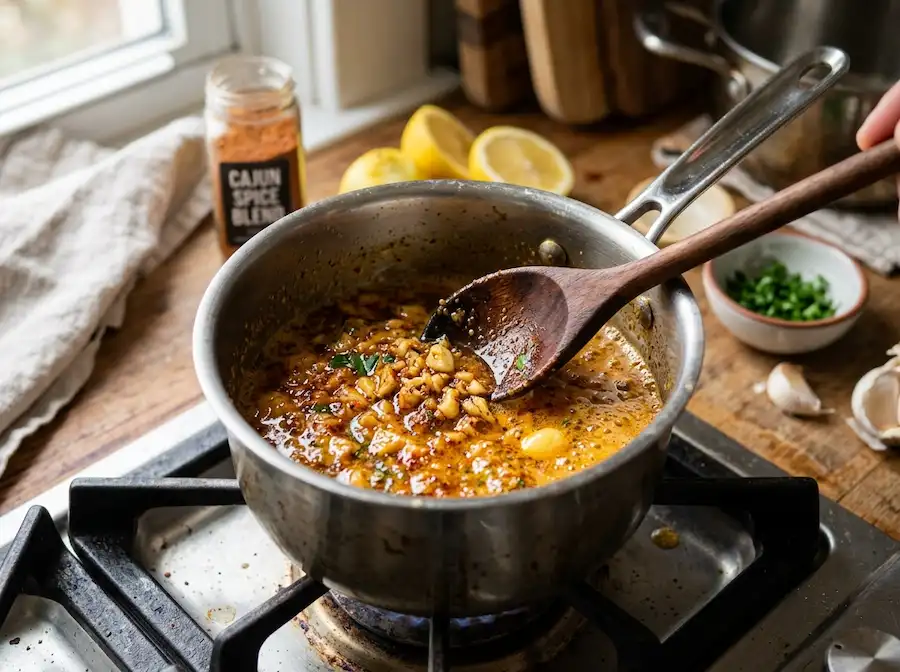
Melt butter in a saucepan over medium-low heat.
Add minced garlic and cook until fragrant.
Stir in:
- Cajun seasoning
- Lemon juice
Simmer briefly, then drizzle over the seafood boil or serve alongside for dipping.
Cooking Time Table
| Ingredient | When to Add | Approximate Cooking Time |
|---|---|---|
| Potatoes | First | 12–15 minutes |
| Sausage | After potatoes soften slightly | 5 minutes |
| Corn | After sausage | 5 minutes |
| Crab legs | Near the end | 5 minutes |
| Shrimp | Last | 2–3 minutes |
The cooking order matters because each ingredient reaches its best texture at a different rate. Adding everything at once can leave potatoes undercooked while causing shrimp to overcook.
How Much Seafood Boil to Serve Per Person
For a main meal:
- Plan on about ½ to 1 pound of seafood per person.
- Include potatoes, corn, and sausage for a more substantial serving.
For seafood-focused gatherings:
- Plan closer to 1 pound of seafood per person.
For lighter meals with multiple side dishes:
- About ½ pound per person is often sufficient.
What to Serve With Cajun Seafood Boil
Good side dishes include:
- Garlic bread
- Coleslaw
- Cornbread
- Hush puppies
- Green salad
- Lemon wedges
- Extra garlic butter sauce
Popular drink options include:
- Iced tea
- Lemonade
- Sparkling water with citrus
- Light beer, if desired
For additional seafood dinner inspiration throughout the year, a black cod recipe can provide a different style of seafood meal with a rich, buttery texture.
Recipe Variations and Substitutions
You can customize this recipe in several ways.
- Use king crab instead of snow crab.
- Substitute andouille sausage for extra heat.
- Add lobster tails for a more premium version.
- Include clams or mussels.
- Use red potatoes instead of baby potatoes.
- Reduce cayenne for a milder flavor.
- Choose low-sodium seasoning blends if needed.
Keep in mind that substitutions may affect cooking time, texture, and overall salt levels.
Recipe Notes
- If your Cajun seasoning contains a lot of salt, wait before adding extra salt.
- Cook in batches if your pot is small.
- Watch shrimp carefully because even an extra minute can affect texture.
- Thaw frozen seafood completely before cooking.
- If using clams or mussels, discard any that remain closed after cooking.
Expert Tips for Better Results
Use shell-on shrimp
Shell-on shrimp tend to stay juicier and contribute additional flavor to the cooking liquid.
Do not add everything at once
Different ingredients require different cooking times. Staggering additions improves texture.
Taste the broth before adding seafood
The broth should be well seasoned before delicate seafood enters the pot.
Be careful with salt
Old Bay and Cajun seasoning often contain significant sodium.
Let the boil rest briefly, but not too long
A short soak of a few minutes can deepen flavor, but leaving shrimp submerged too long may overcook them.
Serve soon after draining
Seafood generally has the best texture shortly after cooking.
Common Mistakes to Avoid
Adding shrimp too early
Shrimp cook rapidly. Adding them with the potatoes almost guarantees overcooking.
Underseasoning the broth
The cooking liquid is where the flavor begins. Taste before adding seafood.
Using a pot that is too small
Crowding ingredients can lead to uneven cooking and difficult stirring.
Forgetting to thaw frozen seafood
Frozen seafood lowers water temperature and can affect timing.
Boiling crab legs too long
Most crab legs are already cooked and only need reheating.
Making the butter sauce too salty
Unsalted butter allows you to season more precisely.
Storage and Reheating
Store leftovers in airtight containers.
- Refrigerate for up to 3 days.
- Reheat gently by steaming.
- Avoid extended microwave reheating.
- Freeze only if necessary because texture may change.
For food safety, cooked seafood should not remain at room temperature for more than about 2 hours.
Nutrition Notes
Nutrition varies depending on serving size and ingredient choices.
Generally:
- Seafood provides protein and minerals.
- Sausage contributes additional fat and sodium.
- Butter sauce increases fat content.
- Seasoning blends may contribute significant sodium.
Exact values depend on seafood type, sausage brand, butter quantity, and seasoning amounts used.
Comparison Section: Seafood Options
| Option | Flavor | Cost | Cooking Notes | Best For |
|---|---|---|---|---|
| Shrimp | Mild and slightly sweet | Moderate | Cooks very quickly | Easy seafood boils |
| Snow crab | Sweet and delicate | Moderate to high | Usually pre-cooked | Classic seafood boil style |
| Crawfish | Earthy and regional | Seasonal | Best when fresh | Louisiana-style meals |
| Lobster tails | Rich and mild | High | Easy to overcook | Special occasions |
| Clams or mussels | Briny | Moderate | Discard unopened shells | Adding variety |
Best Practices
For the smoothest cooking process:
- Prep ingredients before boiling.
- Cut potatoes evenly.
- Cut corn into similar-sized sections.
- Keep seafood refrigerated until needed.
- Use unsalted butter.
- Add shrimp last.
- Use the largest practical pot.
- Serve immediately.
For gatherings, provide:
- Plenty of napkins
- Seafood crackers
- Small discard bowls
Advanced Insights
A successful seafood boil relies on heavily seasoned water because the ingredients spend relatively little time cooking. Strong seasoning in the broth helps flavor penetrate potatoes, corn, and seafood.
Sausage contributes more than protein. As it cooks, it releases smoky, savory notes that enrich the broth.
Shrimp continue cooking slightly after being drained due to carryover heat. That’s why removing them promptly at the opaque stage helps maintain a better texture.
If you want more spice without excess salt, consider adding cayenne or paprika instead of additional Cajun seasoning.
For larger groups:
- Double ingredients proportionally.
- Use a larger stockpot if available.
- Cook in batches when necessary.
Fresh lemon often provides a brighter flavor than bottled lemon juice, especially in the garlic butter sauce.
To keep the butter sauce balanced, gently simmer the garlic rather than browning it, and avoid adding excessive seasoning that can overwhelm the seafood.
Image Placement Suggestions
Consider including original photos in these locations:
- Ingredients arranged before cooking.
- Seasoned broth simmering in the stockpot.
- Potatoes, sausage, and corn being added.
- Crab legs and shrimp added near the end.
- Cajun garlic butter sauce in a serving bowl.
- Finished seafood boil served on a tray or paper-lined table.
Frequently Asked Questions
1. Can I use frozen seafood?
Yes. Thaw seafood completely in the refrigerator before cooking for more consistent results.
2. How long should shrimp cook in a seafood boil?
Most large shrimp need only 2–3 minutes once added to the boiling broth.
3. What is the best Cajun seasoning for seafood boil?
Any reputable Cajun seasoning blend can work. Check the sodium content and adjust salt accordingly.
4. Can I make this recipe less spicy?
Yes. Reduce or omit the cayenne pepper and choose a milder Cajun seasoning blend.
5. Do I need a seafood boil pot?
No. A large stockpot works well for most home kitchens.
6. What kind of sausage works best?
Andouille sausage offers a traditional Cajun-style flavor, while smoked sausage provides a milder option.
7. Can I make this ahead of time?
Seafood boils are best served fresh, but leftovers can be refrigerated and reheated gently.
8. How do I keep seafood from getting rubbery?
Follow the recommended cooking times and add shrimp last.
9. How much seafood do I need per person?
Plan on approximately ½ to 1 pound of seafood per person depending on appetite and side dishes.
10. Can I use crab legs that are already cooked?
Yes. Most crab legs sold in stores are pre-cooked and only need reheating.
Conclusion
This seafood boil succeeds because it follows a straightforward process. Start with a well-seasoned broth, cook the potatoes first, add the remaining ingredients in stages, and save the shrimp for the final few minutes. Heating the crab legs briefly prevents overcooking, while a homemade garlic butter sauce adds richness at serving time.
Remember to adjust spice and salt carefully, especially when using store-bought seasoning blends. Paying attention to timing makes a noticeable difference in texture and flavor.
If you’re looking for another recipe to round out your meal planning, an oyster mushroom recipe can be a great option for a vegetable-focused side or meatless dinner.
For the best results, prepare your ingredients in advance, use the largest pot available, and serve the seafood boil shortly after draining while everything is hot and at its best.