
Meta Description:
Black cod recipe with miso glaze for tender, buttery fish, simple ingredients, and easy broiling or baking at home.
Recipe Snapshot
| Item | Details |
|---|---|
| Prep Time | 10 minutes |
| Marinating Time | 30 minutes to 24 hours |
| Cook Time | 10–12 minutes |
| Total Time | 50 minutes to 24 hours 22 minutes |
| Servings | 4 |
| Course | Main Dish |
| Cuisine | Japanese-inspired / American |
| Main Method | Broiling or baking |
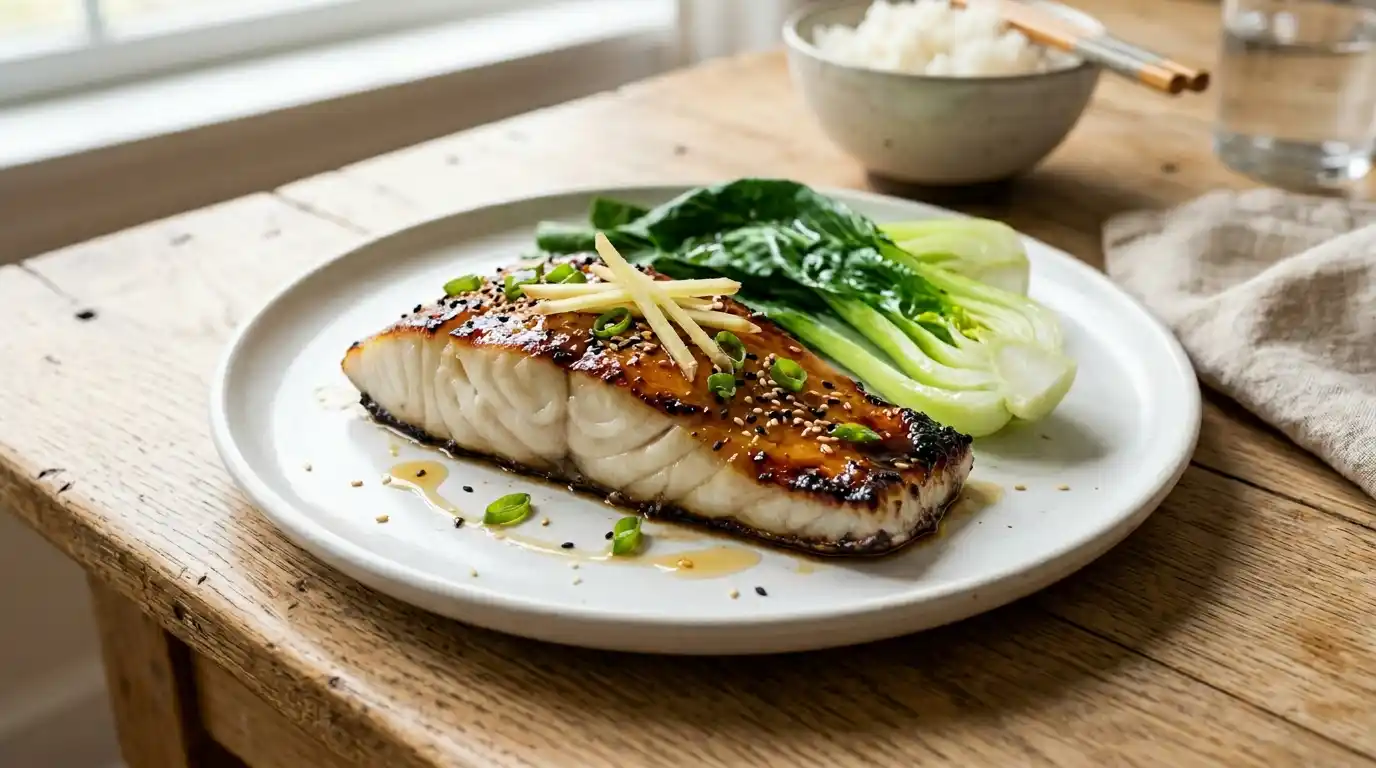
This black cod recipe is a simple way to make a restaurant-style seafood dinner at home. Black cod, also called sablefish, has a rich, buttery texture that works especially well with a miso glaze because the fish stays tender while the surface caramelizes. For U.S. home cooks, that makes it a strong choice for a weeknight seafood dinner, a date-night meal, or a dinner that feels a little more polished without requiring complicated technique.
In this guide, you will learn how to choose black cod, make the miso glaze, marinate it safely, cook it without burning the glaze, serve it with sensible sides, store leftovers, and avoid common mistakes. If you enjoy Japanese-inspired seafood and want another related idea, see the cajun seafood boil recipe for a very different but equally practical seafood dinner.
Table of Contents
Quick Answer
This black cod recipe uses sablefish fillets marinated in a simple miso glaze made with miso paste, mirin, sake or rice vinegar, and a little sugar or honey. Black cod is rich and buttery, so it cooks quickly and stays moist when handled properly. The main thing to watch is heat: miso glaze can burn before the fish is done if the oven or broiler is too aggressive. You can broil, bake, or pan-sear the fish and finish it in the oven, but baking is usually the most forgiving method for home cooks.
What Is Black Cod?
Black cod is the common U.S. market name for sablefish. It is not the same as true cod. True cod is a lean white fish with a mild flavor, while black cod has a much richer texture and a higher fat content. That fat content is what gives black cod its soft, silky feel and helps it stay juicy during cooking.
Because it is naturally rich, black cod takes well to bold seasoning, especially miso-based marinades. The fish can handle higher heat than many leaner fillets, but the glaze needs attention because sugars and miso solids brown fast. That combination is exactly why it is so well suited to broiling, baking, or a careful oven finish after pan-searing.
Why This Recipe Works
This recipe works for a few practical reasons:
- Black cod has enough fat to stay moist during cooking.
- Miso adds savory depth and a mild sweetness that complements the fish.
- A short marinade gives flavor quickly, while a longer marinade develops more seasoning.
- Broiling creates good caramelization, but it needs close watching.
- Baking gives more control and reduces the chance of burning.
- A brief rest after cooking helps the fish finish gently and stay tender.
For readers looking for a Japanese-inspired seafood dinner, this is the same general flavor logic that makes a classic miso cod recipe so appealing: rich fish, balanced salt, gentle sweetness, and careful heat.
Ingredients You’ll Need
Black Cod / Sablefish
Look for fresh or properly thawed frozen black cod fillets. Skin-on or skinless both work. Try to choose fillets with even thickness so they cook at about the same rate. Fresh fish should smell clean, not sharp or sour, and the flesh should feel firm.
Frozen black cod can work very well if it is thawed slowly in the refrigerator. In many U.S. seafood markets, black cod is sold as sablefish, so use either name when shopping.
Miso Paste
White miso is the easiest choice for this recipe. It is mild, lightly sweet, and balanced. Yellow miso brings a little more depth. Red miso is stronger and saltier, so it needs more caution and usually a lighter hand with added salt or soy sauce.
For most home cooks, white miso gives the best mix of flavor and flexibility.
Liquid Ingredients
Mirin adds gentle sweetness and helps the glaze brown. Sake adds flavor and a little complexity. If you do not have sake, rice vinegar can stand in, though it changes the profile by adding more acidity and less sweetness. Soy sauce or tamari is optional, but use it lightly because miso already brings salt.
Sweetener
Sugar, honey, or maple syrup all work. The sweetener helps balance the miso and encourages caramelization. Too much can make the glaze burn, so keep it modest.
Aromatics and Garnishes
Fresh ginger and garlic are optional but helpful if you want a slightly brighter glaze. Green onions and sesame seeds make easy garnishes. Lime or lemon can be served at the table for a sharper finish. Cilantro is optional and less traditional, but it can work if you enjoy that flavor.
Equipment Needed
A few basic tools are enough:
- Baking sheet
- Foil or parchment
- Wire rack, optional
- Small bowl
- Whisk
- Fish spatula
- Instant-read thermometer, optional
- Broiler-safe pan if broiling
Lining the pan helps because miso glaze caramelizes and can stick. A wire rack is optional, but it can help the fish cook more evenly if you are baking.
Black Cod Ingredients List
For the fish
- 4 black cod fillets, about 5–6 ounces each
- 1 tablespoon neutral oil, for the pan if needed
- Sliced green onions, for garnish
- Sesame seeds, for garnish
For the miso glaze
- 1/4 cup white miso paste
- 2 tablespoons mirin
- 1 tablespoon sake or rice vinegar
- 1 tablespoon sugar, honey, or maple syrup
- 1 teaspoon soy sauce or tamari, optional
- 1 teaspoon grated fresh ginger, optional
- 1 small garlic clove, grated, optional
How to Make Black Cod Recipe
Step 1: Thaw and dry the fish
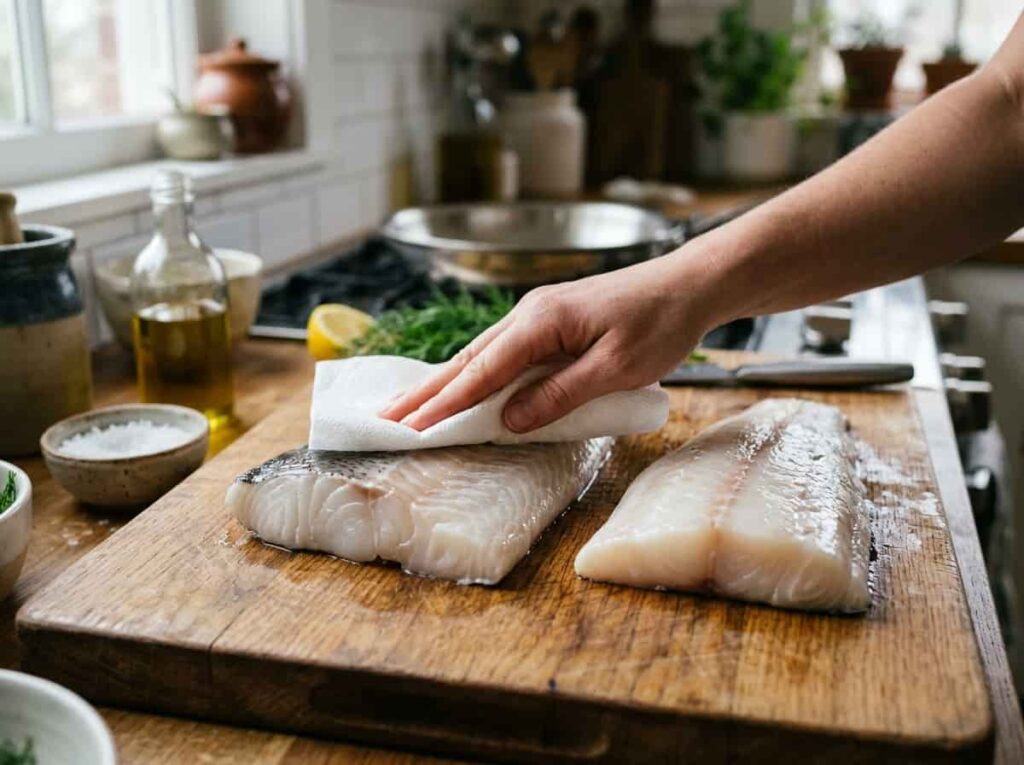
If the fish is frozen, thaw it in the refrigerator overnight. Do not rush it at room temperature. Once thawed, pat the fillets dry with paper towels.
Dry fish holds the glaze better. If the surface is wet, the miso mixture tends to slide off and steam instead of browning properly.
Step 2: Make the miso glaze
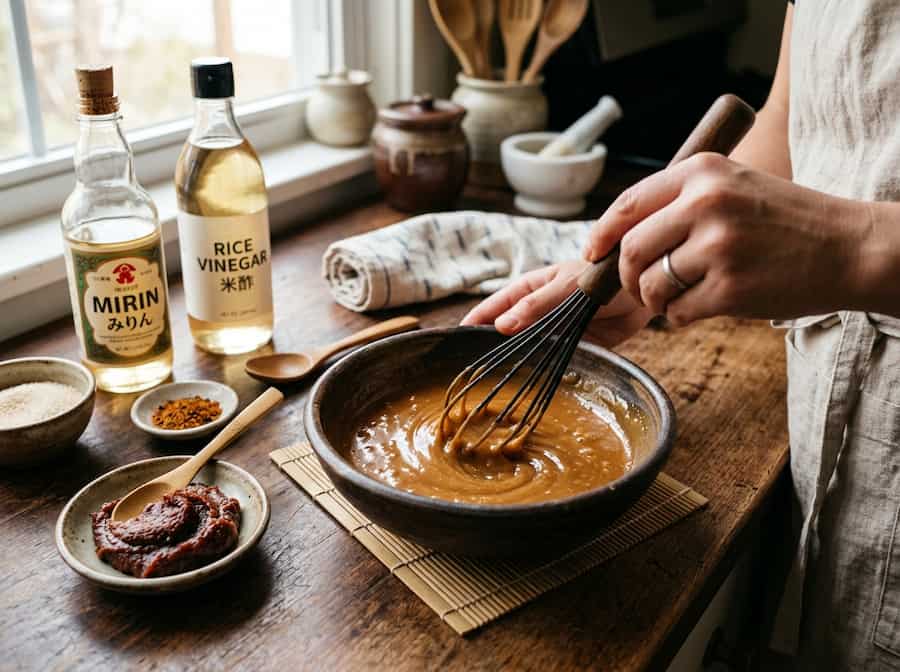
In a small bowl, whisk together the miso paste, mirin, sake or rice vinegar, sweetener, and any optional soy sauce, ginger, or garlic. The finished glaze should be smooth, spreadable, and lightly sweet with a savory edge.
It should not be watery. If it feels too thin, add a little more miso. If it feels too thick to spread, loosen it with a small splash more mirin or sake.
Step 3: Marinate the black cod
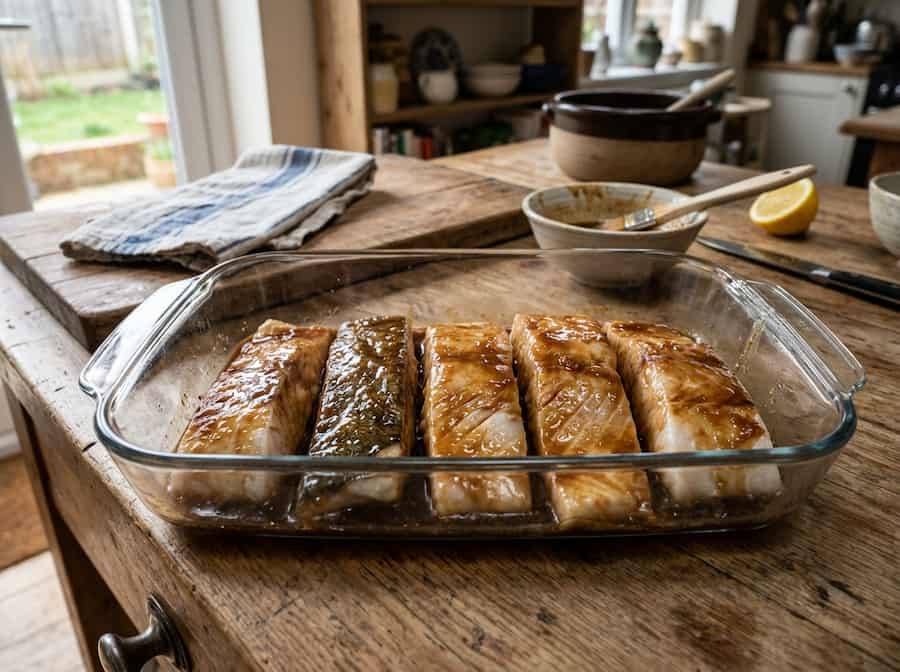
Coat the fish lightly with the miso glaze. Cover and refrigerate for at least 30 minutes and up to 24 hours.
This is the same basic flavor strategy used in a classic miso cod recipe: let the glaze season the fish without drowning it. A short marinade gives surface flavor. A longer marinade gives deeper seasoning, but there is a limit. Very long marinating can make the fish taste overly salty or leave the surface a little firm.
Do not reuse marinade that has touched raw fish unless you cook it thoroughly.
Step 4: Prepare the oven or broiler
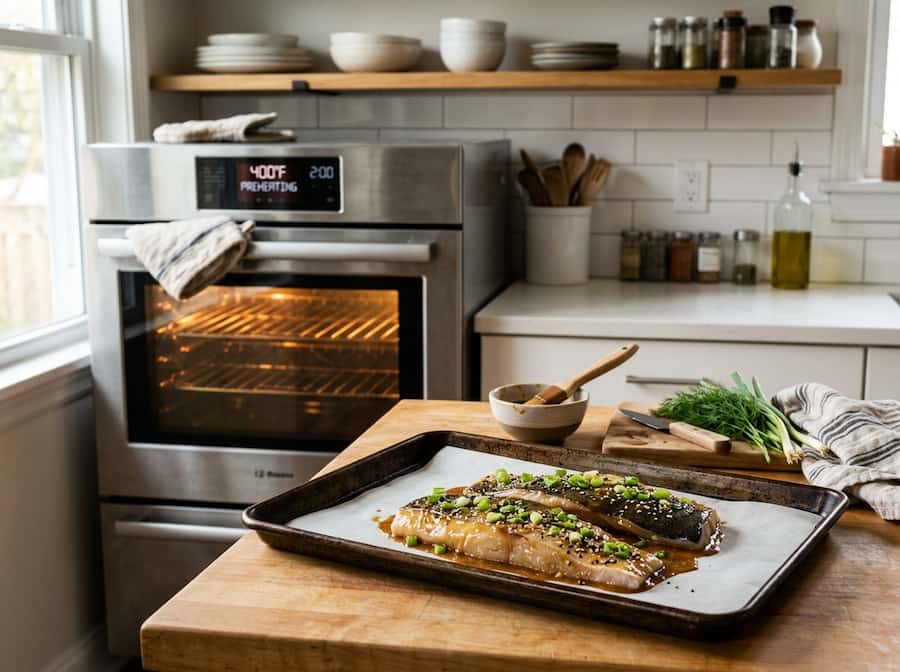
For baking, preheat the oven to 400°F. For broiling, set the broiler and place the rack so the fish is not too close to the heat source.
Miso glaze can burn quickly under direct heat, especially if the sugar content is high. Control matters more than speed here.
Step 5: Remove excess glaze
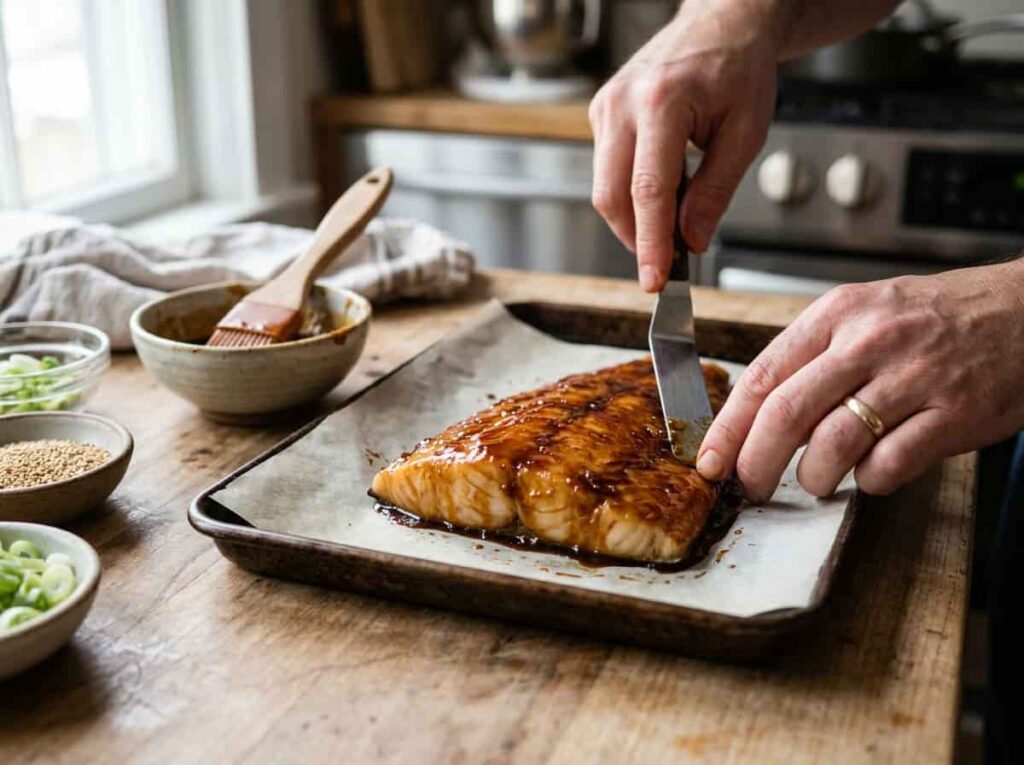
Before cooking, lightly scrape or wipe off thick excess marinade. Leave a thin coating on the fish.
This is one of the most useful details in the recipe. A thin layer caramelizes more cleanly and reduces the risk of blackened spots before the center is done.
Step 6: Cook the fish
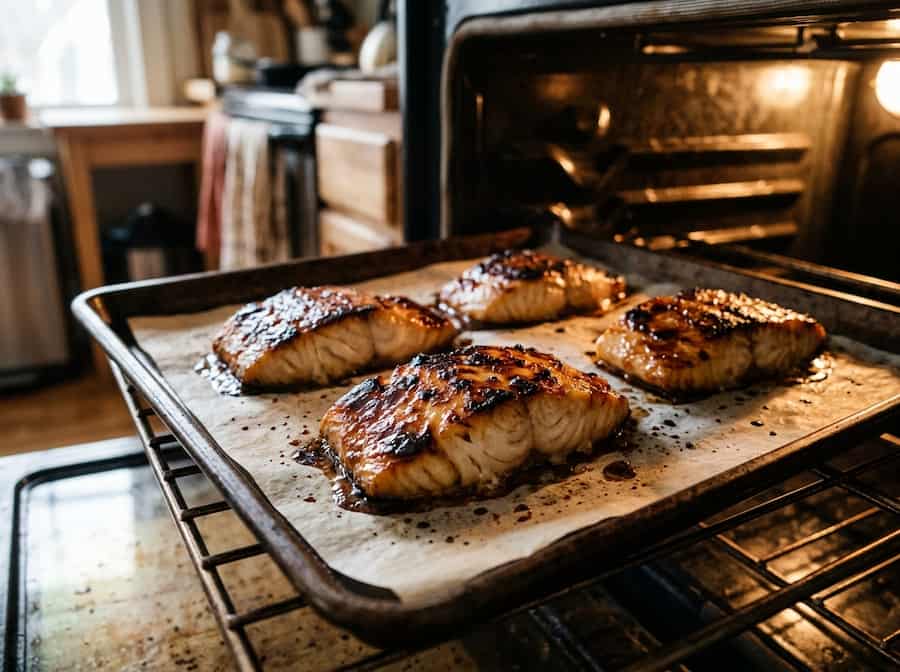
Baked Method
Place the fillets on a lined baking sheet. Bake at 400°F for 10–12 minutes, depending on thickness. If you want more color, finish briefly under the broiler at the end.
Broiled Method
Place the fillets on a broiler-safe pan. Broil for 6–8 minutes, watching closely the entire time. If the top browns too quickly, move the pan lower in the oven.
Step 7: Rest and garnish
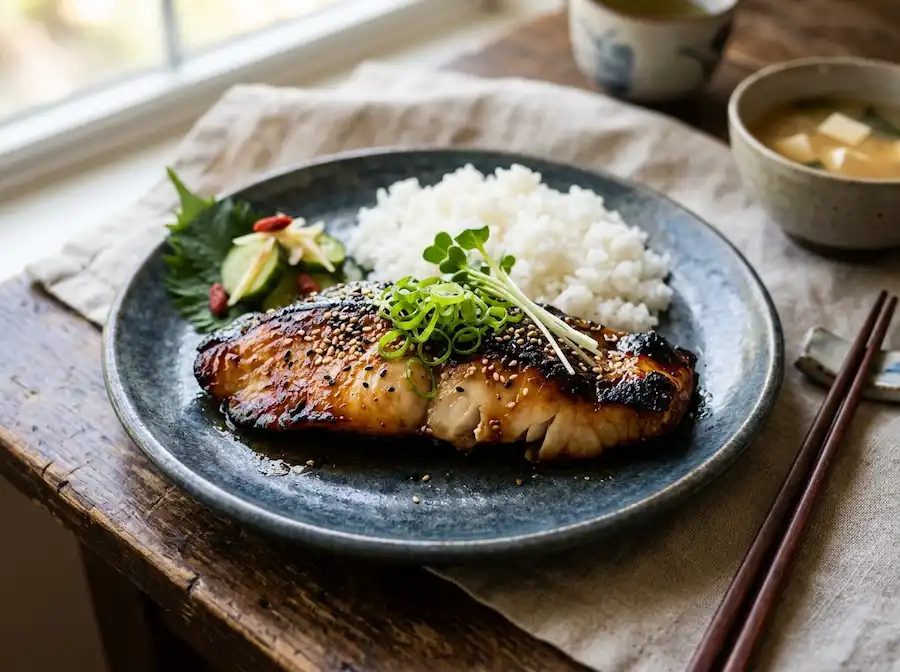
Let the fish rest for 2–3 minutes. Garnish with green onions and sesame seeds, then serve warm.
That short rest matters. It lets the fish settle after the heat so the texture stays soft instead of falling apart.
Cooking Time and Method Table
| Method | Temperature | Approximate Time | Best For | Notes |
|---|---|---|---|---|
| Baking | 400°F | 10–12 minutes | More control | Lower burn risk |
| Broiling | High broil | 6–8 minutes | Strong caramelization | Watch closely |
| Pan-sear + oven | Medium-high + oven finish | 8–12 minutes | Crisp edges | Use moderate glaze |
Timing depends on fillet thickness and oven performance.
How to Serve Black Cod
Black cod pairs well with simple sides that do not compete with the glaze. Good options include:
- Steamed jasmine rice
- Sushi rice
- Brown rice
- Cucumber salad
- Roasted asparagus
- Bok choy
- Steamed broccoli
- Miso soup
- Pickled vegetables
- Simple slaw
For faster seafood nights or alternative cooking methods, an air fryer cod recipe can be useful for true cod, but black cod is usually best with gentler heat because of its rich texture and the way miso browns.
How Much Black Cod to Serve Per Person
A practical portion guide:
- Main dish: 5–6 ounces per person
- Lighter meal: 4 ounces per person with vegetables and rice
- Dinner party serving: 5–6 ounces per person
Black cod is rich, so smaller portions can still feel satisfying.
Recipe Variations and Substitutions
A few useful directions:
- Miso glazed black cod: the classic version
- Spicy miso black cod: add a small amount of chili paste or crushed red pepper
- Ginger miso black cod: increase fresh ginger for a brighter finish
- Honey miso black cod: use honey instead of sugar for a rounder sweetness
- Citrus miso black cod: serve with lemon or lime at the table
- Pan-seared black cod: start in a pan, then finish in the oven
- Baked black cod: the easiest and most controlled method
- Black cod rice bowls: flake the fish over rice with cucumbers and scallions
Substitutions have limits:
- True cod is leaner and can dry out faster.
- Salmon works, but the flavor and texture are different.
- Red miso makes the glaze saltier and more intense.
- Broiling requires close attention and is not ideal for distracted cooking.
Recipe Notes
- Pat the fish dry before marinating.
- White miso gives the most balanced result.
- Do not use a thick layer of glaze before broiling.
- Watch the fish carefully under the broiler.
- Line the baking sheet for easier cleanup.
- Use an instant-read thermometer if needed.
- Keep marinated fish refrigerated.
- Do not leave raw fish at room temperature for long.
Expert Tips for Better Results
Use sablefish when possible
Black cod is usually sold as sablefish. That is the fish this recipe is built for, because its texture holds up well and its richness matches the glaze.
Keep the glaze thin
Too much glaze can burn before the fish cooks through. Thin, even coverage is better than a heavy coating.
Do not over-marinate
A longer marinade deepens the flavor, but too much time can make the fish overly salty or firmer on the outside than expected.
Watch the broiler closely
Miso, mirin, sugar, and honey all brown fast. Broiling should be treated as active cooking, not a set-it-and-forget-it step.
Cook by thickness, not just time
A thick fillet needs more time than a thin one. Use the clock as a guide, but check the fish visually and, if needed, with a thermometer.
Rest before serving
A short rest helps the fish finish gently and keeps the texture soft.
Common Mistakes to Avoid
Using too much glaze
Heavy glaze can burn, stick, and taste bitter.
Broiling too close to the heat
The surface may darken long before the center is cooked.
Skipping the drying step
Moisture interferes with browning and makes the glaze slip off.
Overcooking the fish
Black cod is forgiving, but it can still dry out or turn greasy if cooked too long.
Using red miso without adjusting
Red miso is stronger and saltier, so the other ingredients may need to be reduced or balanced more carefully.
Leaving fish in marinade too long
Extended marinating can make the texture too firm and the flavor too salty.
Storage and Reheating
Black cod is best served fresh, but leftovers can be handled safely.
- Store leftovers in an airtight container.
- Refrigerate for up to 2–3 days.
- Reheat gently in a low oven or covered skillet.
- Avoid aggressive microwave reheating.
- Store rice and fish separately if possible.
- Do not leave cooked fish at room temperature for more than about 2 hours.
Gentle reheating preserves the texture better than high heat.
Nutrition Notes
Black cod provides protein and has a richer, fattier texture than many lean white fish. Miso and soy sauce can add sodium, and the final meal’s nutrition also depends on the rice, vegetables, and sauces you serve with it. Portion size matters here, especially because black cod is satisfying in smaller servings.
Comparison Section: Black Cod vs. Other White Fish
| Fish | Texture | Flavor | Best Cooking Methods | Notes |
|---|---|---|---|---|
| Black cod / sablefish | Rich and buttery | Mild, slightly sweet | Miso glaze, broiling, baking | Moist and forgiving |
| True cod | Lean and flaky | Mild | Baking, air frying, frying | Can dry out faster |
| Halibut | Firm and lean | Clean, mild | Pan-searing, baking | Needs careful cooking |
| Sea bass | Rich and tender | Mild | Roasting, pan-searing | Often more expensive |
| Salmon | Fatty and firm | Stronger flavor | Baking, grilling, broiling | Works with miso but tastes different |
Best Practices
- Buy fish from a trusted seafood counter.
- Thaw frozen fillets in the refrigerator.
- Pat the fish dry.
- Use white miso for balanced flavor.
- Marinate under refrigeration.
- Remove excess glaze before cooking.
- Watch caramelization carefully.
- Cook gently and avoid overcooking.
- Serve with simple sides that do not overpower the fish.
Advanced Insights
Black cod is also called sablefish because of the species name used in seafood markets. The fish’s natural fat content is the reason it works so well with miso. That richness keeps it tender while the glaze adds contrast.
Miso burns faster than plain marinades because it contains solids and often includes sugar or sugar-like ingredients from mirin, honey, or added sweetener. That is why a thin coating works better than a thick one.
Marinating changes more than flavor. It also slightly seasons the surface, so even a short marination can make the final result taste complete. The key is balancing salt, sweetness, and acidity so the glaze tastes rounded instead of harsh.
A thermometer can help, but texture matters too. Black cod should feel just cooked through and flake lightly without drying out. For serving guests, the cleanest approach is to bake the fish and finish with a brief broil only if needed. That keeps the process reliable and avoids last-minute stress.
The recipe also adapts well to rice bowls. Flake the fish over rice, add cucumber, scallions, and a simple vegetable side, then spoon a small amount of extra glaze over the top if desired.
Frequently Asked Questions
Is black cod the same as cod?
No. Black cod is sablefish, while true cod is a different fish. Black cod is richer, fattier, and more buttery.
What does black cod taste like?
It tastes mild, rich, and slightly sweet with a soft, silky texture.
Why is black cod also called sablefish?
Sablefish is the species name commonly used in the seafood trade. “Black cod” is a market name, not the same fish as true cod.
How long should I marinate black cod?
At least 30 minutes, and up to 24 hours. Shorter marinating gives lighter seasoning; longer marinating gives deeper flavor.
Can I use regular cod instead of black cod?
Yes, but the result will be different. Regular cod is leaner and can dry out faster, so it needs closer attention.
What temperature should black cod be cooked to?
Cook it until it is opaque and flakes easily. If you use a thermometer, aim for a gentle finish rather than overcooking it.
Can I make black cod without miso?
Yes. You can use a soy-ginger glaze, a light garlic marinade, or a simple citrus seasoning, but the flavor will be less classic.
How do I keep miso glaze from burning?
Use a thin coating, avoid placing the fish too close to the broiler, and watch the fish closely. Baking is easier to control than broiling.
Can I cook black cod in the air fryer?
It can be done, but it is not the easiest method for miso glaze because the surface can brown quickly. A traditional oven is usually better for this recipe.
What should I serve with black cod?
Rice, steamed vegetables, cucumber salad, miso soup, or pickled vegetables all work well.
Conclusion
Black cod is one of the easiest seafood choices for a polished, Japanese-inspired dinner at home. Use sablefish when possible, make a balanced miso glaze, marinate under refrigeration, and remove excess glaze before cooking. Bake for control or broil carefully for more caramelization. Serve it with rice and simple vegetables, and you will have a seafood dinner that feels complete without being complicated.