
Meta Description:
Make this oyster mushroom in just 20 minutes with simple ingredients, easy steps, and tips for perfectly browned, flavorful mushrooms.
Recipe Snapshot
| Detail | Information |
|---|---|
| Prep Time | 5 minutes |
| Cook Time | 15 minutes |
| Total Time | 20 minutes |
| Servings | 4 |
| Course | Side Dish or Main Dish |
| Cuisine | American / International |
| Main Method | Sautéing |
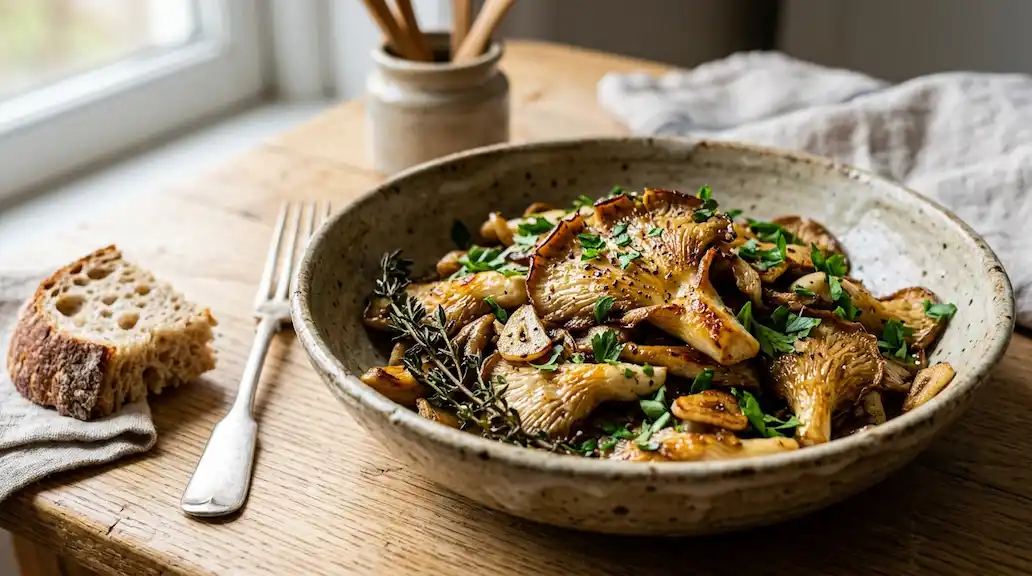
This oyster mushroom is a quick and practical way to turn fresh mushrooms into a flavorful side dish or meatless main course in about 20 minutes. Oyster mushrooms are popular among home cooks because they cook quickly, have a delicate texture, and work well in a wide variety of meals.
Whether you’re building a grain bowl, topping pasta, filling tacos, or preparing a simple weeknight side dish, sautéed oyster mushrooms fit naturally into the menu. They pair well with garlic, herbs, citrus, and many pantry seasonings.
If you enjoy exploring different meal ideas, you might also serve these mushrooms alongside dishes inspired by a Cajun seafood boil recipe for a balanced dinner with both seafood and vegetable options.
In this guide, you’ll learn how to choose fresh oyster mushrooms, clean them correctly, cook them for the best texture, season them effectively, and avoid common mistakes that can lead to soggy mushrooms.
Table of Contents
Quick Answer
An oyster mushroom typically involves cooking oyster mushrooms over medium-high heat with oil or butter until they become tender and lightly browned. Oyster mushrooms cook faster than many other mushroom varieties because of their thin structure and high moisture content. The most important step is allowing excess moisture to evaporate so the mushrooms can brown instead of steam.
A basic version uses olive oil, garlic, salt, pepper, paprika, lemon juice, and fresh herbs. Once cooked, oyster mushrooms can be served as a side dish, added to grain bowls, folded into pasta, used as a taco filling, or incorporated into vegetarian meals. Using a large skillet and avoiding overcrowding are key techniques for developing good texture and flavor.
What Are Oyster Mushrooms?
Oyster mushrooms are edible mushrooms known for their fan-shaped caps and clustered growth pattern. Their appearance resembles oyster shells, which is where their name comes from.
They have:
- A mild, slightly savory flavor
- A tender texture when cooked
- Thin caps and delicate stems
- Fast cooking times compared with many mushroom varieties
Common varieties include:
- Pearl oyster mushrooms
- Blue oyster mushrooms
- King oyster mushrooms
Because of their texture and versatility, oyster mushrooms are widely used in vegetarian and plant-focused cooking. They readily absorb seasonings while maintaining their shape during cooking.
Why This Recipe Works
This recipe succeeds because it focuses on techniques that match the characteristics of oyster mushrooms.
- Oyster mushrooms cook quickly.
- Their texture stays tender while retaining structure.
- Medium-high heat promotes browning.
- Simple seasonings complement their natural flavor.
- The recipe works as a side dish or main component.
- The cooking method adapts easily to different cuisines.
When mushrooms release moisture and that moisture evaporates, flavorful browning develops on the surface. This creates deeper flavor and a more appealing texture.
Ingredients You’ll Need
Oyster Mushrooms
Look for fresh oyster mushrooms that are:
- Firm
- Dry but not brittle
- Free of slimy spots
- Lightly fragrant
You can purchase whole clusters or already separated mushrooms.
Fat for Cooking
Good options include:
- Olive oil
- Avocado oil
- Butter
- Vegan butter
Olive oil offers a clean flavor, while butter adds richness. Vegan butter provides a similar effect for dairy-free cooking.
Seasonings
Simple seasonings work best:
- Salt
- Black pepper
- Garlic
- Paprika
- Red pepper flakes
- Fresh herbs
These ingredients enhance the mushrooms without overwhelming them.
Optional Additions
For extra flavor, consider:
- Lemon juice
- Parmesan cheese
- Soy sauce
- Fresh parsley
- Green onions
Equipment Needed
You’ll need:
- Large skillet
- Chef’s knife
- Cutting board
- Mixing bowl
- Wooden spoon or spatula
- Paper towels
A large skillet is especially important because it helps prevent overcrowding, which allows mushrooms to brown properly.
Oyster Mushroom Ingredients List
Base Recipe
- 1 pound oyster mushrooms
- 2 tablespoons olive oil or butter
- 3 garlic cloves, minced
- 1 teaspoon kosher salt
- ½ teaspoon black pepper
- ½ teaspoon paprika
- 1 tablespoon lemon juice
- 1 tablespoon chopped fresh parsley
Optional
- Pinch of red pepper flakes
- Grated Parmesan cheese
- 1 teaspoon soy sauce
How to Make Oyster
Step 1: Clean the mushrooms
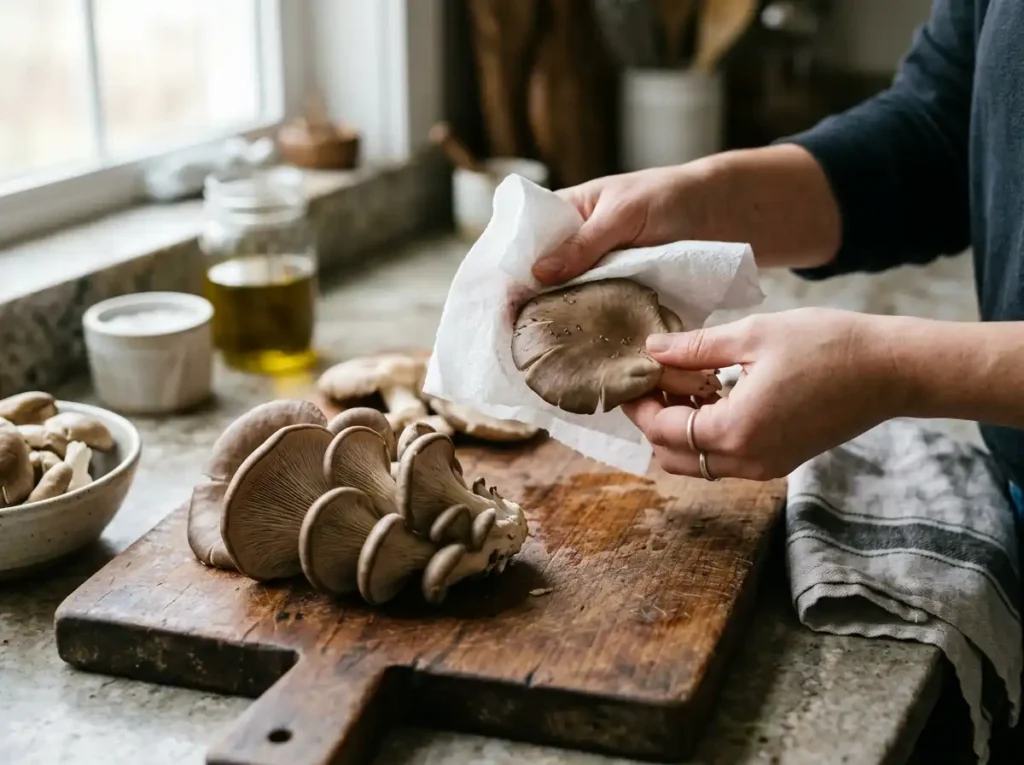
Gently wipe the mushrooms with a damp paper towel to remove dirt.
Oyster mushrooms generally do not need soaking. Excess water can make browning more difficult and may lead to steaming.
Step 2: Separate and prepare
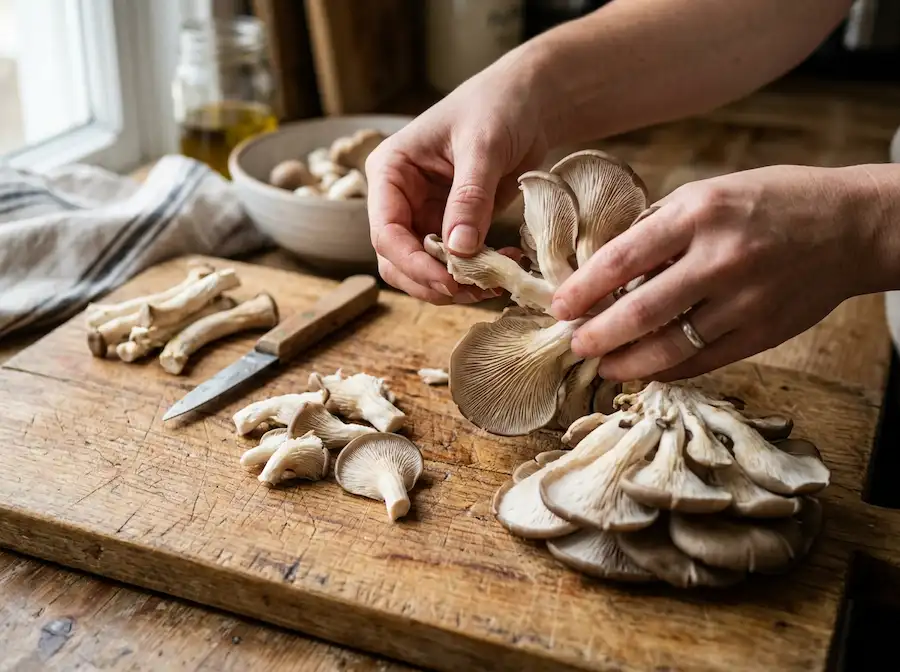
Break large clusters into smaller pieces.
Trim any tough stem ends if necessary. Smaller pieces cook more evenly and fit better in the skillet.
Step 3: Heat the pan
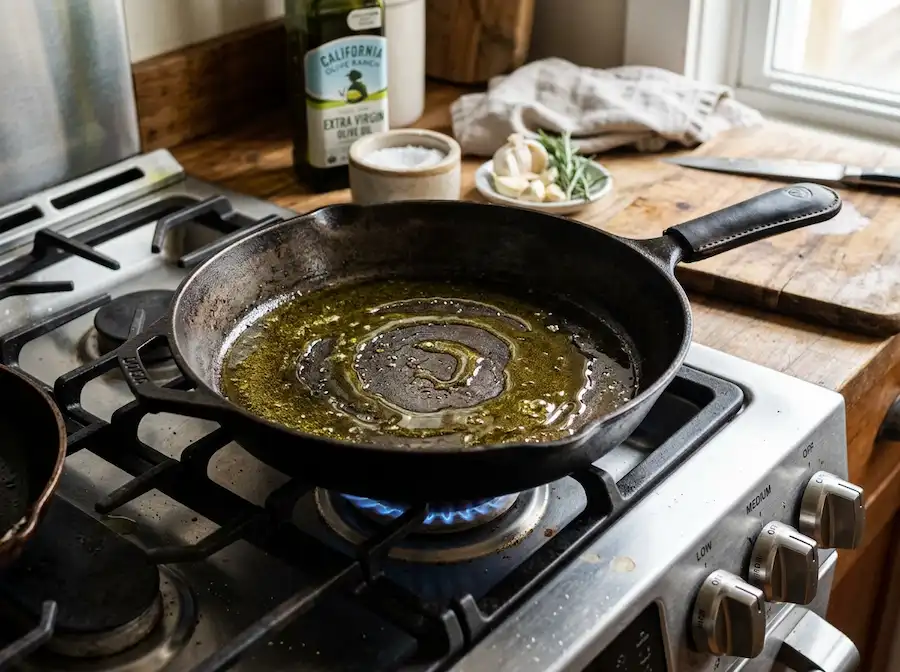
Place a large skillet over medium-high heat.
Add the olive oil or butter and allow it to heat before adding the mushrooms.
Step 4: Cook the mushrooms
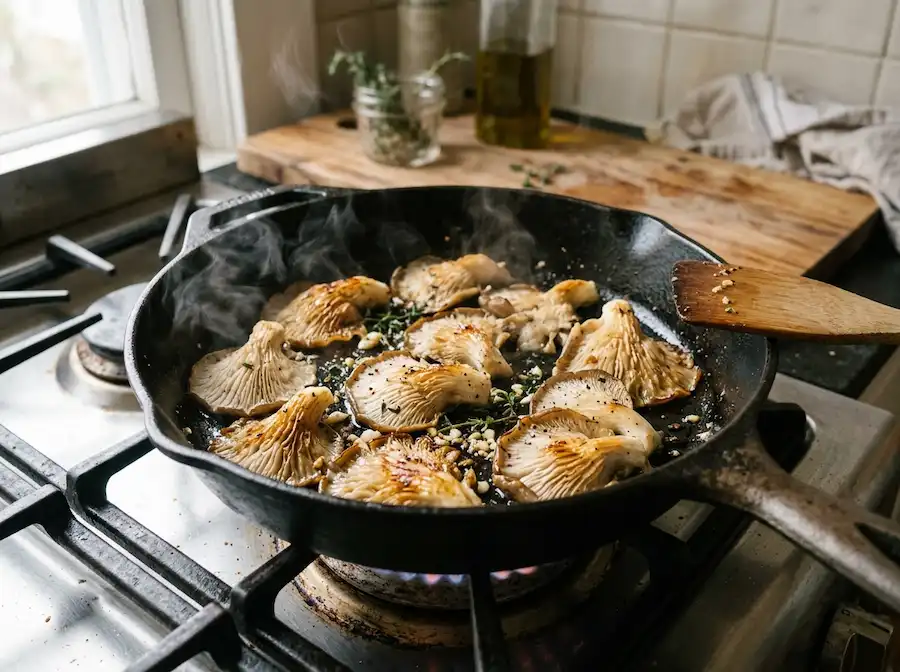
Arrange the mushrooms in a single layer.
Allow them to cook without constant stirring. As they release moisture, the liquid will gradually evaporate and browning will begin to develop.
Cook for approximately 8–10 minutes.
Step 5: Add garlic and seasonings
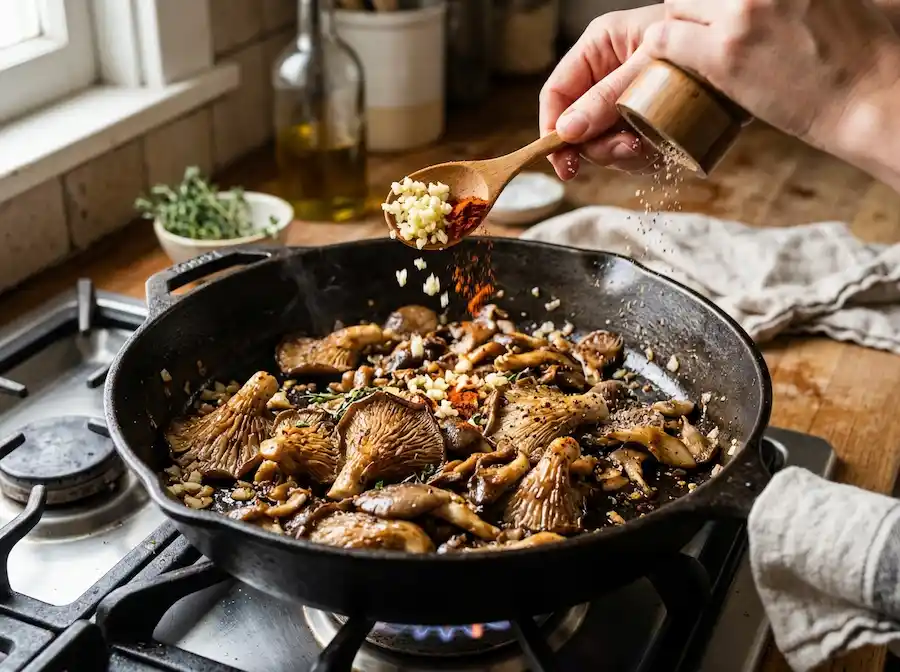
Add the garlic, salt, pepper, and paprika.
Cook for another 1–2 minutes until the garlic becomes fragrant.
Step 6: Finish and serve
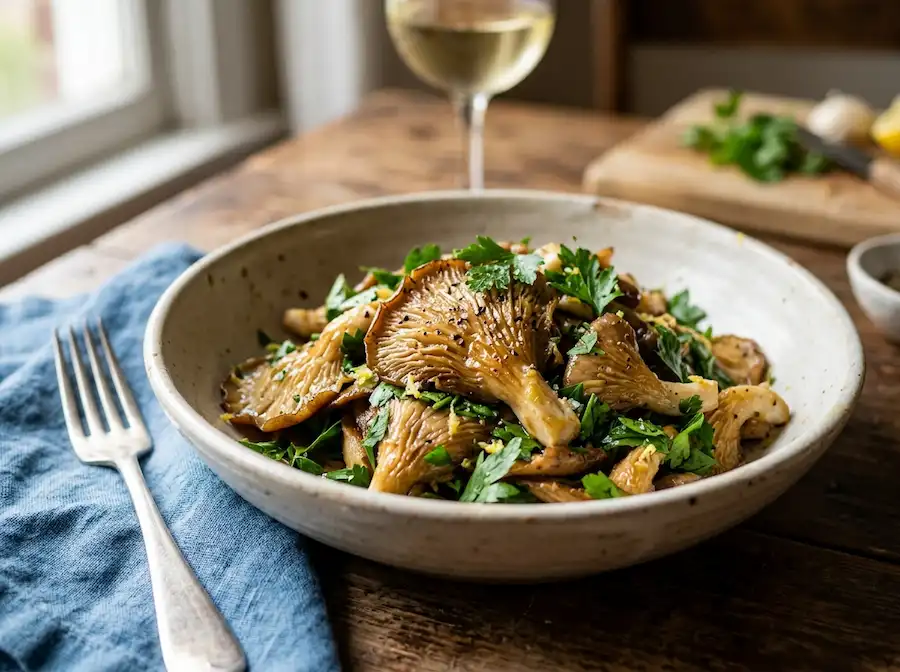
Remove the skillet from the heat.
Add lemon juice and parsley, then toss gently to combine.
Serve immediately while hot.
These mushrooms also work well as a side dish for stuffing-style meals. If you’re planning seasonal menus, they pair nicely with dishes inspired by an oyster dressing recipe because both feature savory flavors and complementary textures.
Cooking Method Comparison
| Method | Texture | Time | Best For | Notes |
|---|---|---|---|---|
| Sautéing | Tender and browned | Fast | Everyday cooking | Best flavor balance |
| Roasting | Deeply browned | Moderate | Larger batches | Less hands-on |
| Air Frying | Crisp edges | Fast | Lighter cooking | Works well for small portions |
| Grilling | Smoky flavor | Moderate | Outdoor cooking | Requires careful handling |
Sautéing remains the fastest and most practical method for weeknight cooking, while roasting and grilling offer different flavor profiles when you have additional time.
How to Serve Oyster Mushrooms
Try serving oyster mushrooms:
- Over pasta
- In grain bowls
- Inside tacos
- Alongside rice
- On toasted bread
- As a vegetable side dish
- In omelets
- In wraps
- With roasted vegetables
- Beside grilled proteins
For appetizer spreads, crispy oyster mushrooms can accompany recipes inspired by a fried oysters recipe, providing a mushroom-based option with a similar crunchy appeal.
How Much Oyster to Serve Per Person
Practical serving guidelines:
| Serving Type | Amount |
|---|---|
| Side dish | 4 ounces per person |
| Main vegetarian dish | 6–8 ounces per person |
| Tacos or bowls | 4–6 ounces per serving |
Remember that mushrooms shrink noticeably during cooking.
Recipe Variations and Substitutions
Garlic Butter Oyster
Replace olive oil with butter and add extra garlic for a richer flavor.
Spicy Oyster
Add red pepper flakes or cayenne pepper.
Soy Garlic Mushrooms
Add a teaspoon of soy sauce near the end of cooking.
Roasted Oyster Mushrooms
Roast at 425°F until browned and tender.
Air Fryer Oyster Mushrooms
Cook in a single layer for crispy edges and quick cleanup.
Vegan Oyster
Use olive oil or vegan butter and skip Parmesan.
Oyster Tacos
Serve with tortillas, slaw, and avocado.
Oyster Rice Bowls
Pair with rice, vegetables, and a simple sauce.
Keep in mind:
- Mushrooms shrink during cooking.
- Overcrowding causes steaming.
- Very low heat limits browning.
Recipe Notes
- Use a large skillet whenever possible.
- Cook in batches if necessary.
- Avoid excess moisture.
- Add delicate seasonings near the end.
- Serve immediately for the best texture.
- Fresh mushrooms generally perform better than older mushrooms.
Expert Tips for Better Results
Avoid overcrowding
Crowded mushrooms release moisture faster than it can evaporate. This causes steaming rather than browning.
Use medium-high heat
Adequate heat helps moisture evaporate and promotes caramelization.
Let mushrooms sit briefly
Leaving mushrooms undisturbed for short periods encourages better browning.
Add garlic later
Garlic cooks quickly and can burn before mushrooms finish cooking.
Finish with acid
A small amount of lemon juice adds brightness and balance.
Cook in batches when necessary
Multiple small batches often produce better texture than one overcrowded pan.
Common Mistakes to Avoid
Washing mushrooms excessively
Too much water can interfere with browning.
Overcrowding the skillet
Crowding traps steam and prevents caramelization.
Using low heat
Low temperatures allow moisture to accumulate without developing color.
Stirring constantly
Continuous stirring reduces contact with the pan surface.
Over-seasoning
Balanced seasoning allows the mushroom flavor to remain noticeable.
Cooking too long
Extended cooking can make oyster overly soft.
Storage and Reheating
Store leftovers in an airtight container.
- Refrigerate for up to 3–4 days.
- Reheat in a skillet for the best texture.
- Microwave reheating is convenient but may soften the mushrooms.
- Avoid leaving cooked mushrooms at room temperature for extended periods.
Nutrition Notes
Oyster are naturally low in calories and can fit into many meal styles.
A few points to consider:
- Added oils and butter affect total calories.
- Portion size influences overall nutrition.
- Side dishes and toppings change meal composition.
- Preparation method can affect texture and richness.
Comparison Section: Oyster vs. Other Mushrooms
| Mushroom | Texture | Flavor | Best Uses | Notes |
|---|---|---|---|---|
| Oyster Mushrooms | Tender and delicate | Mild | Sautéing, tacos, bowls | Quick cooking |
| Cremini | Firm | Earthy | Soups, roasting | Widely available |
| Portobello | Meaty | Rich | Burgers, grilling | Larger size |
| Shiitake | Chewy | Strong savory flavor | Stir-fries, soups | Distinct flavor |
Best Practices
For consistently good results:
- Buy fresh mushrooms.
- Store them properly.
- Cook over sufficient heat.
- Avoid overcrowding.
- Use simple seasonings.
- Serve shortly after cooking.
- Match flavors to the final dish.
Advanced Insights
Oyster mushrooms release moisture quickly because their structure contains a high percentage of water. During cooking, this moisture escapes and evaporates.
As evaporation occurs, browning begins. Browning creates deeper flavors through caramelization and other heat-driven reactions on the mushroom surface.
Different oyster varieties behave differently:
- Pearl oysters cook quickly and become tender.
- Blue oysters often develop slightly firmer texture.
- King oysters have thicker stems and a denser bite.
Many chefs use oyster as a meat alternative because they provide satisfying texture while absorbing sauces and seasonings effectively.
For larger gatherings, scale the recipe by cooking in multiple batches rather than increasing pan volume. This maintains browning and prevents steaming.
Cooking fat also affects results. Butter contributes richness, while oils generally allow slightly higher cooking temperatures.
Frequently Asked Questions
1. How do you cook oyster?
The simplest method is sautéing them in oil or butter over medium-high heat until browned and tender.
2. Do oyster mushrooms need washing?
Usually not. Wiping them with a damp paper towel is often sufficient.
3. What do oyster taste like?
They have a mild, delicate flavor with subtle savory notes.
4. Can you eat oyster raw?
They are generally preferred cooked because cooking improves texture and flavor.
5. Can oyster be air fried?
Yes. Air frying creates crisp edges while keeping preparation quick and simple.
6. How long do oyster last in the refrigerator?
Fresh oyster typically last several days when properly refrigerated, though quality is best when used soon after purchase.
7. What seasonings go well with oyster ?
Garlic, parsley, thyme, black pepper, paprika, lemon juice, soy sauce, and Parmesan are all common choices.
8. Can oyster mushrooms replace meat in recipes?
They can provide texture and substance in tacos, bowls, sandwiches, and many vegetarian dishes.
9. Why are my mushrooms soggy?
The most common causes are overcrowding, low heat, or excess moisture.
10. What should I serve with oyster mushrooms?
They pair well with pasta, rice, grain bowls, eggs, roasted vegetables, grilled proteins, and crusty bread.
Conclusion
This oyster mushroom is a reliable way to prepare a flavorful mushroom dish in about 20 minutes. Success comes from a few simple techniques: start with fresh mushrooms, cook them over medium-high heat, avoid overcrowding the skillet, and season thoughtfully.
Whether you’re serving them as a side dish, adding them to tacos, topping grain bowls, or incorporating them into pasta, oyster mushrooms adapt easily to many meals. For the best texture, cook them until moisture evaporates and browning develops, then serve them immediately while they’re still hot.