
Recipe Snapshot
| Detail | Time/Amount |
|---|---|
| Prep Time | 10 minutes |
| Cook Time | 4–6 minutes |
| Total Time | 15–20 minutes |
| Servings | 2–4 |
| Course | Main Dish |
| Cuisine | American / Asian-inspired |
| Main Method | Pan-searing |
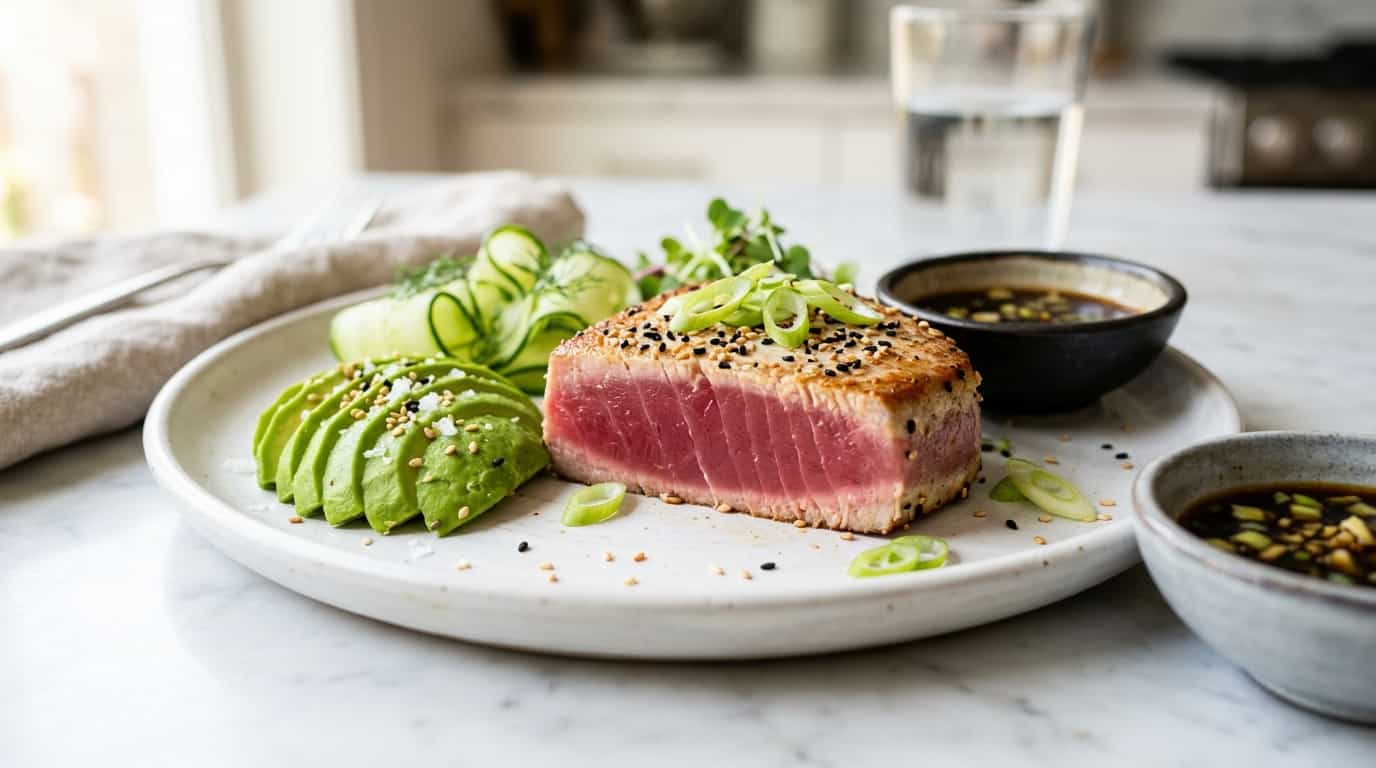
A good ahi tuna is one of the fastest ways to put a restaurant-style seafood meal on the table. With a hot pan, a few seasonings, and quality tuna steaks, you can make a satisfying dinner in less than 20 minutes.
Ahi tuna, commonly sold as yellowfin tuna and sometimes bigeye tuna, is popular with U.S. home cooks because it works well in rice bowls, salads, tacos, and light lunches. Its firm texture and mild flavor make it easy to pair with simple sauces and fresh vegetables.
If you enjoy seafood dinners, you might also like a Cajun seafood boil recipe for larger gatherings and family-style meals.
In this guide, you’ll learn how to choose ahi tuna, season it properly, sear it without overcooking, decide on the right doneness level, serve it with complementary sides, store leftovers safely, and avoid common cooking mistakes.
Table of Contents
Quick Answer
An ahi tuna typically starts with tuna steaks that are lightly seasoned, then seared quickly over high heat for about 45 to 90 seconds per side. The goal is often a browned exterior with a rare or medium-rare center.
The keys to success are simple: choose high-quality tuna, pat it completely dry, heat the pan thoroughly before adding the fish, and avoid cooking it longer than necessary. Ahi tuna cooks much faster than many other seafood options, so timing matters.
If serving tuna rare or medium-rare, purchase high-quality fish from a trusted seafood supplier and follow proper storage and handling practices. Rare seafood may not be suitable for everyone, particularly those who have been advised to avoid undercooked foods.
What Is Ahi Tuna?
Ahi tuna is a term commonly used for two species of tuna:
- Yellowfin tuna
- Bigeye tuna
In grocery stores and seafood markets, yellowfin tuna is the most common variety sold as ahi tuna.
Ahi tuna is known for its firm texture, mild flavor, and deep red appearance. It is frequently served:
- Seared as a tuna steak
- Grilled
- Sliced over rice bowls
- Added to salads
- Used in poke-style dishes
- Served with soy-based sauces
Because it is relatively lean, ahi tuna benefits from quick cooking methods that preserve moisture and texture.
Food Safety Note Before You Start
Rare and medium-rare ahi tuna are common serving styles, but food safety starts with sourcing.
Keep these points in mind:
- Purchase tuna from a trusted seafood source.
- Keep tuna refrigerated until cooking.
- Thaw frozen tuna in the refrigerator, not on the kitchen counter.
- Use clean cutting boards and utensils.
- Cook according to your preferences and any medical guidance you follow.
It’s also important to understand that “sushi-grade” is a marketing term in the United States and does not represent a single federally regulated grading system.
Individuals who are pregnant, elderly, immunocompromised, or caring for very young children may choose fully cooked seafood based on personal or medical recommendations.
Why This Recipe Works
This ahi tuna succeeds because it follows a few practical cooking principles.
- Ahi tuna is lean and cooks very quickly.
- A dry surface encourages browning instead of steaming.
- High heat creates color on the outside while preserving a tender center.
- Simple seasoning allows the fish to remain the focus.
- A short resting period makes slicing easier.
- Balanced sauces complement the fish without overwhelming it.
The result is a quick seafood dinner that feels refined without requiring complicated techniques.
Ingredients You’ll Need
Ahi Tuna Steaks
Look for:
- Fresh or properly thawed ahi tuna steaks
- Yellowfin tuna or bigeye tuna
- Even thickness throughout the steak
- Bright color
- Clean, fresh smell
- A reputable seafood supplier
Previously frozen tuna can work very well when thawed correctly in the refrigerator.
Seasoning
Simple seasonings are often best.
Options include:
- Kosher salt
- Black pepper
- Sesame seeds
- Garlic powder
- Chili flakes
Ahi tuna generally does not require heavy seasoning.
Oil
Choose a high-smoke-point oil such as:
- Avocado oil
- Canola oil
- Grapeseed oil
These oils tolerate the high heat needed for a good sear.
Sauce Options
Popular choices include:
- Soy sauce
- Tamari
- Rice vinegar
- Lime juice
- Sesame oil
- Fresh ginger
- Wasabi mayo
- Spicy mayo
Aim for a balance of saltiness, acidity, and richness.
Garnishes
Good finishing touches include:
- Green onions
- Sesame seeds
- Avocado
- Cucumber
- Lime wedges
- Cilantro
- Pickled ginger
Equipment Needed
You do not need specialized equipment.
- Heavy skillet or cast-iron pan
- Tongs
- Paper towels
- Sharp knife
- Cutting board
- Small bowl for sauce
- Instant-read thermometer (optional)
A very hot pan matters more than expensive equipment.
Ahi Tuna Ingredients List
For the Tuna
- 2 ahi tuna steaks, about 6 ounces each
- 1 tablespoon avocado oil or other high-heat oil
- 1 teaspoon kosher salt
- 1/2 teaspoon black pepper
- 2 tablespoons sesame seeds (optional)
- 1/2 teaspoon garlic powder (optional)
For the Sauce
- 2 tablespoons soy sauce or tamari
- 1 tablespoon rice vinegar or lime juice
- 1 teaspoon sesame oil
- 1 teaspoon honey or maple syrup (optional)
- 1/2 teaspoon grated fresh ginger (optional)
- Sliced green onions, for garnish
How to Make Tuna
Step 1: Thaw and Dry the Tuna
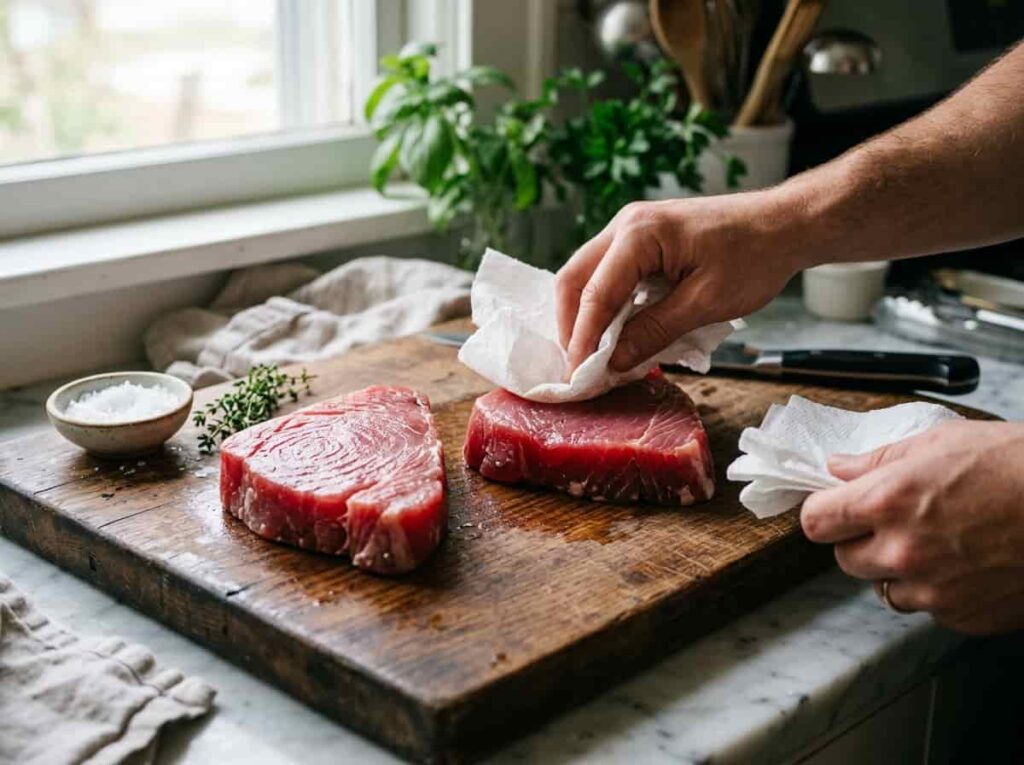
If using frozen tuna, thaw it overnight in the refrigerator.
Pat the steaks thoroughly dry with paper towels. Moisture on the surface prevents proper browning and can cause the fish to steam rather than sear.
Step 2: Season the Tuna
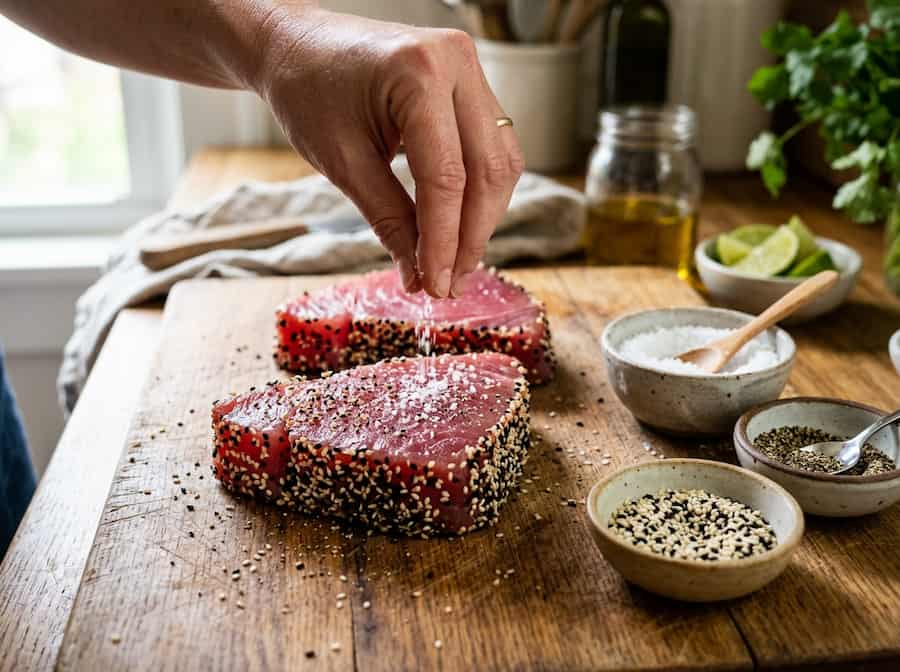
Season both sides with:
- Kosher salt
- Black pepper
- Optional garlic powder
If making sesame crusted tuna, press sesame seeds onto all sides of the steaks.
Avoid over-seasoning. tuna has a clean flavor that benefits from restraint.
Step 3: Make the Sauce
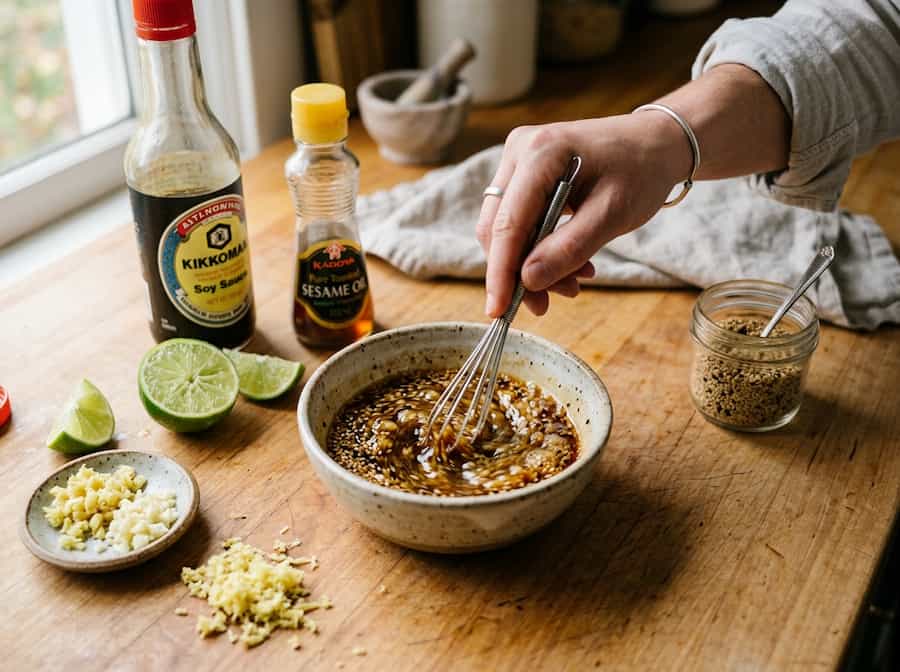
Whisk together:
- Soy sauce or tamari
- Rice vinegar or lime juice
- Sesame oil
- Optional honey
- Optional ginger
Taste and adjust:
- More vinegar or lime for brightness
- More honey for sweetness
- More ginger for bite
- More sesame oil for richness
Step 4: Heat the Pan
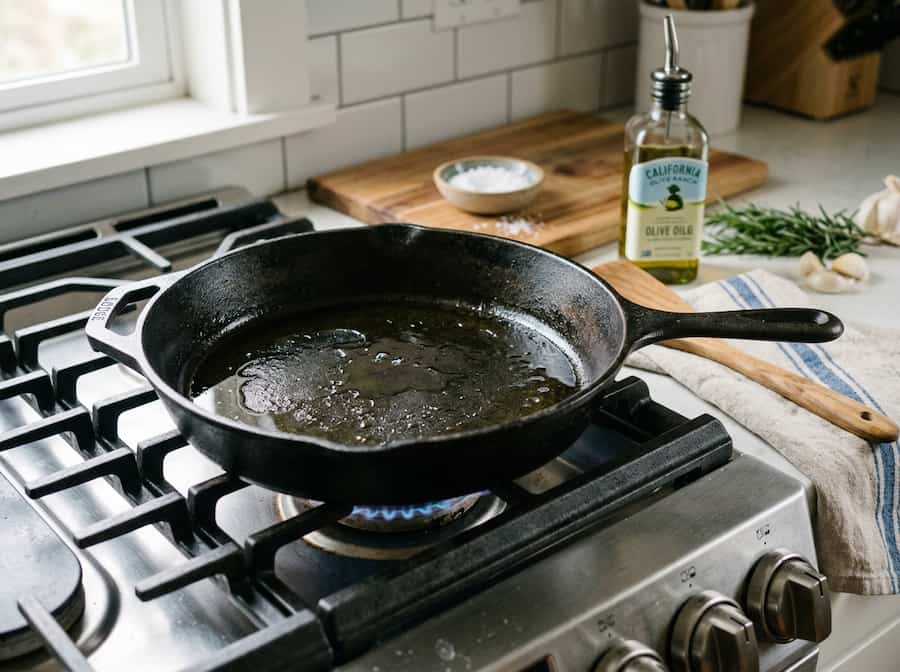
Place a cast-iron skillet or heavy pan over medium-high to high heat.
Add oil once the pan is hot.
The oil should shimmer across the surface but should not produce excessive smoke.
Step 5: Sear the Tuna
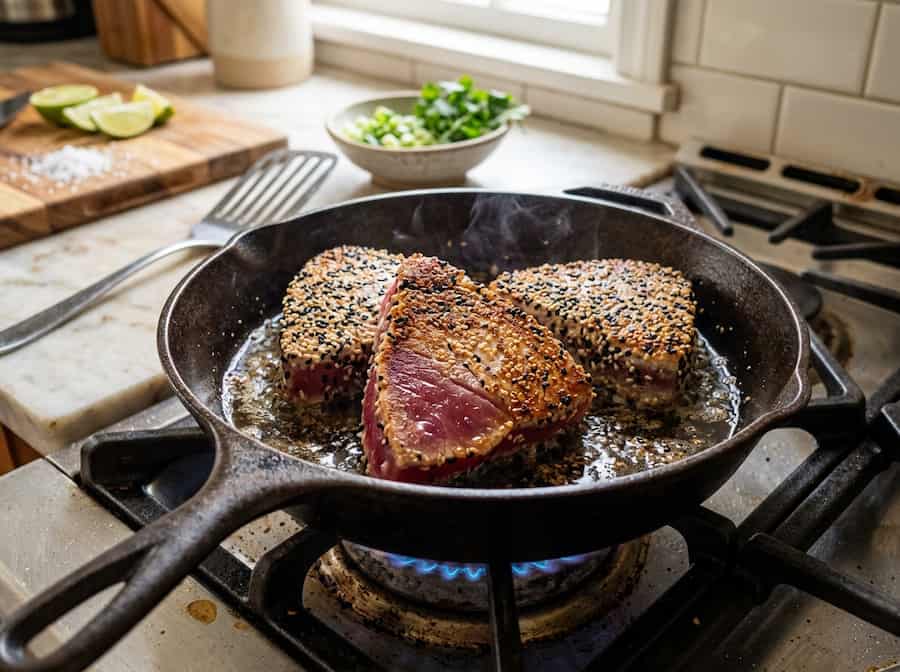
Place the tuna steaks in the pan.
Cook approximately:
- 45–60 seconds per side for rare
- 60–90 seconds per side for medium-rare
For a more cooked center, extend the cooking time gradually.
Remember that tuna changes texture quickly once it moves beyond medium doneness.
Step 6: Rest and Slice
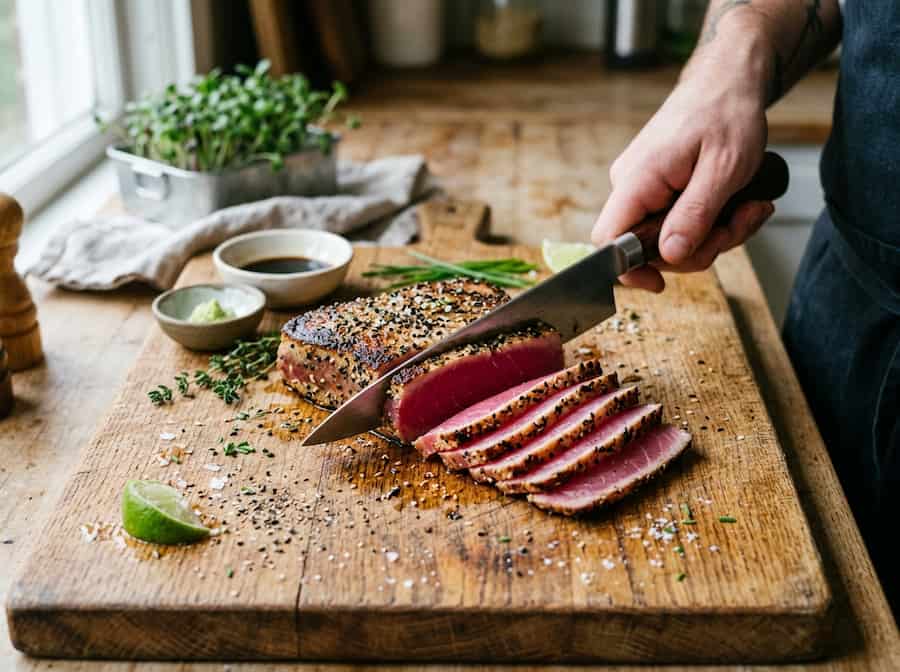
Transfer the tuna to a cutting board.
Let it rest for 2 to 3 minutes.
Using a sharp knife, slice against the grain into thin slices.
Step 7: Serve
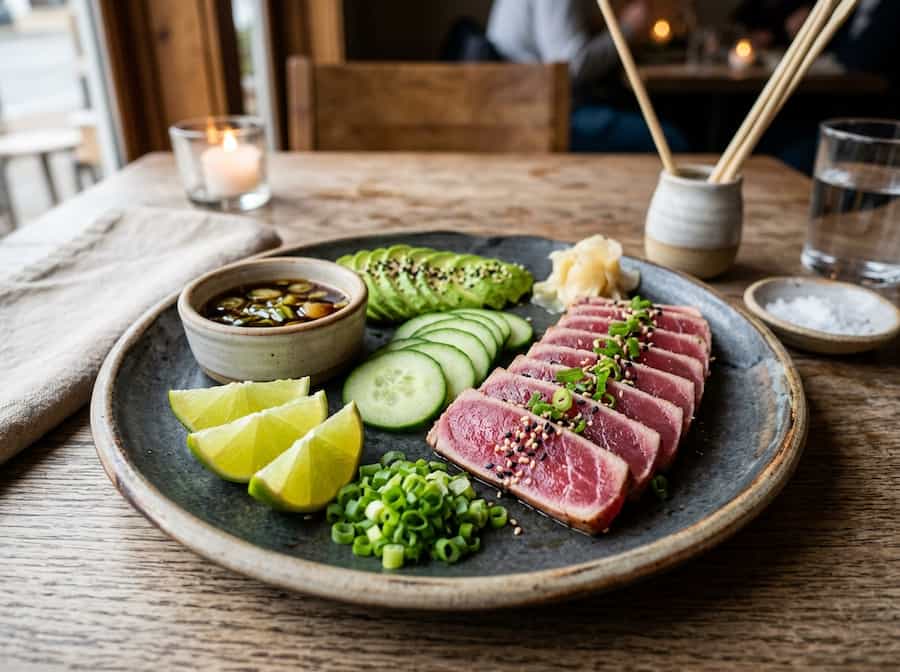
Serve immediately with sauce on the side or drizzled lightly over the fish.
Top with:
- Green onions
- Sesame seeds
- Lime wedges
- Cucumber
- Avocado
Leftover sliced tuna can also be added to grain bowls or incorporated into a tuna macaroni salad recipe for a different lunch option.
Ahi Tuna Doneness Guide
| Doneness | Approximate Sear Time Per Side | Center Texture | Notes |
|---|---|---|---|
| Rare | 45–60 seconds | Cool red center | Common for seared ahi |
| Medium-rare | 60–90 seconds | Warm red-pink center | Balanced texture |
| Medium | 2 minutes | Pink center | Firmer texture |
| Well-done | 3+ minutes | Fully cooked | Can become dry |
Timing varies based on steak thickness, pan temperature, and the starting temperature of the fish.
How to Serve Ahi Tuna
tuna works well in a variety of meals.
Try serving it:
- Over jasmine rice
- Over sushi rice
- In tuna bowls with avocado and cucumber
- On mixed greens
- With soba noodles
- In fish tacos
- Alongside steamed vegetables
- With roasted potatoes
- With a simple cabbage slaw
- As part of meal prep lunches
For lighter lunch options, you may also enjoy a healthy tuna salad recipe alongside fresh vegetables and greens.
How Much Ahi Tuna to Serve Per Person
Use these general serving guidelines:
- Main dish: 5–6 ounces per person
- Rice bowl or salad: 4–5 ounces per person
- Appetizer: 2–3 ounces per person
Rice, vegetables, noodles, and salads can help round out the meal.
Recipe Variations and Substitutions
Sesame-Crusted Ahi Tuna
Coat the exterior with white or black sesame seeds before searing.
Spicy Tuna Bowl
Add spicy mayo, cucumber, avocado, and rice.
Ahi Tuna Tacos
Serve sliced tuna in tortillas with slaw and lime.
Tuna Salad
Arrange sliced tuna over mixed greens and vegetables.
Soy Ginger Tuna
Increase the ginger and soy sauce in the dressing.
Wasabi Mayo Tuna
Serve with a small amount of wasabi mayo on the side.
Citrus-Marinated Tuna
Use lime, orange, or lemon juice sparingly before cooking.
Fully Cooked Tuna Steaks
Cook longer for readers who prefer not to eat rare fish.
Keep in mind:
- Fully cooked tuna can become firm and dry.
- Thin steaks are harder to keep rare in the center.
- Strong marinades may overpower the fish.
Recipe Notes
- Keep tuna cold until cooking.
- Dry it thoroughly before seasoning.
- Use a hot pan.
- Watch cooking time carefully.
- Slice with a sharp knife.
- Serve immediately.
- Buy from a trusted seafood source.
- Thaw frozen tuna in the refrigerator.
Expert Tips for Better Results
Use Evenly Thick Tuna Steaks
Even thickness promotes consistent cooking and predictable doneness.
Dry Before Searing
Moisture prevents browning and encourages steaming.
Use High Heat
High heat develops color quickly while preserving a tender center.
Do Not Walk Away From the Pan
Ahi tuna cooks in seconds rather than minutes.
Slice Against the Grain
This helps create a more tender bite.
Keep the Sauce Balanced
Salt, acidity, sweetness, and freshness should support the fish rather than dominate it.
Common Mistakes to Avoid
Using Wet Tuna
Excess moisture interferes with searing.
Cooking Too Long
Ahi tuna can become dry and firm surprisingly fast.
Using Low Heat
Low heat often cooks the center before the outside develops color.
Over-Marinating
Acidic ingredients can alter the texture if left too long.
Slicing With a Dull Knife
A dull blade tears the fish instead of making clean slices.
Ignoring Food Safety
Proper sourcing, storage, and handling are essential.
Storage and Reheating
Ahi tuna is best enjoyed shortly after cooking.
For leftovers:
- Store in an airtight container.
- Refrigerate within two hours.
- Use within 1–2 days.
- Store sauce separately when possible.
Rare tuna often tastes better cold in salads or rice bowls than after reheating.
If reheating, do so gently and briefly to minimize texture changes.
Nutrition Notes
Nutritional content depends on portion size and preparation.
General considerations:
- Ahi tuna provides lean protein.
- Sauces may contribute significant sodium.
- Sesame oil and avocado add fat.
- Rice bowls increase carbohydrate content.
- Tacos, dressings, and toppings affect overall calories.
Evaluate the complete meal rather than focusing only on the fish.
Comparison Section: Ahi Tuna vs. Other Tuna Recipes
| Dish | Main Style | Texture | Best For | Notes |
|---|---|---|---|---|
| Seared ahi tuna | Quick seared tuna steak | Tender center, seared outside | Fast dinners, bowls, salads | Best with high-quality tuna |
| Tuna macaroni salad | Chilled pasta salad | Creamy and soft | Potlucks, lunches | Usually made with canned tuna |
| Healthy tuna salad | Light tuna salad | Creamy or crisp | Lunches, wraps, salads | Can be made with Greek yogurt or lighter dressing |
| Tuna steak, fully cooked | Pan-seared or grilled | Firm | Readers avoiding rare fish | Can dry out if overcooked |
Best Practices
For the best results:
- Buy tuna from a trusted source.
- Keep it cold.
- Pat it dry thoroughly.
- Use high-heat oil.
- Fully preheat the pan.
- Cook briefly.
- Rest before slicing.
- Pair with fresh, balanced sides.
- Store leftovers safely.
Advanced Insights
Ahi tuna behaves differently from many other fish.
Because it is lean, it cooks faster than salmon and many white fish varieties. Salmon contains more fat, which provides a larger margin for error during cooking. Ahi tuna has less protection from drying out.
High heat works particularly well because it browns the exterior quickly while limiting heat penetration into the center.
Sesame seeds can provide a slight buffer between the pan and the fish while adding texture and visual contrast.
Acidic marinades should be used carefully. Extended exposure to citrus juice or vinegar can change the surface texture before cooking.
When building a tuna bowl, aim for balance:
- Rice or grains for substance
- Fresh vegetables for crunch
- Avocado for richness
- A light sauce for seasoning
- Herbs or green onions for freshness
If serving guests with different preferences, cook some steaks for a shorter time and others slightly longer.
Finally, treat “sushi-grade” as one useful purchasing clue rather than a guarantee. Supplier reputation, freshness, handling practices, and storage remain important considerations.
Frequently Asked Questions
1. What is the best way to cook ahi tuna?
For many home cooks, high-heat pan-searing is the easiest method. It creates a browned exterior while preserving a tender center.
2. Can ahi tuna be eaten rare?
Yes. Rare ahi tuna is commonly served, but it should come from a trusted source and be handled properly.
3. What does ahi tuna taste like?
Ahi tuna has a mild, clean flavor and a firm texture that is often described as meatier than many other fish.
4. How long should I sear ahi tuna?
Most tuna steaks need only 45 to 90 seconds per side for rare to medium-rare doneness.
5. Is ahi tuna the same as yellowfin tuna?
Usually, yes. The term ahi often refers to yellowfin tuna, though it can also refer to bigeye tuna.
6. Can I use frozen ahi tuna?
Yes. Properly frozen and properly thawed tuna can produce excellent results.
7. What sauce goes well with ahi tuna?
Soy sauce, tamari, ginger sauce, sesame dressing, spicy mayo, and wasabi-based sauces all pair well with ahi tuna.
8. How do I know when ahi tuna is done?
Visual cues are helpful. The outside should be seared while the center remains red, pink, or fully cooked according to your preference.
9. What can I serve with ahi tuna?
Rice, noodles, salads, roasted vegetables, slaw, avocado, cucumber, and steamed vegetables are all good options.
10. Can I make this ahi tuna fully cooked?
Yes. Simply increase cooking time, understanding that the texture will become firmer and less tender.
Conclusion
A great ahi tuna does not require complicated ingredients or lengthy preparation. Start with quality tuna, keep it cold, pat it dry, season it lightly, and use a thoroughly heated pan.
Because ahi tuna cooks so quickly, careful timing is more important than elaborate techniques. A brief sear, a short resting period, and thoughtful slicing help preserve the texture that makes seared ahi tuna so appealing.
Pair it with a balanced sauce, fresh vegetables, rice, or greens, and you’ll have a quick meal that works equally well for weeknight dinners, lunches, and casual entertaining.