
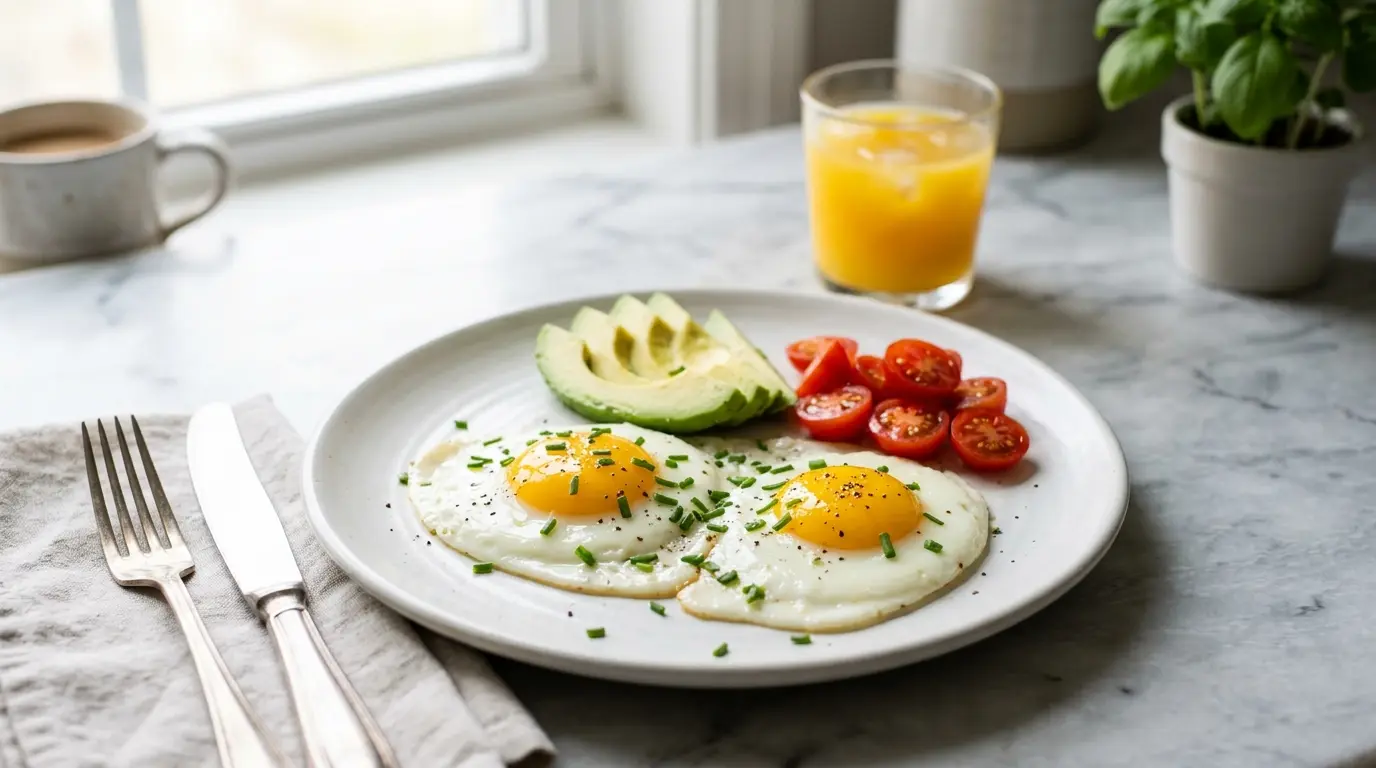
A healthy eggs for breakfast recipe combines eggs, vegetables, and healthy fats to create a satisfying, protein-rich morning meal. This recipe provides approximately 20–25 grams of protein per serving, making it a practical option for busy mornings. Eggs remain a breakfast favorite because they are affordable, versatile, quick to cook, and pair well with many nutritious ingredients. The recipe takes about 15 minutes from start to finish and works well for workdays, school mornings, post-workout meals, weekend breakfasts, or meal prep. By adding vegetables and serving with whole grains or fruit, you can turn simple eggs into a balanced breakfast that supports steady energy throughout the morning.
In addition to breakfast, readers looking for balanced meal ideas later in the day may also enjoy a healthy pasta recipe that combines vegetables, lean protein, and whole-food ingredients.
Table of Contents
Why Protein Matters at Breakfast
Protein is one of the most important components of a well-balanced breakfast. While no single food guarantees long-lasting fullness, protein-rich meals often help people feel satisfied longer than meals built primarily around refined carbohydrates.
Morning Hunger Management
Many common breakfast foods are low in protein. Examples include pastries, sweetened cereals, and toast with jam. While convenient, these options may leave some people feeling hungry sooner.
Adding eggs to breakfast helps increase protein intake early in the day, making the meal more substantial.
Meal Satisfaction
A high-protein breakfast often feels more satisfying because protein contributes texture, flavor, and staying power. Pairing protein with fiber-rich foods can further improve meal satisfaction.
Convenience
Eggs cook quickly and require minimal preparation. Whether scrambled, folded into an omelet, or cooked as a vegetable skillet, eggs fit easily into busy schedules.
Balanced Meal Planning
Protein works best when combined with other important breakfast components:
- Vegetables
- Whole grains
- Fruit
- Healthy fats
- Fluids such as water, milk, or unsweetened beverages
This combination creates a more complete and nutritious breakfast.
Common Breakfast Problems This Recipe Solves
Skipping Breakfast
Many people skip breakfast because mornings feel rushed. This recipe requires only about 15 minutes and uses simple ingredients.
Low-Protein Breakfasts
A bowl of cereal alone may provide relatively little protein. Eggs increase protein intake without requiring complicated preparation.
Reliance on Sugary Foods
Sweet breakfast items can be appealing but may not provide the same level of meal satisfaction as a balanced breakfast recipe that includes protein and vegetables.
Lack of Preparation Time
Busy professionals, students, and parents often need quick breakfast solutions. This recipe uses common ingredients and minimal cooking equipment.
For example:
- A student can prepare it before class.
- A remote worker can cook it between meetings.
- A family can double the recipe to serve multiple people.
Recipe Snapshot
| Detail | Information |
|---|---|
| Prep Time | 5 minutes |
| Cook Time | 10 minutes |
| Total Time | 15 minutes |
| Servings | 2 |
| Estimated Protein Per Serving | 20–25g |
| Course | Breakfast |
| Cuisine | American |
| Cooking Method | Stovetop |
Building a Better Breakfast
Before discussing ingredients, it’s helpful to understand what makes a breakfast balanced.
Protein
Eggs are naturally rich in high-quality protein. They cook quickly and pair well with vegetables, whole grains, and healthy fats.
Vegetables
Vegetables add color, flavor, texture, and volume. They help transform eggs from a simple dish into a more complete meal.
Healthy Fats
Healthy fats from foods such as avocado, olive oil, nuts, and seeds can enhance flavor and help create a satisfying breakfast experience.
Fiber Sources
Fiber can come from:
- Whole-grain toast
- Oatmeal
- Fruit
- Vegetables
Combining protein, healthy fats, vegetables, and fiber creates a nutritious breakfast that supports balanced meal planning.
Ingredients You’ll Need healthy eggs for breakfast recipe
Eggs
You have several options:
Whole Eggs
Whole eggs provide protein along with flavor and richness.
Egg Whites
Egg whites contain protein while contributing fewer calories than whole eggs.
Combination Approach
Many people enjoy combining whole eggs and egg whites. This approach increases protein while maintaining the flavor of whole eggs.
Vegetables
This recipe works well with:
- Spinach
- Bell peppers
- Tomatoes
- Mushrooms
- Onions
Feel free to use whatever vegetables are already available in your refrigerator.
Optional Protein Boosters
To increase protein content further, consider:
- Cottage cheese
- Lean turkey
- Chicken sausage
- Greek yogurt served on the side
Seasonings
Simple seasonings add significant flavor:
- Salt
- Black pepper
- Paprika
- Garlic powder
- Fresh herbs
Ingredient List
For 2 servings:
- 4 large eggs
- 1 cup fresh spinach
- ½ bell pepper, diced
- 1 small tomato, diced
- 1 teaspoon olive oil
- Salt, to taste
- Black pepper, to taste
- Fresh herbs for garnish
Optional:
- 2 tablespoons cottage cheese
- 2 slices whole-grain toast
Morning Meal Formula
A simple breakfast framework can make healthy eating easier:
Protein + Fiber + Produce + Hydration
Protein
Examples:
- Eggs
- Greek yogurt
- Cottage cheese
Fiber
Examples:
- Whole grains
- Fruit
- Vegetables
Produce
Fresh fruits and vegetables add variety and nutritional value.
Hydration
Include:
- Water
- Milk
- Unsweetened tea
- Coffee
This formula is simple, flexible, and practical for many lifestyles.
Step-by-step instructions for a healthy egg breakfast recipe
Step 1: Prepare Ingredients

Wash and chop vegetables.
Crack eggs into a bowl and whisk until smooth.
Season lightly with salt and pepper.
Step 2: Cook Vegetables

Heat olive oil in a nonstick skillet over medium heat.
Add bell pepper and cook for 2–3 minutes.
Add spinach and tomato.
Cook until vegetables soften slightly.
Vegetables should be cooked first because they release moisture and develop flavor before eggs are added.
Step 3: Add Eggs

Pour whisked eggs over the vegetables.
Allow the eggs to set briefly before gently stirring with a spatula.
Continue cooking slowly over medium-low heat.
Gentle cooking helps maintain a softer texture.
Step 4: Adjust Texture

For softer eggs:
- Remove from heat when slightly glossy.
For firmer eggs:
- Cook another 1–2 minutes.
Avoid excessive cooking, as eggs can become dry.
Step 5: Serve
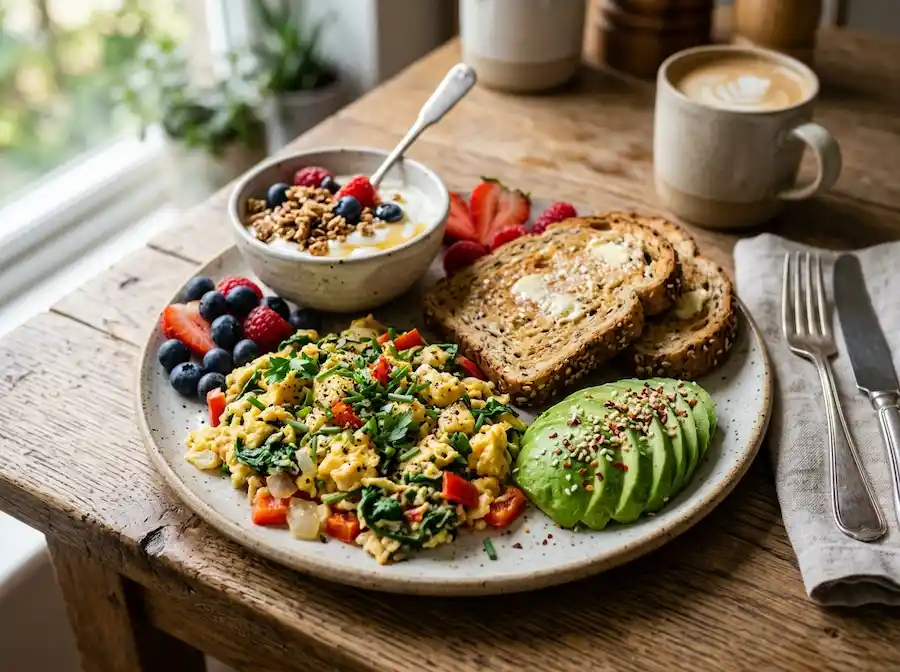
Serve immediately with:
- Whole-grain toast
- Fresh fruit
- Greek yogurt
- Avocado slices
Garnish with herbs before serving.
Protein Comparison Table healthy eggs for breakfast recipe
| Breakfast Option | Approximate Protein |
|---|---|
| Egg Breakfast | 20–25g |
| Cereal | 2–8g |
| Toast and Jam | 3–5g |
| Greek Yogurt Bowl | 15–20g |
| Protein Smoothie | 20–35g |
Protein amounts vary based on ingredients and serving sizes.
Breakfast Customization Ideas
One of the best features of this healthy eggs for breakfast recipe is its flexibility.
Weight-Conscious Version
- Use 2 whole eggs and additional egg whites.
- Increase vegetable volume.
- Serve with fruit instead of extra bread.
Higher-Protein Version
- Add cottage cheese.
- Include turkey or chicken sausage.
- Pair with Greek yogurt.
Protein can easily exceed 30 grams per serving.
Vegetarian Version
- Add mushrooms and cottage cheese.
- Include beans on the side.
- Serve with whole-grain toast.
Meal-Prep Version
Prepare vegetables in advance and store them in containers for quick morning cooking.
Readers interested in digestive-friendly morning meals may also enjoy a quick gut healthy breakfast recipe featuring fiber-rich ingredients and simple preparation methods.
Family Version
Double or triple ingredient quantities and serve with a variety of toppings so everyone can customize their plate.
Healthy Breakfast Habits Beyond the Recipe
Good breakfast habits often matter as much as the recipe itself.
Planning Ahead
Prepare ingredients the night before whenever possible.
Grocery Preparation
Keep staple breakfast ingredients readily available:
- Eggs
- Vegetables
- Fruit
- Whole grains
Consistent Meal Timing
Many people find breakfast easier to maintain when it becomes part of a consistent morning routine.
Portion Awareness
Balanced portions help create meals that are satisfying without becoming unnecessarily large.
For variety, some mornings may call for a healthy breakfast recipe no eggs, such as oatmeal with Greek yogurt, a protein smoothie, or a cottage cheese bowl with fruit.
What to Serve with Eggs
Fruit
Great for freshness and convenience.
Whole Grain Toast
Adds fiber and texture.
Oatmeal
Works well for people needing a more substantial breakfast.
Yogurt
Provides additional protein.
Smoothies
Convenient for busy mornings.
Roasted Potatoes
A satisfying option for weekends or larger family breakfasts.
Meal Prep Possibilities
Egg Muffins
Bake eggs and vegetables in muffin tins for grab-and-go breakfasts.
Breakfast Bowls
Prepare ingredients in containers for quick reheating.
Vegetable Prep
Wash and chop vegetables ahead of time.
Batch Cooking
Cook several servings at once and refrigerate.
Storage guideline:
- Refrigerate cooked egg dishes in airtight containers.
- Consume within 3–4 days for best quality.
Common Mistakes
Overcooking Eggs
Overcooked eggs often become dry and rubbery.
Skipping Vegetables
Vegetables increase volume, flavor, and variety.
Ignoring Portion Balance
Protein alone may not create a complete meal.
Adding Excess Fat
Large amounts of butter, cheese, or oils can quickly increase calories.
Relying Only on Eggs
Including fiber-rich foods and produce creates a more balanced breakfast.
Expert Breakfast Tips
- Keep chopped vegetables ready in the refrigerator.
- Use a nonstick skillet for easier cleanup.
- Cook eggs over medium-low heat.
- Season eggs before and after cooking.
- Add fresh herbs for flavor without extra effort.
- Pair eggs with fruit for additional variety.
- Use egg whites when increasing protein.
- Prepare breakfast stations for busy mornings.
- Rotate vegetables to prevent boredom.
- Keep backup protein options like Greek yogurt available.
Comparison Section
| Breakfast Type | Preparation Time | Protein Potential | Convenience |
|---|---|---|---|
| Egg Breakfast | 10–15 minutes | High | High |
| Oatmeal | 5–10 minutes | Moderate | High |
| Smoothie | 5 minutes | Moderate to High | Very High |
| Breakfast Sandwich | 10–15 minutes | Moderate to High | Moderate |
| Pastries | 1–2 minutes | Low | Very High |
Analysis
Egg breakfasts offer one of the best combinations of protein potential, affordability, and customization.
Oatmeal provides excellent flexibility and fiber.
Smoothies are ideal when time is extremely limited.
Breakfast sandwiches can be balanced depending on ingredients.
Pastries are convenient but generally provide less protein than other options.
Advanced Insights
Why Breakfast Protein Has Become Popular
Many people seek breakfast options that feel more substantial and fit active lifestyles. Protein-rich breakfasts help meet daily protein goals while providing versatility and convenience.
How Meal Composition Affects Satisfaction
Meals containing protein, fiber, healthy fats, and produce often feel more complete than meals focused on a single nutrient category.
Why Convenience Influences Food Choices
People frequently choose foods that are quick and accessible. Eggs remain popular because they cook rapidly and require little equipment.
The Role of Preparation Habits
Small preparation habits, such as chopping vegetables in advance, can significantly simplify breakfast routines.
How Breakfast Quality Influences Daily Choices
Starting the day with a balanced meal may make it easier for some individuals to maintain consistent eating habits throughout the day.
Frequently Asked Questions
1. Are eggs a healthy breakfast choice?
Yes. Eggs provide protein and fit well into many balanced breakfast patterns when paired with vegetables, fruit, and whole grains.
2. How much protein is in this recipe?
Approximately 20–25 grams per serving, depending on ingredients and serving size.
3. Can I prepare it ahead of time?
Yes. Vegetables can be chopped in advance, and cooked portions may be refrigerated for several days.
4. Are egg whites better than whole eggs?
Neither is universally better. Egg whites increase protein with fewer calories, while whole eggs provide additional flavor and nutrients.
5. What vegetables work best?
Spinach, peppers, tomatoes, mushrooms, onions, zucchini, and broccoli are all excellent choices.
6. Can I increase the protein content?
Yes. Add cottage cheese, turkey, chicken sausage, extra egg whites, or Greek yogurt.
7. How long can cooked eggs be stored?
Most cooked egg dishes can be refrigerated for 3–4 days in airtight containers.
8. What side dishes work well?
Fruit, whole-grain toast, oatmeal, yogurt, smoothies, and roasted potatoes pair well with eggs.
9. Can this recipe support meal prep?
Absolutely. It works well in breakfast bowls, egg muffins, and batch-cooked servings.
10. What if I do not eat eggs every day?
You can rotate breakfast options such as Greek yogurt bowls, oatmeal, smoothies, cottage cheese, or other protein-rich meals.
Conclusion
This healthy eggs for breakfast recipe remains one of the simplest ways to create a nutritious breakfast that combines protein, vegetables, and great flavor. It requires minimal preparation, fits busy schedules, and can be customized for different dietary preferences and protein goals.
By pairing eggs with vegetables, fiber-rich foods, healthy fats, and proper hydration, you can build a balanced breakfast that works for workdays, school mornings, family meals, or meal prep routines. Whether you prefer a lighter version or a high-protein breakfast, the flexibility of eggs makes them a practical choice for almost any lifestyle.
For continued healthy eating throughout the day, consider pairing your breakfast routine with other balanced meals, including a healthy pasta recipe that incorporates vegetables, lean protein, and wholesome ingredients.