
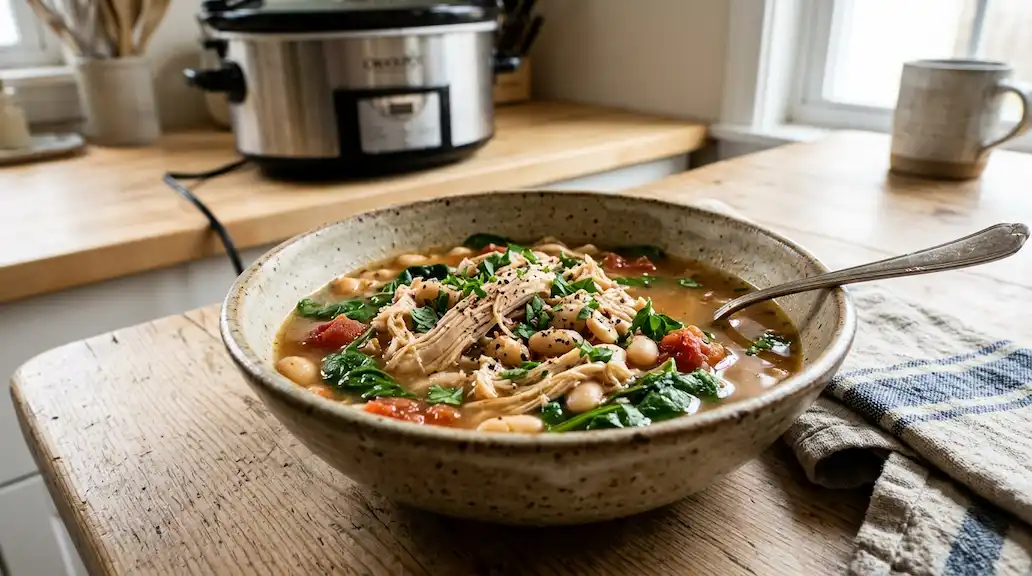
This high protein slow cooker recipe is a simple, budget-friendly meal prep solution built around lean protein, vegetables, and flavorful seasonings. It requires minimal hands-on time, produces multiple servings, and helps make healthy eating more convenient throughout the week.
Why it’s useful for meal prep:
- Large batch cooking with minimal effort
- Easy portioning into containers
- Budget-friendly ingredients
- Excellent refrigerator and freezer storage
Approximate protein content: 30–40g per serving
Preparation time: 15 minutes
Cooking time: 6–8 hours on Low or 3–4 hours on High
Best use cases:
- Weekly meal prep
- High protein dinner planning
- Family meals
- Fitness nutrition goals
- Busy work schedules
If you’re building a complete meal-prep routine, pairing this dish with a healthy pasta recipe can add variety while maintaining convenience throughout the week.
Table of Contents
Why Slow Cooker Meals Work So Well for High-Protein Diets
Slow cookers remain one of the most practical kitchen tools for anyone trying to increase protein intake consistently.
The biggest advantage is hands-off cooking. Once ingredients are added, the slow cooker handles the work while you focus on your day. This is particularly useful for professionals balancing work schedules, parents managing family responsibilities, and athletes following structured nutrition plans.
Another benefit is consistency. Unlike stovetop cooking, where protein can quickly become overcooked, slow cooking provides a more forgiving environment that helps maintain tenderness.
Batch cooking is another major advantage. A single cooking session can provide multiple meals for several days. Instead of preparing lunch and dinner daily, you can prepare one large protein-packed meal and portion it into containers.
Portion control also becomes easier. When meals are pre-portioned ahead of time, it’s much simpler to monitor calorie and protein intake without additional measuring throughout the week.
Many home cooks find that spending 15 minutes preparing ingredients on Sunday can save several hours of weekday cooking and cleanup.
The Protein Challenge Most People Face
Meeting daily protein goals sounds simple in theory but often becomes difficult in practice.
Busy schedules frequently push people toward convenience foods that are high in calories but relatively low in protein. Breakfast gets skipped, lunches become rushed, and dinner turns into whatever is fastest to prepare.
Lack of preparation is often the biggest obstacle. Even people who understand the importance of protein may struggle to keep high-quality meals available throughout the week.
For active individuals, protein requirements can be even higher. Athletes, recreational lifters, and physically demanding workers often need substantial protein intake spread across multiple meals.
Meal prep addresses these challenges by creating ready-to-eat meals before the week becomes busy. When a protein-rich meal is already prepared, healthy choices become significantly easier.
Recipe Snapshot
| Detail | Information |
|---|---|
| Prep Time | 15 minutes |
| Cook Time | 6–8 hours Low or 3–4 hours High |
| Total Time | 6–8 hours |
| Servings | 6–8 |
| Estimated Protein | 30–40g per serving |
| Course | Main Dish |
| Cuisine | American |
| Cooking Method | Slow Cooker |
Ingredients You’ll Need
Primary Protein Source
The protein you choose significantly influences flavor, texture, and nutritional profile.
Chicken Breast
- Extremely lean
- High protein density
- Shreds easily
- Budget-friendly
Chicken Thighs
- More flavorful
- Slightly higher fat content
- Less likely to dry out
Lean Turkey
- Excellent protein-to-calorie ratio
- Mild flavor
- Works well with various seasonings
Lean Beef
- Rich flavor
- Higher iron content
- Great for hearty meal prep dishes
Pork Loin
- Leaner than many pork cuts
- Tender texture
- Cost-effective option
Vegetables
Vegetables add volume, fiber, texture, and flavor.
Recommended options include:
- Bell peppers
- Onions
- Carrots
- Celery
- Tomatoes
- Green beans
These ingredients absorb seasonings during cooking while helping create a satisfying meal without dramatically increasing calories.
Liquid Components
Liquid serves several important functions during slow cooking.
Common choices include:
- Chicken broth
- Bone broth
- Low-sodium broth
- Tomato-based liquids
Bone broth may slightly increase protein content, while tomato-based liquids contribute acidity and depth of flavor.
Seasonings
Simple seasonings often work best.
Try combining:
- Garlic
- Onion powder
- Paprika
- Black pepper
- Italian seasoning
- Chili powder
These ingredients create flavor complexity without requiring specialty products.
Ingredient List
Base Recipe
- 2 pounds chicken breast
- 1 onion, diced
- 2 bell peppers, chopped
- 2 carrots, sliced
- 3 garlic cloves, minced
- 2 cups low-sodium chicken broth
- 1 tablespoon paprika
- 1 teaspoon Italian seasoning
- 1 teaspoon salt
- 1/2 teaspoon black pepper
How to Build a Better Slow Cooker Meal
Before cooking, it helps to understand what makes a successful high-protein meal prep recipe.
Choose Lean Protein
Protein density matters when meal prepping.
Chicken breast, turkey breast, lean beef, and pork loin provide substantial protein while keeping calories relatively controlled.
Higher protein density makes it easier to reach nutrition targets without dramatically increasing portion sizes.
Add High-Volume Vegetables
Vegetables increase meal volume and satiety.
A larger meal often feels more satisfying despite containing relatively few additional calories.
This approach helps create balanced meals that support both nutrition and fullness.
Control Liquid Carefully
One of the most common slow cooker mistakes is excessive liquid.
Proteins and vegetables release moisture during cooking. Too much added liquid can create a watery final product.
Use enough liquid to maintain moisture but not so much that flavors become diluted.
Season Early
Seasonings need time to develop.
Adding spices at the beginning allows flavors to distribute throughout the cooking process, creating a more cohesive final dish.
Step-by-Step Cooking Method High Protein Slow Cooker Recipe
Step 1: Prepare Ingredients
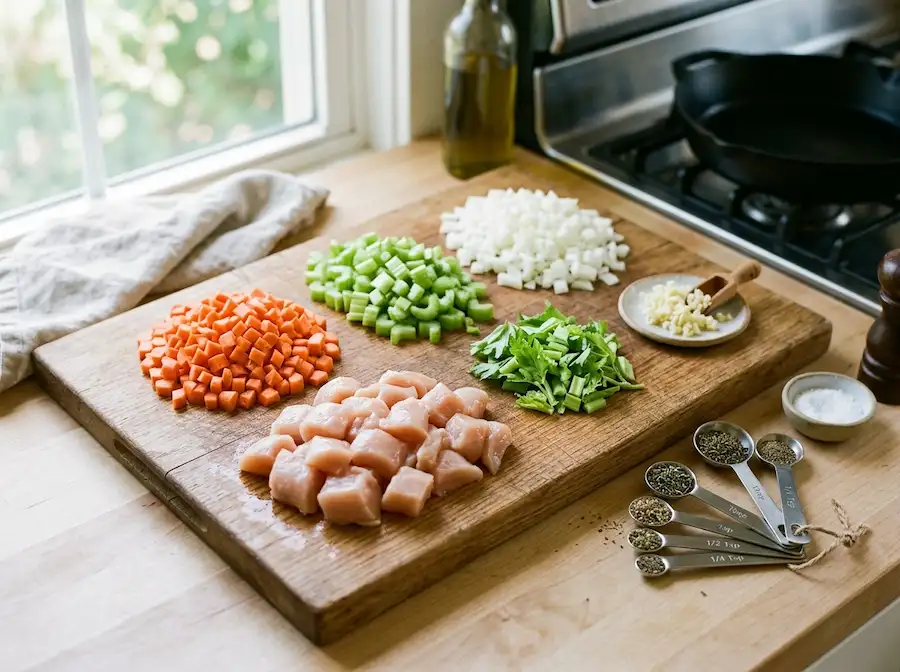
Dice vegetables, mince garlic, and trim any excess fat from the chicken breasts.
Measure seasonings before assembling the slow cooker.
Step 2: Layer Ingredients Correctly
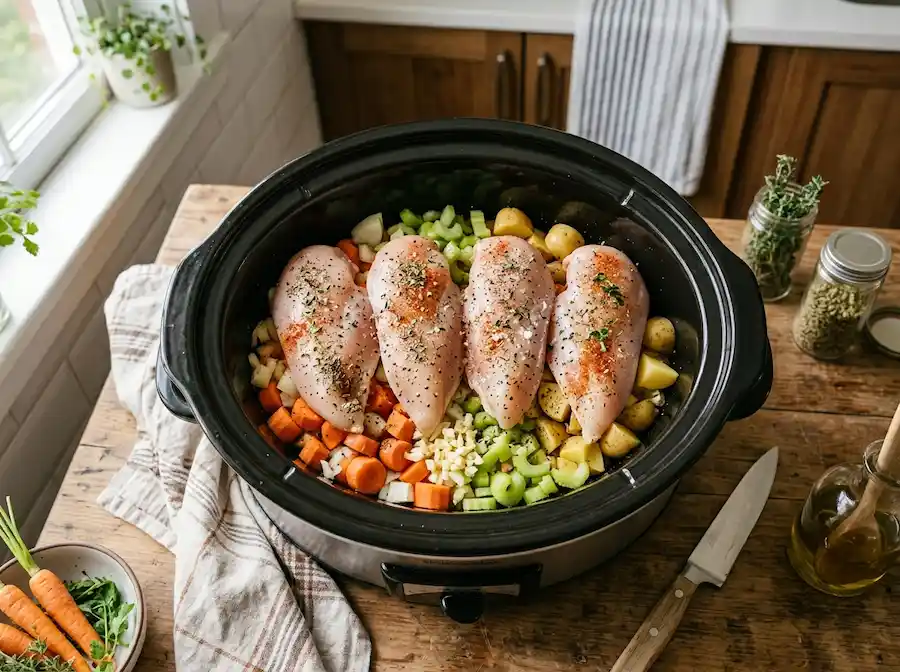
Place carrots, onions, and other dense vegetables on the bottom.
Protein should sit above the vegetables.
This arrangement helps vegetables cook evenly while protecting lean protein from direct heat exposure.
Step 3: Add Liquid and Seasoning
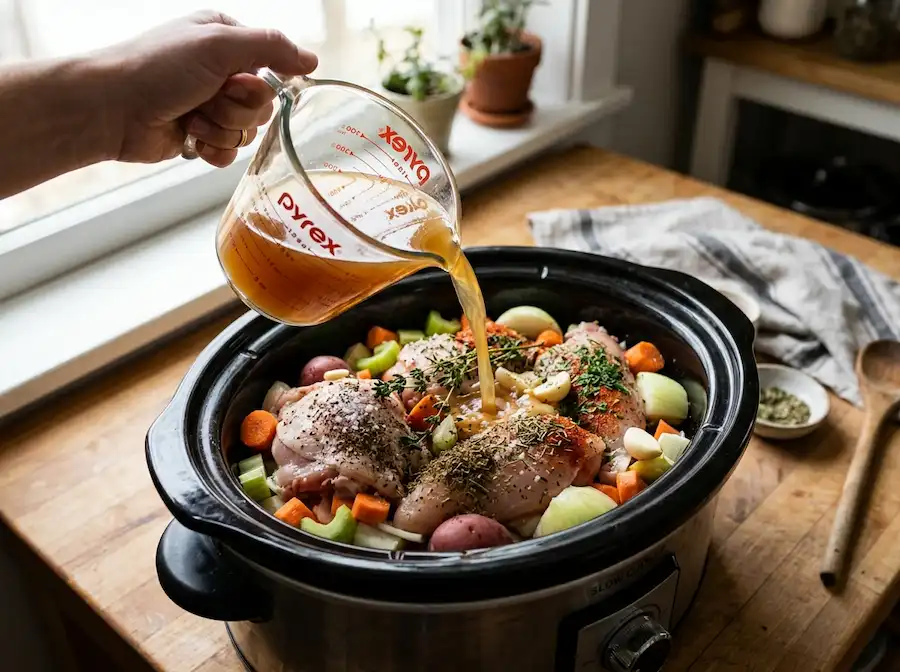
Pour broth evenly across ingredients.
Sprinkle seasonings over the top for consistent flavor distribution.
Step 4: Slow Cook
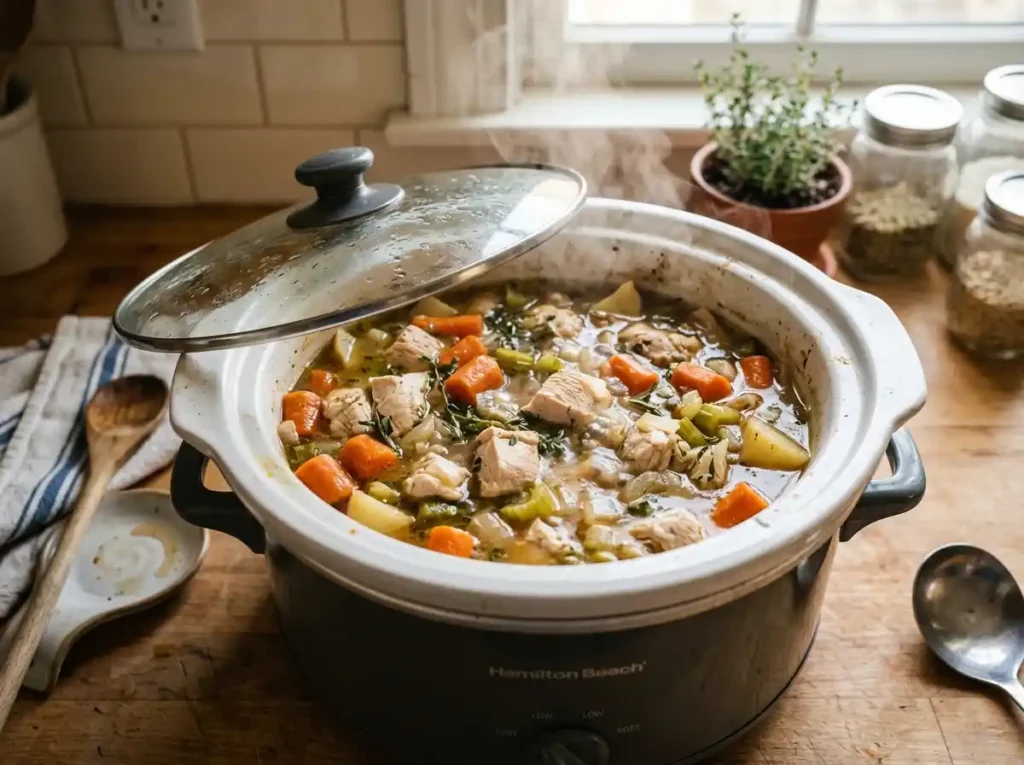
Choose one of the following settings:
Low: 6–8 hours
High: 3–4 hours
Low-temperature cooking typically produces the most tender texture.
Step 5: Shred or Slice Protein
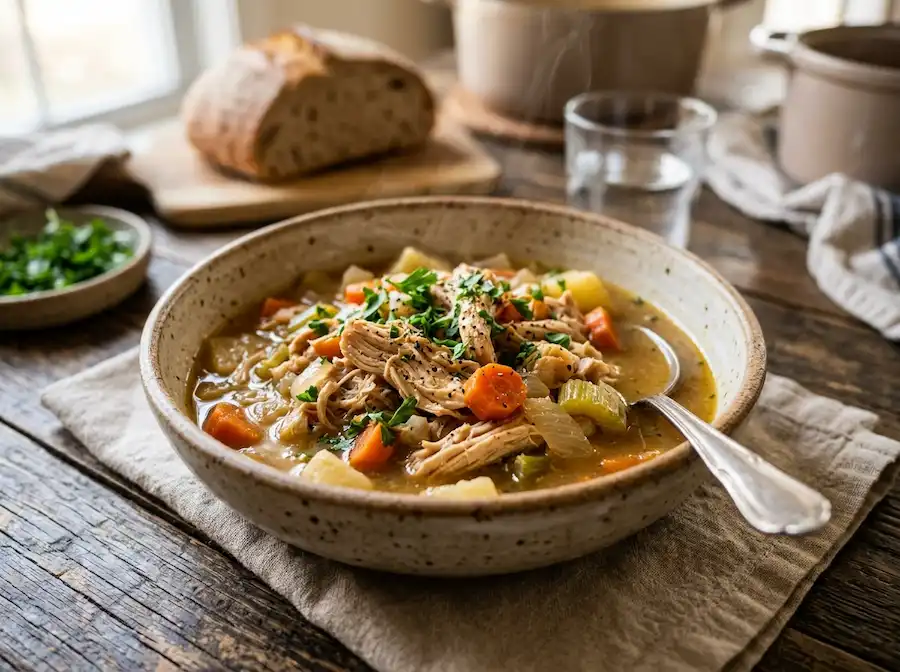
Chicken breast is usually easiest to shred after cooking.
Turkey can also be shredded effectively.
Lean beef and pork loin are often excellent when sliced into portions.
Step 6: Portion for Meal Prep
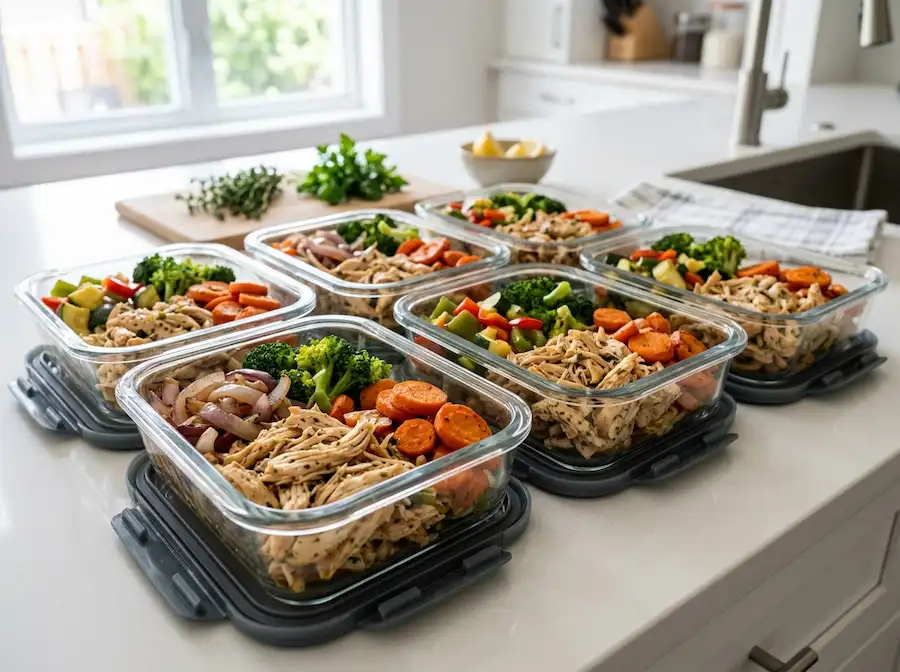
Divide the finished meal into storage containers.
Aim for balanced portions containing both protein and vegetables.
Label containers with preparation dates if preparing multiple batches.
Protein Breakdown Per Serving
| Protein Source | Approximate Protein |
|---|---|
| Chicken Breast | 35–40g |
| Turkey | 34–38g |
| Lean Beef | 30–35g |
| Pork Loin | 30–34g |
Actual values vary depending on serving size and preparation method.
Meal Prep Strategy
Successful slow cooker meal prep begins with weekly planning.
Many households prepare one large protein source and rotate side dishes throughout the week. This reduces cooking workload while minimizing menu fatigue.
After cooking, divide meals into individual containers immediately. This creates ready-to-grab lunches and dinners.
Store meals in the refrigerator for short-term use and freeze additional portions if needed.
For those seeking variety, alternating this recipe with a high protein vegetarian recipe can help diversify protein sources while maintaining meal-prep efficiency.
A practical system is preparing two large protein-based meals each week and alternating between them.
How to Reach Protein Goals More Easily
Protein intake becomes easier when distributed across multiple meals.
Instead of relying on one large dinner, aim to include protein at breakfast, lunch, dinner, and snacks.
Helpful strategies include:
- Planning protein around each meal
- Prioritizing protein first when portioning meals
- Keeping convenient options available
- Using meal-prepped lunches consistently
Combining this recipe with a high protein snack recipe during the day can make it much easier to achieve overall protein targets without feeling overly full at any one meal.
Best Side Dishes
Rice
Ideal for athletes and active individuals needing additional carbohydrates.
Roasted Vegetables
Adds variety and micronutrients while remaining meal-prep friendly.
Sweet Potatoes
Provide carbohydrates, fiber, and natural sweetness.
Salad
Works well for lighter meals and lower-calorie goals.
Whole Grain Bread
Convenient option for quick lunches.
Quinoa
Offers additional protein and fiber compared to many grain options.
Storage, Freezing, and Reheating
Refrigerator Storage
Store portions in airtight containers for up to 4 days.
Freezer Storage
Freeze individual servings for up to 3 months.
Meal Prep Containers
Use durable containers with secure lids to minimize leaks and preserve freshness.
Reheating Methods
- Microwave: Fastest option
- Stovetop: Good texture retention
- Oven: Suitable for larger portions
Some texture changes are normal after freezing. Shredded proteins generally reheat better than sliced proteins.
Common Meal Prep Mistakes
Overcooking Lean Protein
Chicken breast can become dry if cooked significantly longer than necessary.
Using Too Much Liquid
Excess liquid often results in diluted flavor and poor texture.
Underseasoning
Slow cooking can mellow spices. Adequate seasoning is important.
Poor Portion Control
Uneven portions make nutrition tracking difficult.
Freezing Incorrectly
Allow meals to cool before freezing and remove excess air when possible.
Expert Meal Prep Tips
- Shop with a weekly meal plan.
- Buy protein in family-size packages when on sale.
- Prep vegetables before cooking day.
- Label containers with dates.
- Freeze extra portions immediately.
- Use bone broth for richer flavor.
- Rotate seasoning blends for variety.
- Cool food safely before refrigeration.
- Store sauces separately when possible.
- Keep a backup freezer meal available for busy weeks.
Comparison Section
| Method | Time Investment | Convenience | Protein Potential |
|---|---|---|---|
| Slow Cooker | Low | Very High | Excellent |
| Oven Baking | Moderate | Moderate | Excellent |
| Stovetop Cooking | High | Moderate | Excellent |
| Meal Delivery Services | Very Low | High | Variable |
Analysis
Slow cookers provide one of the best balances between convenience and nutritional control.
Oven baking works well but requires more attention.
Stovetop cooking offers speed but demands active involvement.
Meal delivery services save time but are generally more expensive and provide less control over ingredients.
Advanced Insights
Protein Density vs Calorie Density
Protein-dense foods deliver substantial protein without excessive calories, making them particularly useful for meal prep.
Why Slow Cooking Changes Texture
Extended cooking gradually breaks down connective tissues, producing a tender texture that many people find highly satisfying.
How Meal Prep Reduces Food Waste
Planned meals reduce impulse purchases and increase ingredient utilization.
The Economics of Batch Cooking
Preparing eight servings simultaneously often costs substantially less than purchasing eight individual meals.
How Athletes and Busy Professionals Use Meal Prep Systems
Many athletes and professionals rely on structured meal-prep routines because consistency often matters more than complexity.
A prepared meal removes decision fatigue and improves adherence to nutrition goals.
Frequently Asked Questions
1. What is the best protein for a slow cooker recipe?
Chicken breast is often the most popular option due to its protein density, affordability, and versatility.
2. Can I use frozen chicken?
It’s generally safer and more reliable to thaw chicken before slow cooking.
3. How much protein should a meal contain?
Many high-protein meals contain approximately 25–40g of protein, depending on individual goals.
4. Can I freeze meal prep portions?
Yes. Individual portions freeze very well and can remain stored for several months.
5. How long do slow cooker meals last?
Typically up to 4 days in the refrigerator when properly stored.
6. Is chicken breast or thigh better?
Chicken breast offers more protein per calorie, while thighs provide richer flavor and moisture.
7. Can I make this recipe low carb?
Yes. Reduce starchy sides and focus on non-starchy vegetables.
8. Can I increase protein further?
Yes. Increase protein portions or use higher-protein side dishes such as quinoa.
9. What vegetables work best?
Onions, carrots, celery, peppers, tomatoes, and green beans all perform well in slow cookers.
10. Can I cook this overnight?
Yes. Using the low setting overnight is a common approach for meal-prep cooking.
Conclusion
This high protein slow cooker recipe offers an efficient way to prepare nutritious meals with minimal effort. By combining lean protein, vegetables, and simple seasonings, you can create a satisfying protein-packed meal that supports busy schedules and long-term meal-prep success.
Slow cooker meal prep simplifies weekday eating, reduces cooking stress, and helps maintain consistent protein intake. The ability to batch cook, portion meals, and freeze extras makes this approach practical for families, athletes, and professionals alike.
Whether your goal is building a weekly meal prep routine, saving money, or preparing more high protein dinners, this recipe provides a flexible foundation that can be customized to fit your needs. For additional variety, consider pairing it with a healthy pasta recipe as part of a balanced meal-prep rotation.