
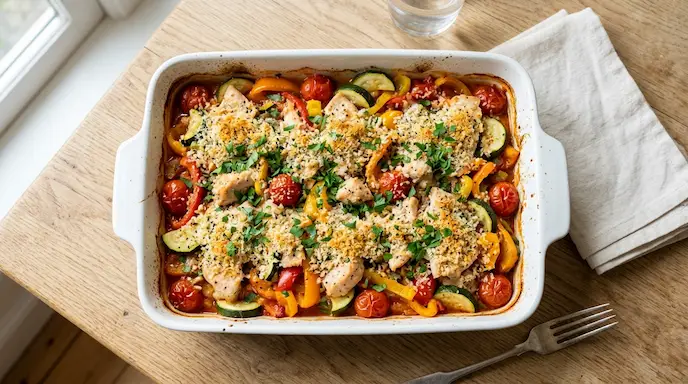
Meta Description: Low calorie casserole recipe under 300 calories per serving with turkey, vegetables, and a light Greek yogurt sauce.
Quick Overview
This low calorie casserole recipe is a baked turkey and vegetable casserole with a light Greek yogurt sauce that stays creamy without relying on heavy cream or large amounts of cheese. It comes in at about 190 to 230 calories per serving, depending on your exact ingredients and portion size. The recipe works because it combines lean protein, high-volume vegetables, and a flavorful but lighter sauce, which helps it feel satisfying without becoming calorie-dense. It takes about 15 minutes to prep and 35 minutes to bake, so it is practical for weeknights, meal prep, and family dinners. It is also a strong option for anyone looking for a comforting, filling meal that fits a lighter eating plan.
For another lighter dinner idea, a healthy pasta recipe can be a useful companion meal when you want variety without losing balance.
Why Many Traditional Casseroles Are High in Calories
Classic casseroles often start out simple, then quietly become heavy. The main reasons are familiar:
- Heavy cream adds richness quickly, but it also adds a lot of fat and calories.
- Excess cheese makes the top golden and appealing, yet it can push the calorie count up fast.
- Processed ingredients like creamy soups, packaged sauces, and pre-seasoned fillings often contain hidden sodium, fat, and starch.
- Large serving sizes are easy to justify with casserole because the dish is baked in one pan and feels wholesome, which can lead to oversized portions.
That combination is why casseroles are often treated like comfort food rather than everyday food. They are satisfying, but not always aligned with weight-conscious eating.
What Makes This Low Calorie Casserole Different
This version keeps the comfort-food feel while making smarter choices that support lighter eating.
Lean protein
Ground turkey gives the dish structure, heartiness, and staying power. Protein matters because it helps the casserole feel like a real meal instead of a side dish.
More vegetables
Broccoli, zucchini, bell pepper, onion, and garlic add volume, color, and texture. They also help the casserole look full and generous, which is useful when you are eating with calorie awareness.
A lighter sauce
Greek yogurt and low-sodium broth replace the usual cream base. The result is still creamy and cohesive, but the dish does not feel heavy.
Controlled portions
A casserole can be healthy and still become too much if the serving size is vague. This recipe is designed with clear portions so each plate stays under control.
Better nutrient density
You get protein, fiber, vitamins, and minerals in a meal that is still familiar and comforting. In real home cooking, that matters more than chasing perfection. A lighter casserole only works if people actually want to eat it again.
Recipe Snapshot
| Detail | Information |
|---|---|
| Prep Time | 15 minutes |
| Cook Time | 35 minutes |
| Total Time | 50 minutes |
| Servings | 6 |
| Estimated Calories Per Serving | About 190 to 230 |
| Course | Main Dish |
| Cuisine | American |
| Main Cooking Method | Baking |
Ingredients You’ll Need
Lean Protein Options
The best protein depends on your goals and what you keep on hand.
Ground turkey
This is the most practical choice for the base recipe. It browns well, mixes easily with vegetables, and has a mild flavor that takes seasoning well. The main advantage is balance: enough protein for satiety without a heavy calorie load.
Chicken breast
A good option if you want a slightly leaner, more delicate casserole. It is very lean, but it can dry out faster than turkey if overbaked.
Rotisserie chicken, skin removed
Convenient and fast, especially for busy families. The tradeoff is that it can vary in salt content and texture depending on the brand.
White beans
A smart vegetarian option that adds fiber and creaminess. They are filling, though they create a softer texture than meat-based versions.
Low-Calorie Vegetables
Vegetables are the bulk of the recipe, and that is a good thing.
Broccoli adds structure and a hearty bite.
Cauliflower blends well with sauce and helps create volume.
Zucchini brings moisture and mild flavor.
Mushrooms add savory depth.
Spinach works well if you want a softer green element.
Bell peppers add sweetness, color, and freshness.
These ingredients make the casserole look abundant, which is one reason a low calorie casserole recipe can feel more satisfying than its calorie count suggests.
Sauce Components
Greek yogurt replaces cream with protein and tang.
Reduced-fat milk can thin the sauce if needed.
Low-sodium broth helps carry flavor and keeps the dish moist.
This trio gives you a creamy texture without the thickness and calorie load of a traditional sauce base.
Flavor Boosters
A light casserole still needs depth.
- Garlic gives the dish aroma and warmth.
- Onion adds sweetness and a savory base.
- Herbs like Italian seasoning bring balance and familiarity.
- Mustard adds brightness and helps the sauce taste more complete.
- Parmesan provides concentrated flavor, so a small amount goes a long way.
That is the key lesson: flavor does not have to come from fat alone.
Ingredients List
Use these practical quantities for the base recipe:
- 1 pound lean ground turkey
- 4 cups broccoli florets
- 1 zucchini, diced
- 1 bell pepper, chopped
- 1 small onion, diced
- 2 garlic cloves, minced
- 1 cup plain Greek yogurt
- 1 cup low-sodium chicken broth
- 1/4 cup grated Parmesan cheese
- 1 teaspoon Italian seasoning
- Salt and pepper, to taste
Step-by-Step Instructions
Step 1: Prepare Ingredients
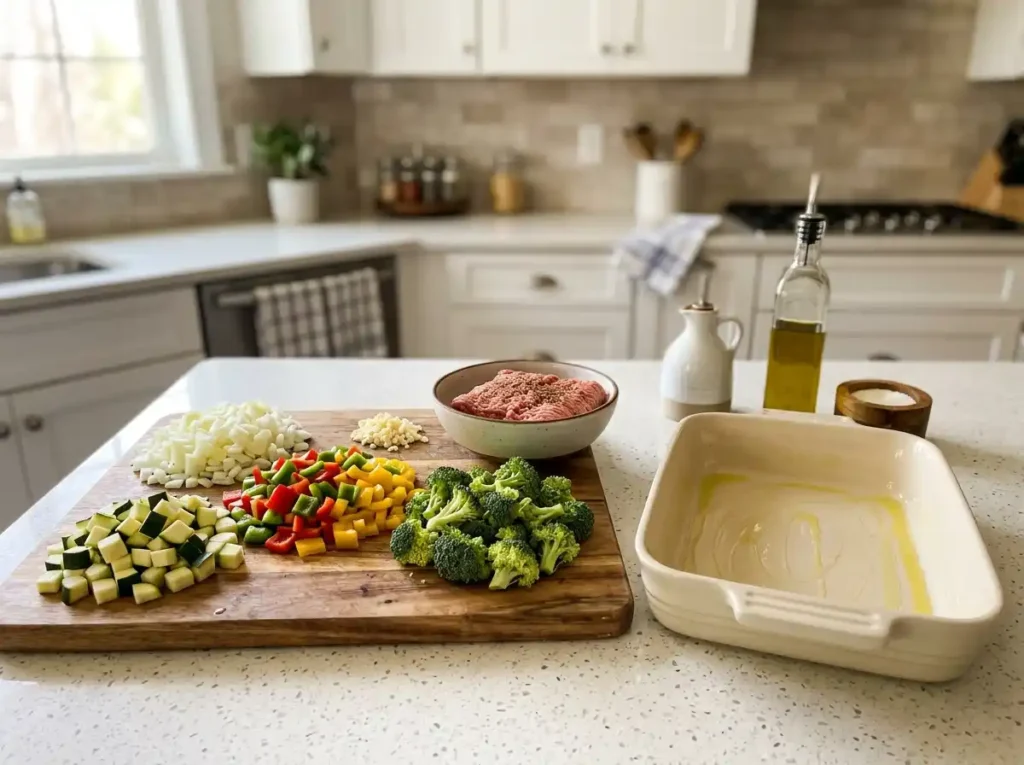
Preheat the oven to 375°F. Lightly grease a casserole dish. Chop the vegetables before cooking so the process stays organized. When a recipe is meant for weeknights or meal prep, prep work matters more than fancy technique.
Step 2: Cook the Protein
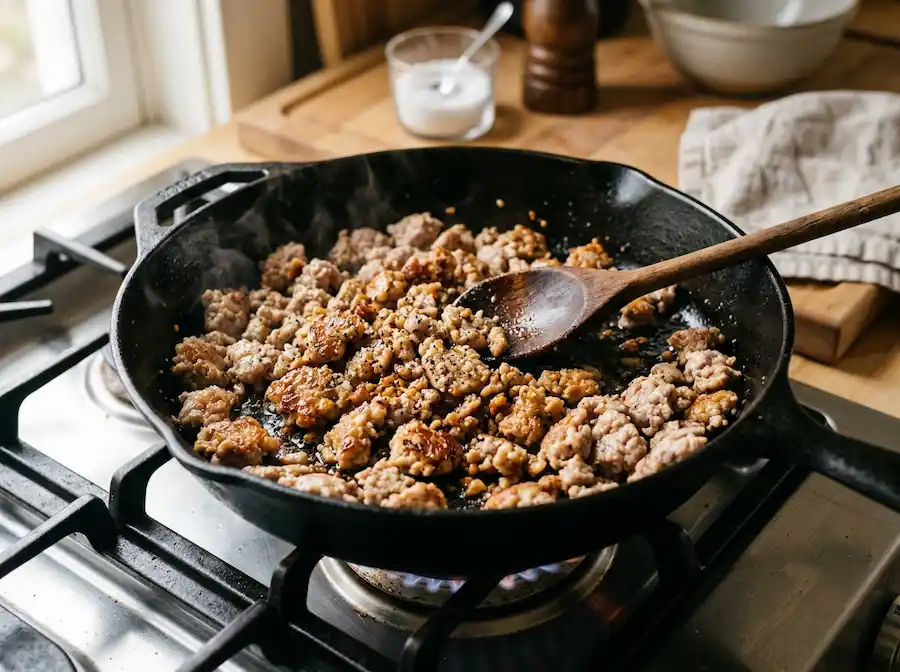
Heat a large skillet over medium heat. Add the ground turkey and cook until browned, breaking it apart with a spoon. Let it develop some color instead of stirring constantly. Browning creates more flavor than simply steaming the meat.
Season lightly with salt and pepper while it cooks.
Step 3: Build the Vegetable Base
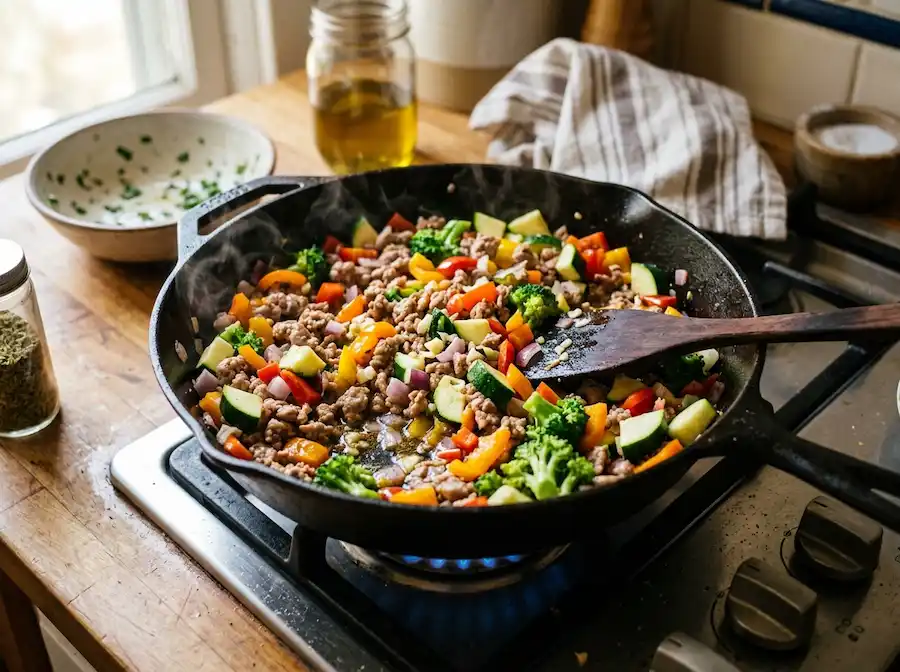
Add the onion, garlic, bell pepper, zucchini, and broccoli to the skillet. Cook for a few minutes until the vegetables begin to soften, but do not overcook them. They will continue baking in the oven, and the goal is to keep some texture.
If the vegetables are too soft at this stage, the finished casserole can turn mushy.
Step 4: Make the Light Sauce

Reduce the heat to low. In a bowl, whisk together the Greek yogurt, broth, Italian seasoning, and Parmesan cheese. Then stir the sauce into the turkey and vegetable mixture.
To prevent curdling, avoid high heat when adding the yogurt. Keep the pan warm rather than hot. This helps the sauce stay smooth and creamy.
Step 5: Assemble the Casserole
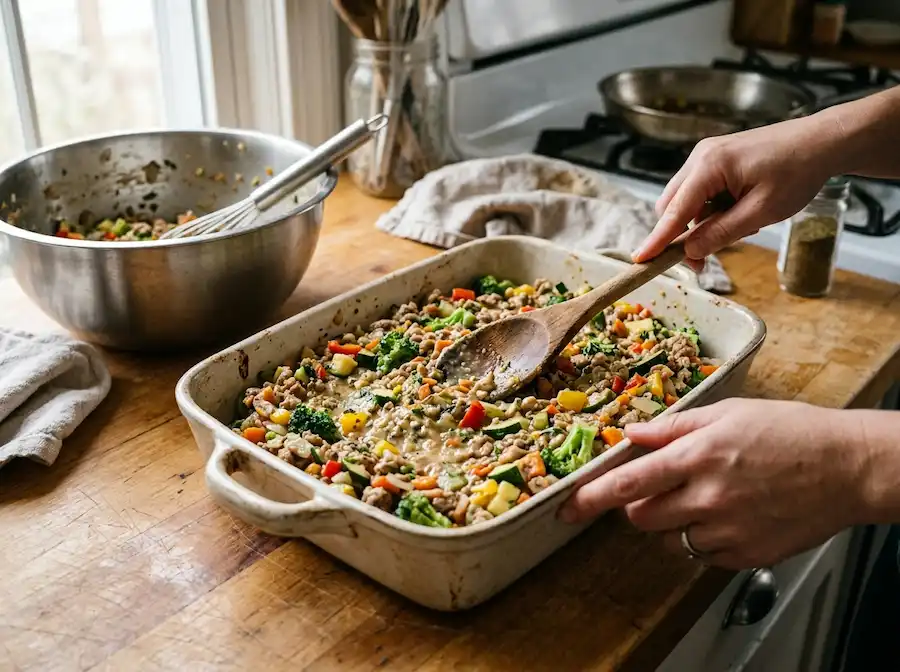
Transfer the mixture to the prepared baking dish. Spread it evenly so the sauce and vegetables are distributed from edge to edge. A casserole should not have dry corners or pockets of too much liquid.
Step 6: Bake
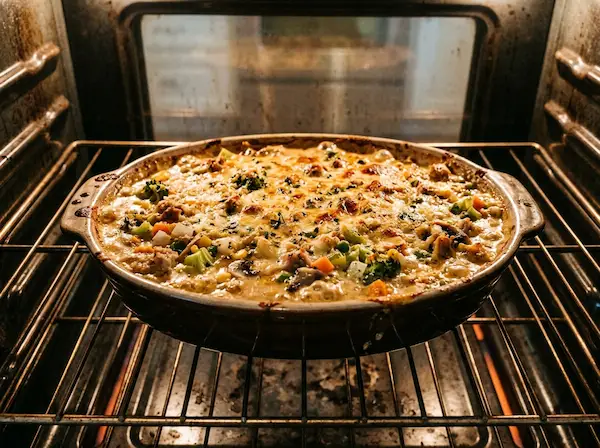
Bake uncovered for about 30 to 35 minutes, or until the casserole is hot and bubbling and the top looks set. If you want a little more browning, you can broil it for 1 to 2 minutes at the end, but watch it carefully.
Step 7: Rest and Serve
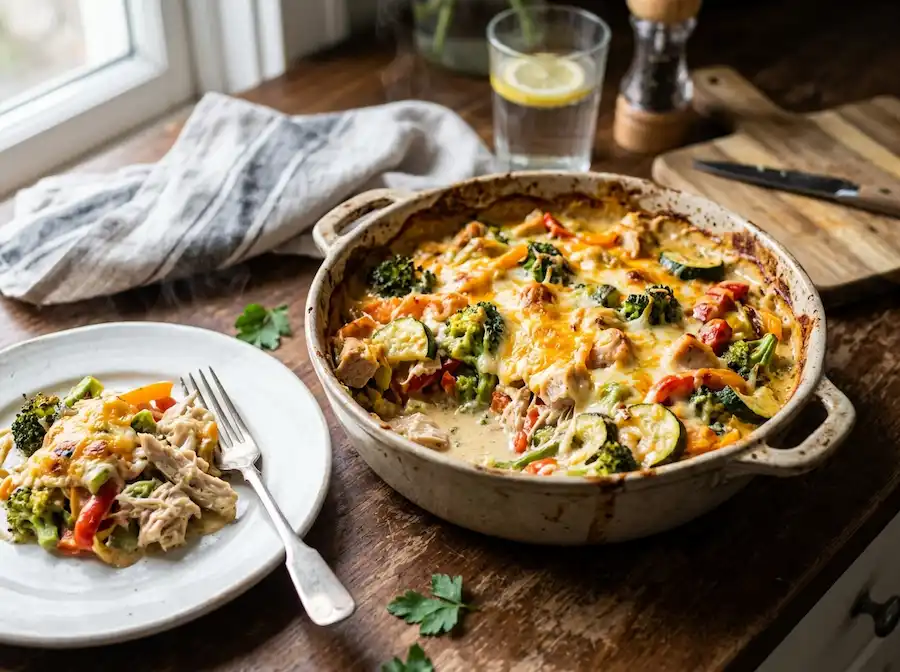
Let the casserole rest for 5 to 10 minutes before serving. This helps the sauce settle and improves texture. Straight out of the oven, it may seem looser than it really is.
Estimated Calorie Breakdown
| Ingredient Category | Approximate Calories |
|---|---|
| Lean Protein | 680 |
| Vegetables | 220 |
| Sauce | 145 |
| Cheese | 80 |
| Total Recipe | 1,125 |
| Total Per Serving (6 servings) | About 188 |
These numbers are estimates, not laboratory measurements. Exact calories depend on the brand of turkey, yogurt, broth, and cheese you use. Even so, this recipe stays well under the 300-calorie target per serving.
How to Keep a Casserole Filling Without Extra Calories
A casserole feels satisfying when it has more than one kind of staying power.
Protein
Protein helps reduce the feeling that you need a second dinner. Ground turkey, chicken, or beans all work because they make the dish more substantial.
Fiber
Vegetables and beans slow down eating and add bulk. This matters for anyone building a low calorie recipe for weight loss because fullness is often the difference between a meal that works and one that leaves you searching for snacks an hour later.
Vegetables
Volume matters. A large portion of broccoli or zucchini creates visual and physical fullness without a large calorie cost.
Portion volume
A bowl or plate that looks generous can be more satisfying than a tiny, dense serving. That is why lighter casseroles are often better than people expect.
For all-day calorie management, pairing dinner with a low calorie breakfast recipe earlier in the day can help create a balanced routine without making meals feel restrictive.
Best Side Dishes
This casserole works well on its own, but a simple side can round out the plate.
Green salad
Best when you want extra crunch and freshness.
Roasted vegetables
Best when you want a more filling, dinner-style spread.
Fresh fruit
Best when you want a light contrast after a savory meal.
Light soup
Best for colder weather or larger family dinners.
Meal Prep and Storage
This casserole is meal-prep friendly, but like most baked dishes, it changes slightly after storage.
Refrigeration
Store leftovers in an airtight container for up to 4 days. The flavors usually deepen overnight.
Freezing
You can freeze portions for up to 2 months. The texture of the yogurt sauce may become slightly less smooth after thawing, but the recipe still reheats well.
Reheating
Reheat gently in the microwave or oven. Add a small splash of broth if the casserole seems dry. Reheating too aggressively can make the vegetables softer than you want.
Healthy Substitutions
| Instead Of | Use |
|---|---|
| Heavy Cream | Greek Yogurt |
| Full-Fat Cheese | Reduced-Fat Cheese |
| Ground Beef | Turkey |
| White Pasta | Extra Vegetables |
Each swap lowers calories or increases nutrient density, but there are tradeoffs. Greek yogurt is tangier than cream. Reduced-fat cheese melts differently. Turkey is leaner than beef, so it may need stronger seasoning. Extra vegetables lower calorie density, but they also require attention to texture so the dish does not become watery.
That is the real mindset behind a low calorie recipe for weight loss: keep the meal satisfying, but make every calorie do more work.
Common Mistakes
Too Much Cheese
Cheese is easy to overdo. A small amount adds flavor; a large amount can overpower the lighter structure of the dish.
Skipping Seasoning
Lean protein and vegetables need seasoning. Without enough garlic, herbs, salt, and pepper, the casserole can taste flat.
Overcooking Vegetables
If the vegetables are too soft before baking, the final texture can become soggy.
Using Large Portions
Even a lighter casserole can become high-calorie if the serving size grows too large. Serving it with a measuring scoop or dividing it into six portions helps.
Adding High-Calorie Toppings
Breadcrumbs, extra cheese, creamy dressings, and buttery sauces can quickly change the nutrition profile.
Expert Tips
- Use a wide skillet so the turkey browns instead of steaming.
- Chop vegetables into similar sizes so they cook evenly.
- Add herbs early and adjust salt at the end.
- Let the casserole rest before serving so it holds together better.
- Use a light hand with sauce; you want coating, not pooling.
- Choose vegetables with different textures for a more interesting bite.
- Make one batch on Sunday and portion it for lunches or fast dinners.
- Taste before baking if possible; seasoning a mixture is easier than fixing a bland finished dish.
Comparison: Low Calorie Casserole vs Traditional Casserole
| Feature | Low Calorie Version | Traditional Version |
|---|---|---|
| Calories | About 190 to 230 per serving | Often 350 to 600+ |
| Protein | Lean and balanced | Varies, often lower relative to calories |
| Vegetables | High volume | Often lower or secondary |
| Saturated Fat | Lower | Higher |
| Portion Flexibility | Easier to fit into meal plans | Easier to overeat |
The low-calorie version wins on everyday practicality. It delivers enough richness to feel like comfort food, but it is more realistic for regular meal planning. Traditional casseroles can still have a place, especially for holidays or special events, but this lighter version is better suited to routine dinners.
Advanced Insights
The best light casseroles are built around a simple idea: satiety matters as much as calories. A meal that is technically low in calories but leaves you hungry is not very useful.
Satiety versus calories
Protein, fiber, and moisture all help a meal feel complete.
Protein density
When each serving contains enough protein, the dish becomes more than a vegetable bake. It behaves like a real dinner.
Volume eating
Large portions of low-calorie vegetables give the illusion and the reality of abundance.
Batch cooking
A casserole is ideal for batch cooking because one pan can cover several meals with minimal cleanup.
Calorie awareness without extreme restriction
Healthy eating works better when it is repeatable. That is why recipes like this matter: they support consistency, not deprivation.
Frequently Asked Questions
1. Can casseroles be healthy?
Yes. A casserole can be healthy when it includes lean protein, vegetables, and a lighter sauce instead of heavy cream and excess cheese.
2. How many calories should a casserole serving contain?
For a lighter dinner, many people aim for about 250 to 400 calories per serving. This recipe stays under 300, which makes it especially useful for calorie-conscious eaters.
3. Can I freeze this recipe?
Yes. Freeze it in airtight containers for up to 2 months. The texture may soften slightly after thawing, but it still reheats well.
4. What protein works best?
Lean ground turkey is the easiest and most balanced choice, but chicken breast, rotisserie chicken, or white beans can also work.
5. Can I make it vegetarian?
Yes. Replace the turkey with white beans, chickpeas, or a meatless crumble. The calorie count may change slightly depending on the substitute.
6. Is Greek yogurt a good substitute for cream?
Yes. Greek yogurt adds creaminess and protein with far fewer calories than heavy cream. Add it over low heat to avoid curdling.
7. How long does casserole last in the refrigerator?
Stored properly, it usually keeps for up to 4 days.
8. Can I meal prep this recipe?
Yes. It is one of the better recipes for meal prep because it reheats well and portions easily.
9. What vegetables work best?
Broccoli, zucchini, bell peppers, onions, cauliflower, mushrooms, and spinach all work well. Choose a mix of firm and soft vegetables for better texture.
10. How can I reduce calories further?
Use a smaller amount of cheese, choose extra-lean turkey, increase the vegetables, and serve with a simple salad instead of a starchy side.
Conclusion
This low calorie casserole recipe stays satisfying because it does not rely on cream, excess cheese, or oversized portions. Instead, it uses lean protein, vegetables, and a lighter sauce to create a dinner that feels comforting and balanced. The vegetables add volume, the turkey adds staying power, and the yogurt-based sauce keeps the texture creamy without pushing calories too high.
That combination is why calorie-conscious cooking does not have to be bland or complicated. It can be practical, filling, and genuinely enjoyable. If you are building a routine of lighter meals, this casserole fits well alongside a healthy pasta recipe and other simple dinners that make everyday eating easier.
A smart next move is to make one batch this week, portion it into containers, and see how well it works for lunch or dinner the next day.