
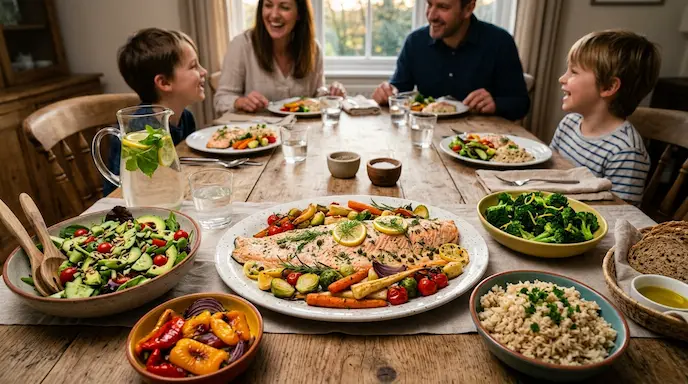
A healthy family dinner recipe combines lean protein, vegetables, smart carbohydrates, and healthy fats into one satisfying meal that supports both nutrition and convenience. This recipe uses simple, affordable ingredients such as chicken breast, broccoli, carrots, bell peppers, brown rice, garlic, and olive oil to create a balanced meal that works well for busy households.
Preparation takes approximately 15 minutes, while cooking requires about 25 minutes, bringing total time to roughly 40 minutes. The recipe is designed to appeal to both adults and children by using familiar flavors, mild seasonings, and colorful vegetables. It is easy to customize based on family preferences, dietary needs, and available ingredients, making it an excellent choice for healthy weeknight dinner planning and long-term healthy eating habits.
In addition to this meal, families looking for variety may also enjoy a healthy pasta recipe as part of their weekly dinner rotation.
Table of Contents
Why Family Dinners Matter
Family dinners offer more than just nourishment. They provide an opportunity for household members to reconnect, share experiences, and establish healthy eating habits.
Many families struggle to balance convenience and nutrition. Fast food and takeout may save time initially, but they often cost more over the course of a month and provide less control over ingredients.
Preparing a homemade family dinner allows families to:
- Control portion sizes
- Choose fresher ingredients
- Reduce added sugars and excess sodium
- Save money compared to frequent takeout
- Create consistent mealtime routines
The goal is not perfection. Most families simply need practical meals that fit real schedules while providing balanced nutrition.
The Biggest Challenges of Weeknight Cooking
Weeknight cooking often feels difficult because modern families face competing priorities.
Limited Time
Parents frequently arrive home after work with little energy remaining to prepare elaborate meals.
Picky Eaters
Children may resist unfamiliar foods, making dinner planning frustrating.
Budget Restrictions
Food prices continue to influence purchasing decisions, forcing families to maximize value from grocery budgets.
Lack of Meal Planning
Without a plan, many households end up scrambling for dinner ideas at the last minute.
Busy Schedules
Sports practices, homework, extracurricular activities, and commuting leave limited time for cooking.
For example, a family returning home at 6:00 PM may need dinner on the table before 7:00 PM while helping children complete homework and preparing for the next day. Simple, nutritious family meals become essential in these situations.
Recipe Snapshot
| Detail | Information |
|---|---|
| Prep Time | 15 minutes |
| Cook Time | 25 minutes |
| Total Time | 40 minutes |
| Servings | 4–6 |
| Course | Main Dish |
| Cuisine | American |
| Cooking Method | Stovetop + Oven (optional) |
What Makes a Family Dinner Truly Balanced?
A balanced dinner recipe focuses on combining key nutritional components rather than eliminating specific foods.
Protein
Protein helps create a satisfying meal and supports muscle maintenance and overall fullness.
Examples include:
- Chicken breast
- Turkey
- Fish
- Lean beef
- Beans and legumes
Including protein at dinner often helps family members stay satisfied longer.
Vegetables
Vegetables add:
- Color
- Texture
- Variety
- Vitamins and minerals
Using multiple vegetables can make meals more visually appealing while increasing nutritional diversity.
Smart Carbohydrates
Carbohydrates provide energy and help create a complete meal.
Examples include:
- Rice
- Potatoes
- Whole grains
- Pasta
The best choice depends on family preferences, budget, and preparation time.
Healthy Fats
Healthy fats contribute flavor and satisfaction.
Examples include:
- Olive oil
- Avocado
- Nuts
- Seeds
Balance matters far more than perfection. A meal does not need to be flawless to be nutritious and family-friendly.
Ingredients You’ll Need
Protein Options
Several proteins work well in family dinner ideas.
Chicken Breast
- Mild flavor
- Widely accepted by children
- Easy to cook
Ground Turkey
- Affordable
- Versatile
- Lean option
Lean Beef
- Rich flavor
- High protein content
- Works well in skillet meals
Beans
- Budget-friendly
- Plant-based option
- High in fiber
Fish
- Quick cooking
- Nutritious
- Great for variety
Chicken breast remains one of the most family-friendly choices because of its neutral flavor and flexibility.
Vegetables
Mild vegetables often appeal more to children.
Recommended options include:
- Carrots
- Bell peppers
- Broccoli
- Green beans
- Zucchini
These vegetables cook quickly and pair well with many proteins.
Carbohydrate Base
Choose one primary carbohydrate source:
- Brown rice
- White rice
- Whole wheat pasta
- Potatoes
Each option can support a healthy weeknight dinner when paired with protein and vegetables.
Flavor Builders
Simple ingredients can create excellent flavor.
Examples include:
- Garlic
- Onion
- Herbs
- Mild spices
- Broth
These ingredients help elevate meals without increasing complexity.
Ingredient List
Base Recipe
- 1 pound chicken breast, diced
- 1 tablespoon olive oil
- 1 onion, diced
- 2 garlic cloves, minced
- 1 bell pepper, chopped
- 2 cups broccoli florets
- 1 cup carrots, sliced
- 2 cups cooked brown rice
- 1 teaspoon Italian seasoning
- 1/2 teaspoon paprika
- Salt and pepper to taste
Optional Garnishes
- Fresh parsley
- Grated Parmesan cheese
Family-Friendly Meal Building Formula
One of the simplest ways to create nutritious family meals is to follow this formula:
Protein + Vegetables + Smart Carbohydrates + Flavor
Examples include:
| Protein | Vegetables | Carbohydrate | Flavor |
|---|---|---|---|
| Chicken | Broccoli | Brown rice | Garlic & herbs |
| Turkey | Green beans | Potatoes | Paprika |
| Fish | Zucchini | Rice | Lemon & herbs |
| Beans | Peppers | Whole wheat pasta | Garlic |
Using this framework allows families to create dozens of easy family meal combinations without relying on complicated recipes.
Step-by-Step Instructions
Step 1: Prepare Ingredients
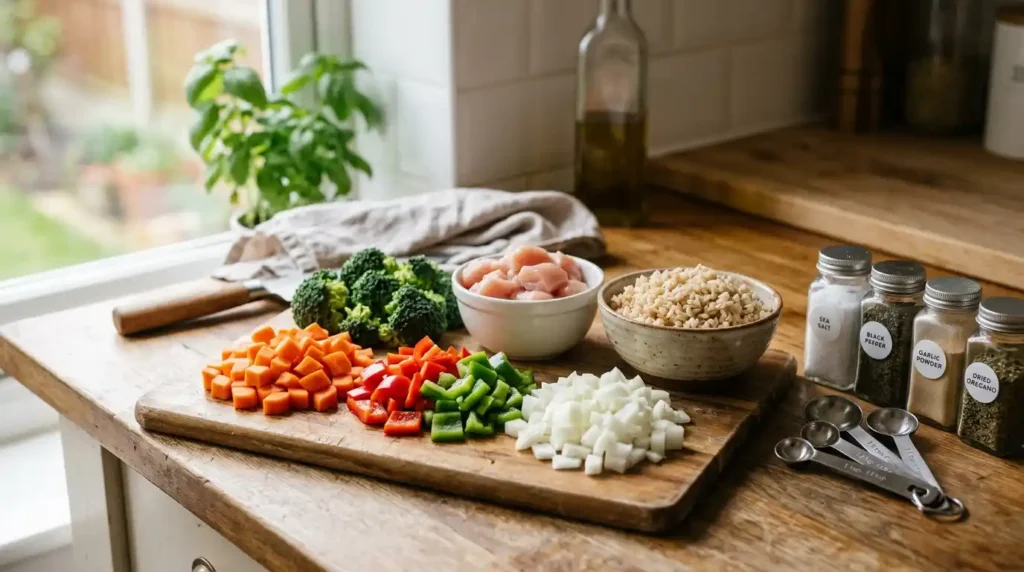
Wash and chop vegetables before turning on the stove.
Dice chicken into evenly sized pieces to promote consistent cooking.
Measure seasonings and prepare rice ahead of time if possible.
Step 2: Cook the Protein

Heat olive oil in a large skillet over medium-high heat.
Add chicken and season with salt, pepper, Italian seasoning, and paprika.
Cook for approximately 6–8 minutes until lightly browned and fully cooked.
Step 3: Add Vegetables

Add onions and carrots first since they require longer cooking.
After 3–4 minutes, add bell peppers and broccoli.
Cook until vegetables are tender but still slightly crisp.
Step 4: Build the Meal
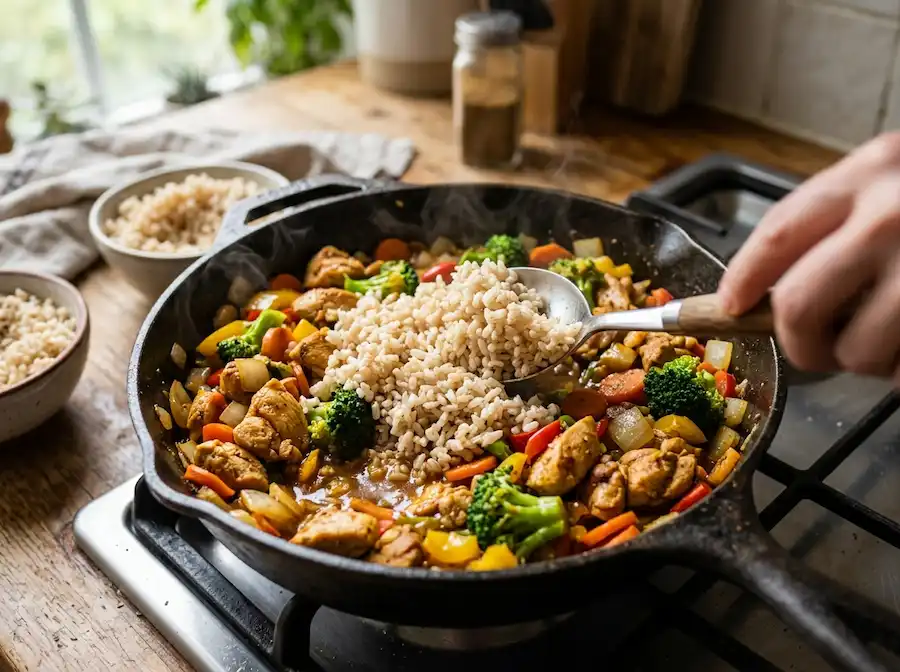
Add cooked brown rice directly into the skillet.
Stir thoroughly to combine ingredients and distribute flavors evenly.
If needed, add a small splash of broth for moisture.
Step 5: Adjust Seasoning

Taste before serving.
A small adjustment in salt, pepper, or herbs can significantly improve flavor.
Step 6: Serve
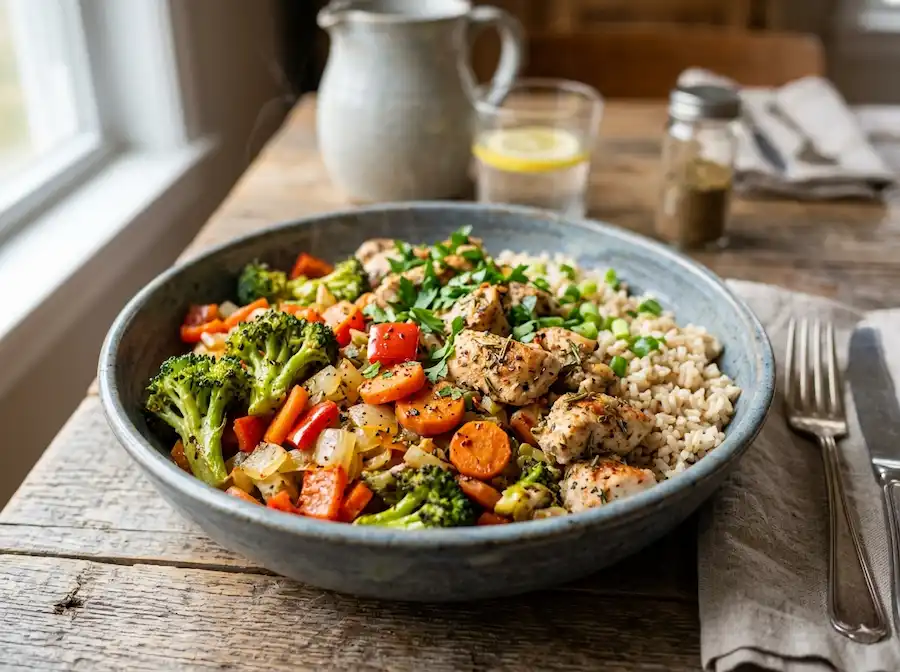
Serve family-style in a large bowl or directly from the skillet.
Allow family members to customize portions and optional toppings.
Dinner Component Comparison Table
| Component | Best Options | Why It Works |
|---|---|---|
| Protein | Chicken, turkey, beans, fish | Promotes fullness and supports balanced nutrition |
| Vegetables | Broccoli, carrots, peppers, green beans | Adds color, texture, and variety |
| Carbohydrates | Brown rice, potatoes, whole wheat pasta | Provides energy and satisfaction |
| Healthy Fats | Olive oil, avocado, nuts | Enhances flavor and meal satisfaction |
Analysis
The strongest family meals combine all four categories. Skipping one component can leave meals feeling incomplete or less satisfying. Small amounts from each category often produce the most balanced results.
Making Healthy Family Dinners Easier During Busy Weeks
Consistency becomes easier when dinner preparation starts before the workweek begins.
Helpful strategies include:
- Planning meals every weekend
- Creating a grocery list
- Washing vegetables in advance
- Cooking grains ahead of time
- Freezing extra portions
Many families also benefit from rotating familiar meals throughout the month.
A slow cooker healthy dinner recipe can be especially useful on days filled with activities, allowing dinner to cook while the family focuses on work, school, or sports commitments.
Effective healthy meal planning reduces stress, food waste, and last-minute takeout decisions.
How to Adapt Meals for Different Family Members
Not every family member has identical nutritional needs.
Younger Children
- Serve smaller portions
- Cut vegetables into bite-sized pieces
- Use milder seasonings
Teenagers
- Increase protein and carbohydrate portions
- Offer additional healthy sides
Adults
- Add extra vegetables
- Adjust seasoning preferences
Larger Households
- Double protein and rice quantities
- Prepare ingredients in batches
An easy and healthy dinner recipe for family success often comes from customization rather than creating separate meals for each person.
What to Serve Alongside This Dinner
Several side dishes pair well with this recipe.
Side Salad
Ideal for adding freshness and additional vegetables.
Roasted Vegetables
Perfect during cooler months.
Fresh Fruit
Provides a naturally sweet finish.
Soup
Works well when feeding larger groups.
Whole Grain Bread
Useful for families with larger appetites.
Choose sides based on hunger levels, available ingredients, and seasonal produce.
Meal Prep and Leftovers
This healthy family dinner recipe stores exceptionally well.
Storage
Store leftovers in airtight containers.
Refrigeration
Refrigerate within two hours of cooking.
Reheating
Reheat in a skillet or microwave until thoroughly heated.
Lunchbox Use
Leftovers make convenient lunches for work or school.
Generally, refrigerated leftovers remain best when consumed within 3–4 days.
Common Mistakes Families Make
Overcomplicating Dinner
Simple recipes are often more sustainable than elaborate meals.
Skipping Meal Planning
Even a basic weekly plan can dramatically reduce stress.
Serving Too Few Vegetables
Vegetables should occupy a meaningful portion of most family meals.
Relying on Processed Foods
Convenience foods have a place, but whole ingredients typically offer greater flexibility and value.
Making Separate Meals for Everyone
Preparing multiple dinners increases workload and often creates unnecessary stress.
Expert Tips for Stress-Free Family Dinners
- Create a weekly meal plan.
- Keep staple ingredients stocked.
- Use frozen vegetables when needed.
- Cook extra protein for future meals.
- Repurpose leftovers creatively.
- Shop with a detailed grocery list.
- Let children help prepare simple ingredients.
- Choose recipes with overlapping ingredients.
- Keep seasonings simple and consistent.
- Focus on progress rather than perfection.
Comparison Section
| Dinner Type | Preparation Time | Cost | Nutrition Balance | Family Friendly |
|---|---|---|---|---|
| Homemade Healthy Dinner | Moderate | Low to Moderate | High | High |
| Takeout | Low | High | Variable | Moderate |
| Frozen Meals | Very Low | Moderate | Variable | Moderate |
| Meal Kits | Moderate | Moderate to High | Generally Good | High |
Analysis
Homemade Healthy Dinner
- Best balance of cost, nutrition, and flexibility.
- Allows full control over ingredients.
Takeout
- Convenient but often more expensive.
- Nutrition varies significantly.
Frozen Meals
- Helpful for emergencies.
- Limited customization.
Meal Kits
- Simplify planning.
- Can be more expensive than traditional grocery shopping.
Advanced Insights
Why Consistency Matters More Than Perfection
Healthy eating patterns develop over time. Occasional less-balanced meals rarely determine long-term outcomes.
The Economics of Home Cooking
Cooking at home frequently lowers per-serving costs and reduces spending on restaurant meals.
Family Meal Habits
Regular family dinners often encourage more consistent eating routines.
Reducing Food Waste Through Meal Planning
Planned ingredient use helps prevent unused produce from being discarded.
Building a Flexible Weekly Dinner System
Rotating five to seven dependable recipes simplifies decision-making.
Why Simple Ingredients Work Best
Reliable ingredients tend to be affordable, accessible, and easier to prepare consistently.
Frequently Asked Questions
1. What is a healthy family dinner?
A healthy family dinner includes protein, vegetables, carbohydrates, and healthy fats in balanced portions.
2. How can I make dinner healthier for my family?
Use more whole foods, increase vegetables, and reduce reliance on heavily processed ingredients.
3. What protein works best for family meals?
Chicken breast is often the most versatile and family-friendly option.
4. Can I prepare this meal ahead of time?
Yes. Vegetables, rice, and protein can all be prepared in advance.
5. How long do leftovers last?
Typically 3–4 days when refrigerated properly.
6. What vegetables are most family-friendly?
Carrots, broccoli, bell peppers, zucchini, and green beans are commonly well accepted.
7. Can I freeze this recipe?
Yes. Store in freezer-safe containers for future meals.
8. How can I save money on family dinners?
Plan meals, buy staple ingredients in bulk, and use leftovers strategically.
9. What side dishes work best?
Salads, roasted vegetables, fruit, soup, and whole grain bread are excellent choices.
10. How do I handle picky eaters?
Offer familiar foods alongside new ingredients and avoid pressuring children to eat specific items.
Conclusion
A healthy family dinner recipe does not require expensive ingredients, advanced cooking skills, or hours in the kitchen. By focusing on balanced nutrition, simple preparation methods, and practical meal planning, families can create satisfying dinners that fit busy schedules and varying tastes.
The combination of lean protein, vegetables, smart carbohydrates, and healthy fats provides a flexible foundation that can be adapted to nearly any household. Consistent planning reduces stress, lowers food costs, and minimizes dependence on takeout.
Most importantly, simple recipes help make healthy eating sustainable. Alongside this recipe, a healthy pasta recipe can serve as another practical dinner option that families can rotate into their weekly menu to keep meals interesting, affordable, and enjoyable.