
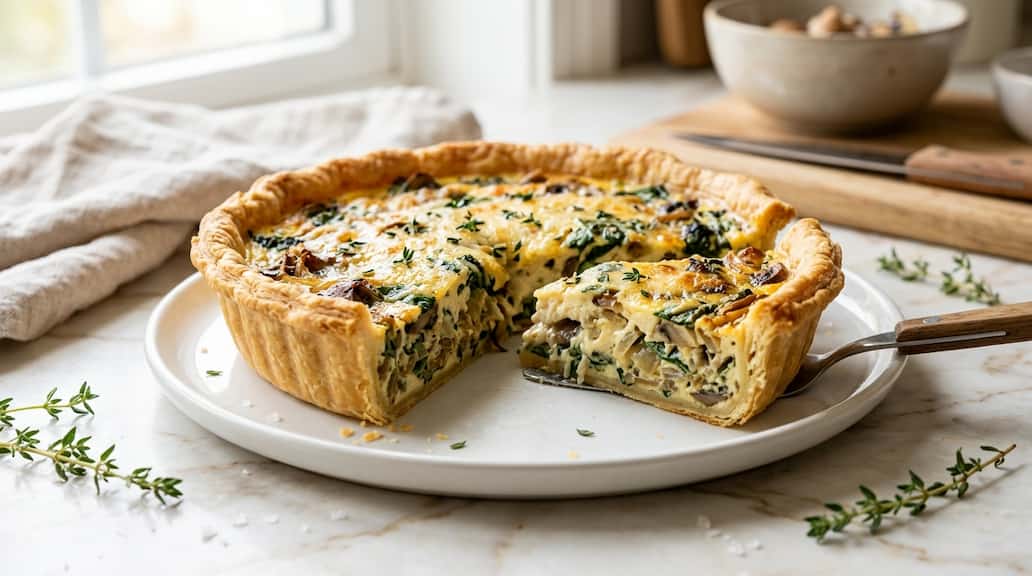
If you love a good healthy pasta recipe for busy weeknights, you’ll want to keep this one close by too. This Quiche Lorraine vegetarian recipe takes the classic French custard pie and swaps the traditional bacon for a savory combination of sautéed mushrooms, caramelized onions, and sharp Gruyère cheese. The result is a rich, silky filling in a flaky, buttery crust that holds its shape when sliced and tastes even better the next day. I’ve made this quiche more times than I can count, testing different ratios of eggs to cream and troubleshooting the dreaded soggy bottom crust, so every tip below comes from real kitchen trial and error, not guesswork.
Quick Recipe Facts
- Prep time: 25 minutes
- Cook time: 50 minutes
- Chilling time: 30 minutes
- Total time: About 1 hour 45 minutes
- Servings: 8 slices
- Diet: Vegetarian
- Best pan: 9-inch tart pan with removable bottom
Table of Contents
Why You’ll Love This Recipe
This vegetarian quiche Lorraine recipe delivers everything you want from the original: a crisp, golden crust, a custard filling that’s creamy without being heavy, and deep savory flavor in every bite. It’s a fantastic make-ahead breakfast or brunch centerpiece, and it reheats beautifully for weekday lunches. Unlike a lot of vegetarian swaps that taste like an afterthought, this version builds real umami depth using mushrooms, a touch of Dijon mustard, and nutty Gruyère, so nobody at the table will miss the meat.
What Is Quiche Lorraine?
Quiche Lorraine originated in the Lorraine region of northeastern France, and in its earliest form it was simply an open-faced pie filled with an egg and cream custard and smoky lardons, baked in a pastry crust. Cheese was actually a later addition in many versions, though today most modern quiche Lorraine recipes include Gruyère or Swiss cheese as a standard ingredient. The dish became popular internationally in the 20th century as French bistro cooking spread, and it’s now a brunch staple in the United States, often loaded with additional vegetables and cheeses depending on regional taste.
Why Make a Vegetarian Version?
Removing the bacon doesn’t mean removing the flavor if you know how to replace it correctly. Mushrooms cooked low and slow until deeply browned develop the same savory, almost meaty richness that lardons provide, while caramelized onions add natural sweetness that balances the eggs and cream. This version is also a smart option if you’re cooking for a mixed group, meal-prepping for the week, or simply trying to work more vegetables into your rotation without sacrificing a dish that feels indulgent.
Why This Recipe Works
The custard ratio here — a blend of whole eggs, egg yolks, heavy cream, and a splash of whole milk — is what gives this quiche its signature silky texture instead of a rubbery, overbaked one. Blind-baking the crust first prevents the soggy bottom that ruins so many quiches, and salting the mushrooms early draws out excess moisture so the filling doesn’t turn watery. Every element of this recipe is built around solving the most common quiche failures, not just assembling ingredients.
I also bake this quiche at a slightly lower oven temperature than many recipes call for, which gives the custard time to set gently rather than puffing up quickly and then collapsing as it cools. This lower, slower approach is the difference between a quiche that slices cleanly and one that weeps liquid onto the plate. Combined with a fully cooled filling and a properly blind-baked crust, it’s a method that consistently produces restaurant-quality results at home, even on the first attempt.
Ingredient Notes
- Pie dough: Use an all-butter pastry crust for the best flavor and flakiness. Store-bought works in a pinch if you’re short on time.
- Eggs: A mix of whole eggs and extra yolks gives the custard richness without making it too firm.
- Heavy cream and whole milk: The combination keeps the custard silky rather than dense. All cream can make it heavy; all milk can make it watery.
- Gruyère cheese: Its nutty, slightly sweet flavor is what makes quiche Lorraine taste authentic. Freshly grated melts far better than pre-shredded bags.
- Mushrooms: Cremini or baby bella mushrooms have the deepest flavor, though white button mushrooms work fine too.
- Onion: Yellow onion caramelized slowly brings natural sweetness that mimics the flavor bacon usually contributes.
- Dijon mustard: A small amount brushed on the baked crust adds tang and helps seal it against the custard.
- Fresh nutmeg: A classic quiche seasoning that rounds out the richness of the eggs and cream.
Ingredient Substitutions
- Swap Gruyère for Swiss, Emmental, or a sharp white cheddar if that’s what you have on hand.
- Use half-and-half instead of heavy cream and whole milk for a slightly lighter custard.
- Replace mushrooms with sautéed leeks or spinach for a different vegetable base.
- A gluten-free pie crust can be used to make this recipe gluten-free with no other changes needed.
- Shallots can stand in for yellow onion for a milder, slightly sweeter flavor.
Kitchen Equipment
- 9-inch tart pan with a removable bottom (a standard pie dish also works)
- Pie weights or dried beans for blind baking
- Large skillet for the mushrooms and onions
- Mixing bowl and whisk for the custard
- Box grater for the Gruyère
- Fine mesh strainer, optional, for an extra-smooth custard
None of this equipment is specialized or expensive, which is part of why quiche Lorraine has stayed a home-cook favorite for generations. If you don’t own a tart pan, a standard pie dish works just as well, though slices from a tart pan with straight sides tend to hold their shape a bit more neatly when plated.
Step-by-Step Instructions Quiche Lorraine Vegetarian Recipe
Step 1: Blind bake the crust
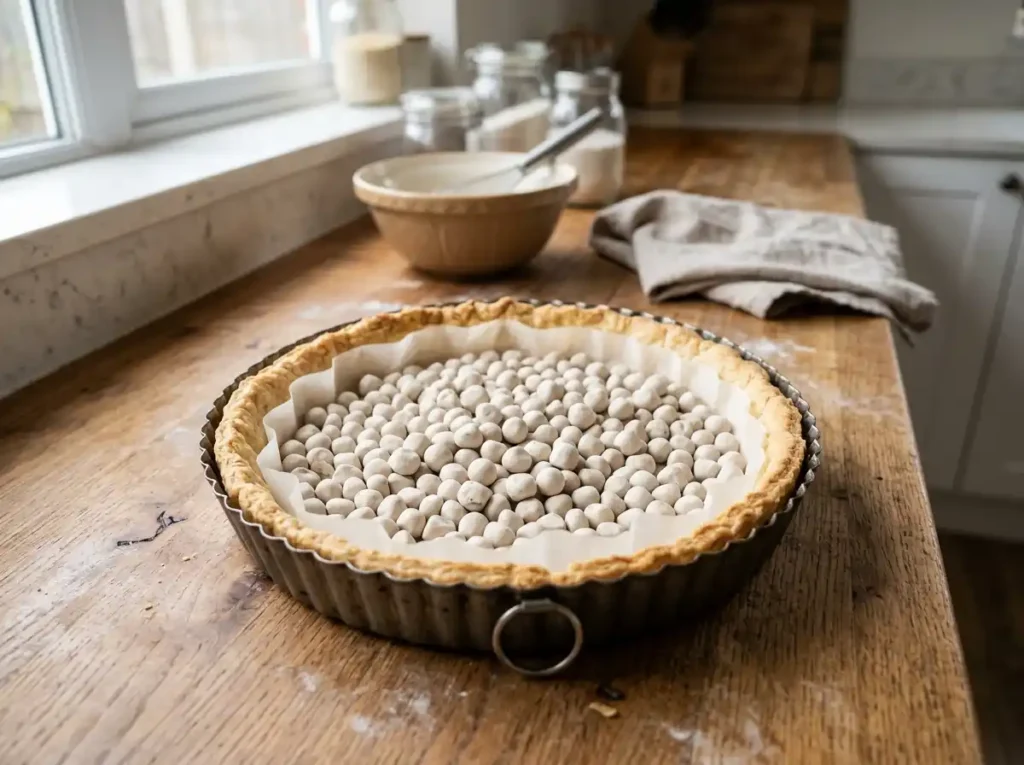
Roll out the chilled pie dough and fit it into your tart pan, trimming the excess. Prick the bottom with a fork, line it with parchment, fill with pie weights, and bake at 375°F for 20 minutes. This step matters because an unbaked crust can’t hold up to the wet custard filling, which is the leading cause of soggy quiche. You’ll know it’s ready when the edges are pale gold and the dough looks set rather than shiny. A common mistake is skipping the weights entirely, which lets the crust puff and shrink unevenly. For the crispest results, brush the warm crust with a thin layer of Dijon mustard the moment it comes out of the oven.
Step 2: Caramelize the onions
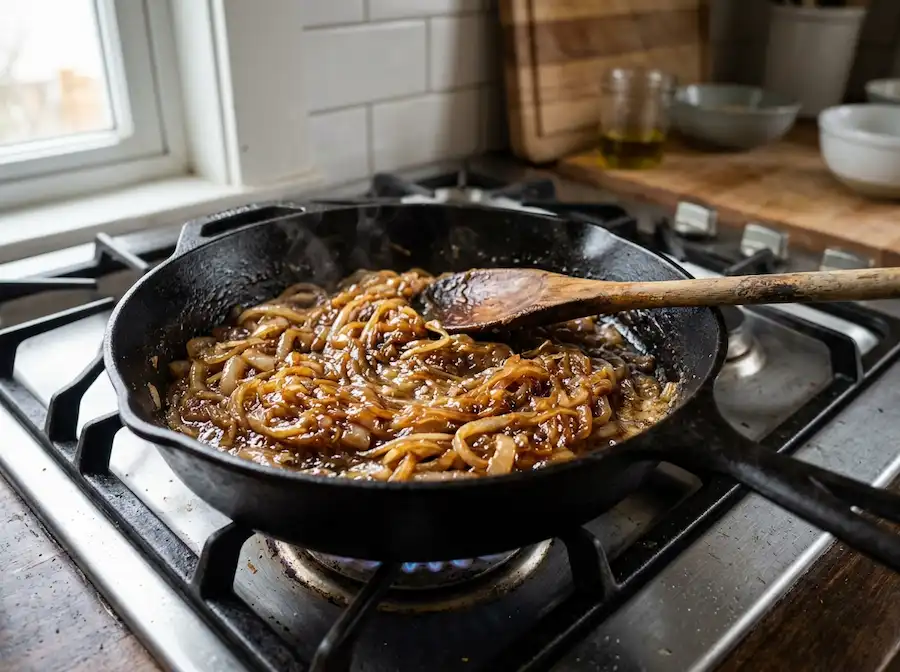
Melt butter in a large skillet over medium-low heat and add the sliced onion with a pinch of salt. Cook slowly, stirring occasionally, for 20 to 25 minutes. This slow cooking matters because rushing it with high heat will scorch the onion instead of developing the deep sweetness that replaces the flavor bacon normally provides. The onions are done when they’re a deep amber color and smell sweet rather than sharp. If they start sticking, add a tablespoon of water rather than turning up the heat.
Step 3: Sauté the mushrooms
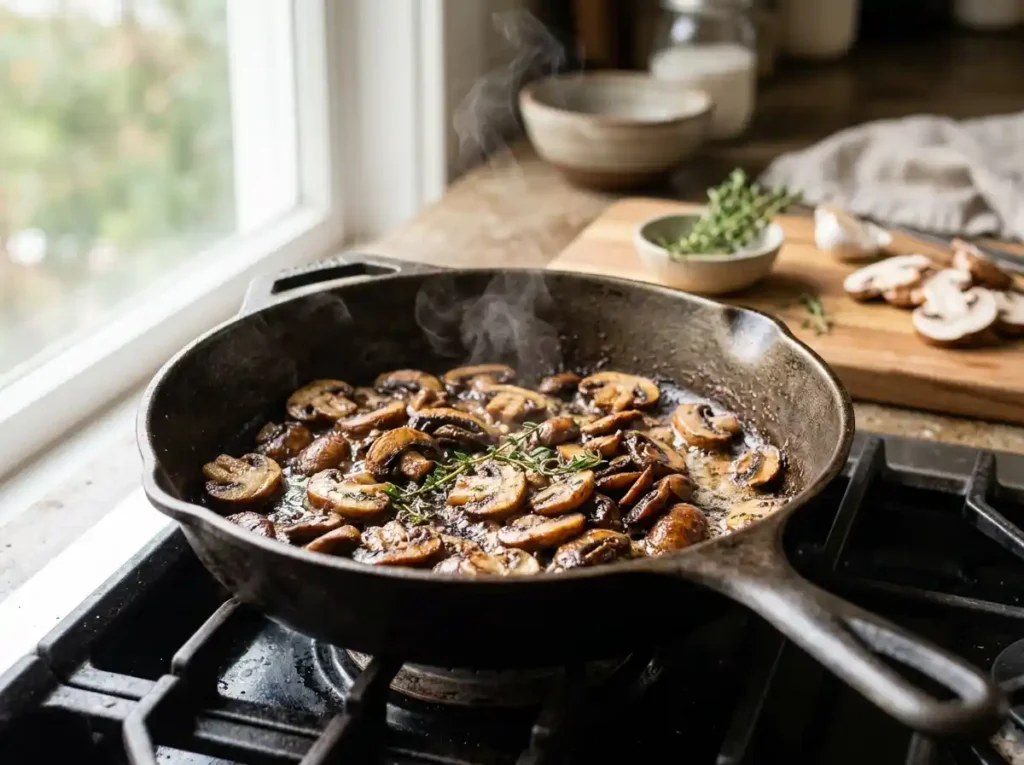
In the same skillet, add a little more butter and the sliced mushrooms with a pinch of salt. Cook over medium-high heat, stirring only occasionally, until they release their liquid and it evaporates completely, about 8 to 10 minutes. This step is essential because mushrooms hold a lot of water, and any leftover liquid in the filling will make the custard runny. You’ll know they’re ready when the pan is dry again and the mushrooms are browned at the edges. Avoid crowding the pan, or the mushrooms will steam instead of browning.
Step 4: Whisk the custard
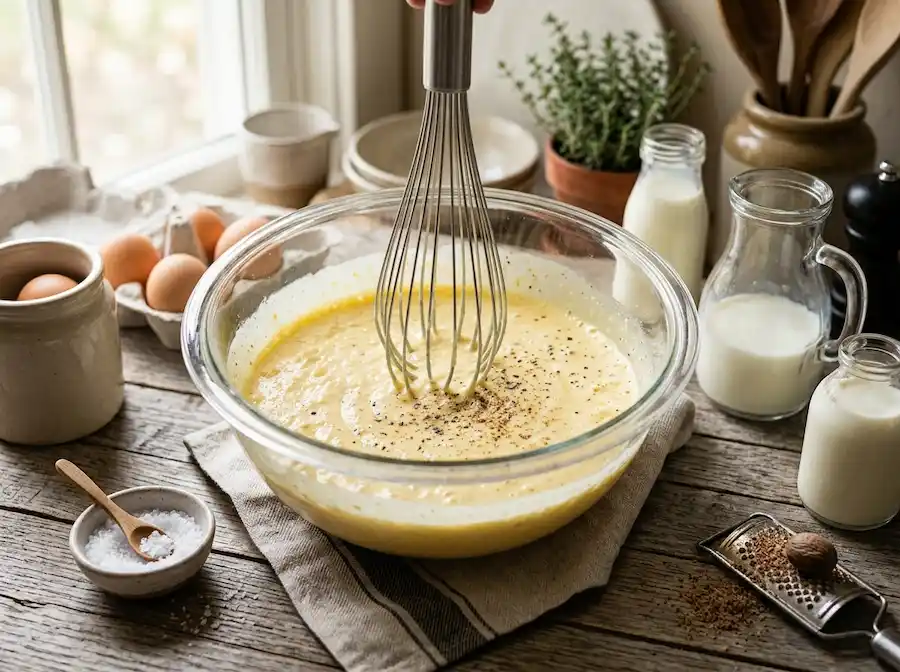
In a large bowl, whisk together the eggs, egg yolks, heavy cream, milk, salt, pepper, and a small grating of fresh nutmeg until fully combined and slightly frothy. Whisking thoroughly here matters because unblended egg yolks can create streaky white patches once baked. The custard is ready when it looks uniform in color with no visible egg white strands. For an ultra-smooth texture, pass the mixture through a fine mesh strainer before pouring it into the crust.
Step 5: Layer the filling
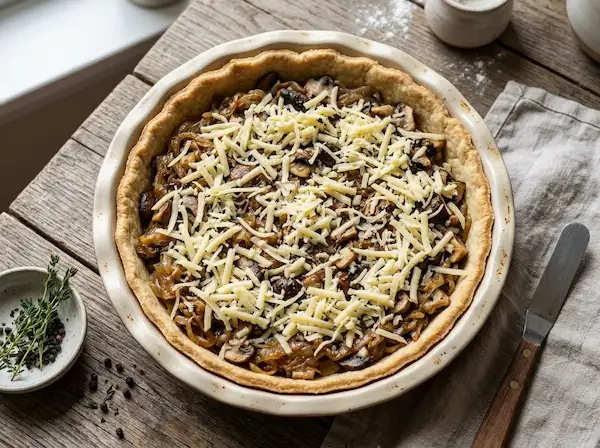
Scatter the caramelized onions, sautéed mushrooms, and shredded Gruyère evenly over the bottom of the blind-baked crust. Even distribution matters here because clumped filling leads to uneven slices, with some bites overloaded and others bland. The layer is correctly built when you can still see small gaps of crust between the fillings, which allows the custard to fill in evenly. Don’t pack the fillings too tightly, or the custard won’t be able to settle around them properly.
Step 6: Pour and bake
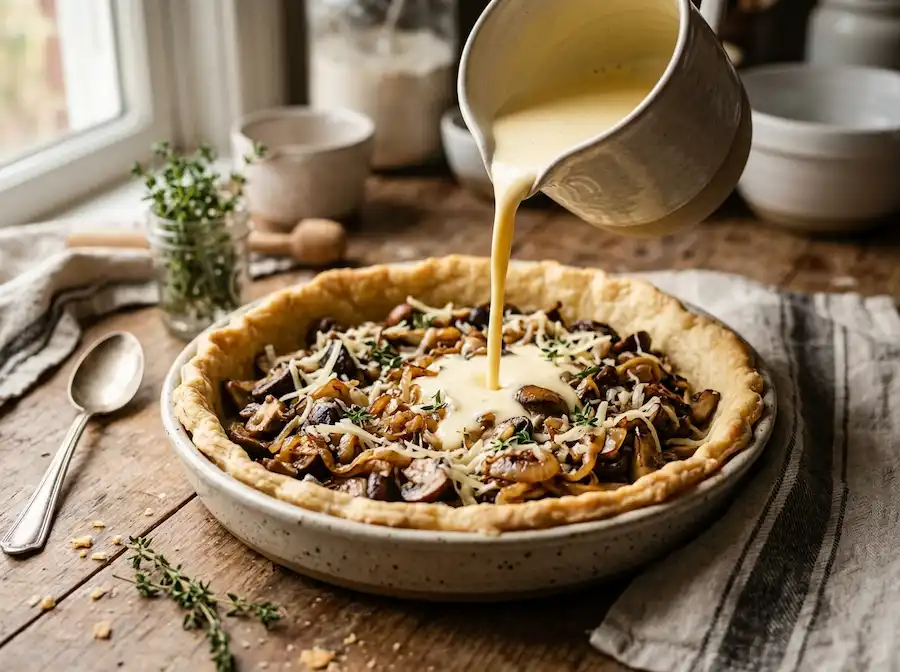
Slowly pour the custard over the filling, filling the crust almost to the top. Bake at 350°F for 35 to 40 minutes. This gentle, moderate temperature matters because baking a custard too hot causes it to curdle and turn rubbery instead of setting into a silky texture. The quiche is done when the edges are puffed and set but the very center still has a slight jiggle, similar to gelatin. A common mistake is waiting for the center to look completely firm in the oven, which usually means it’s overbaked by the time it cools.
Step 7: Cool before slicing
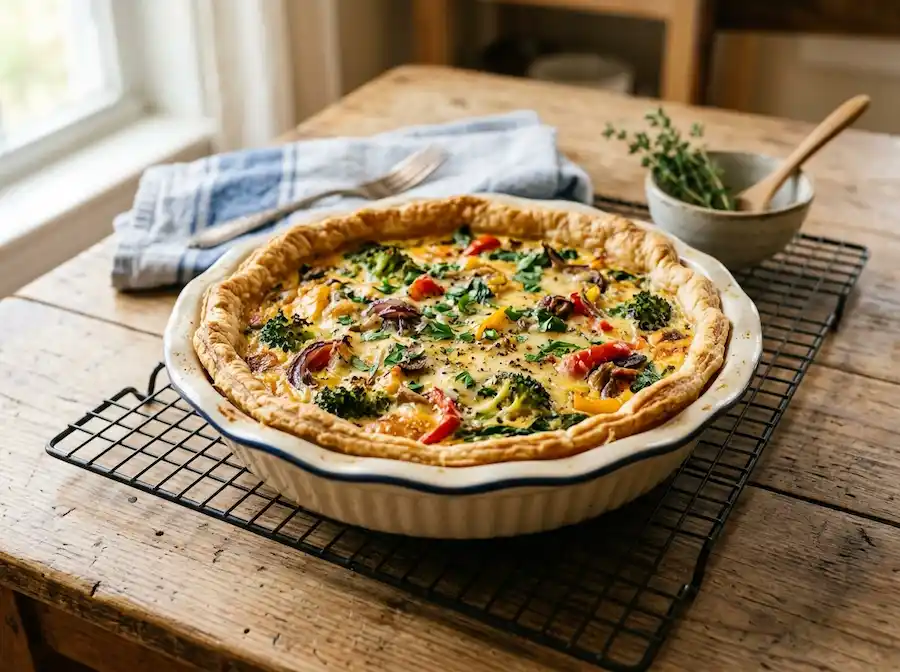
Let the quiche rest at room temperature for at least 20 to 30 minutes before cutting. This resting period matters because the custard is still finishing its set from residual heat, and cutting too soon will cause the filling to spill out rather than hold a clean slice. It’s ready to cut when the top no longer looks glossy or wobbly. Rushing this step is the single most common reason home cooks end up with a quiche that looks more like a scramble than a sliceable pie.
Step 8: Slice and serve
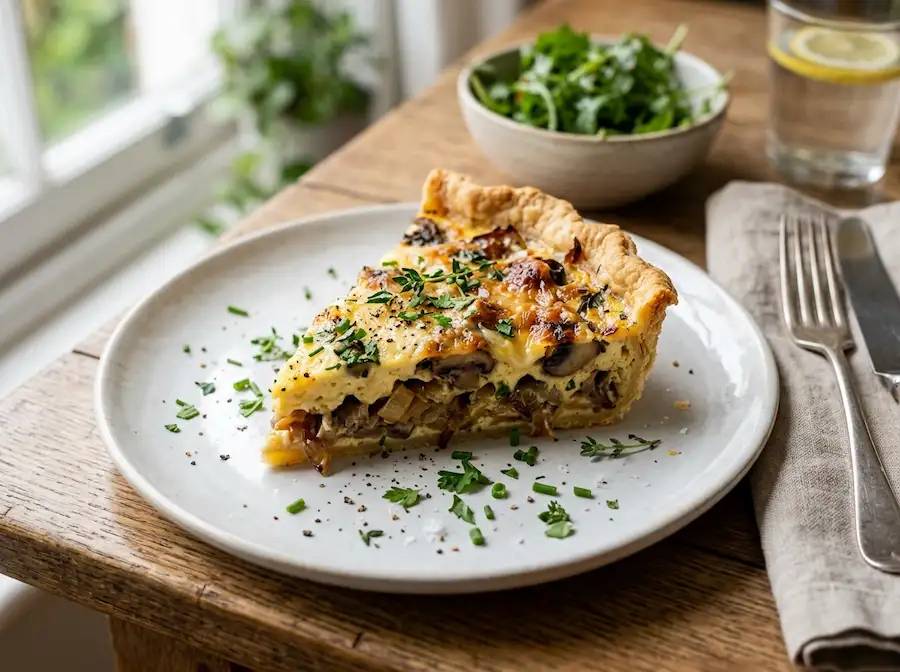
Use a sharp knife dipped in warm water for the cleanest slices, wiping the blade between cuts. Serving it slightly warm or at room temperature, rather than piping hot, actually lets the flavors of the Gruyère and caramelized onion come through more clearly. This dish is done when each wedge holds its shape and shows distinct, even layers of custard, cheese, and vegetables.
Expert Tips
- Always fully cool sautéed vegetables before adding them to the custard, since warm fillings can partially cook the eggs too early.
- Grate your own cheese rather than using pre-shredded bags, which contain anti-caking starches that affect how smoothly it melts.
- Chill the assembled, unbaked quiche for 10 minutes before it goes into the oven to help the crust hold its shape.
- Use a metal or dark tart pan rather than glass for a crisper crust bottom.
Common Mistakes
- Skipping the blind bake: This is the number one cause of a soggy, undercooked bottom crust.
- Overbaking the custard: Pulling the quiche when the center looks fully set in the oven usually means it will be dry once cooled.
- Not draining the mushrooms: Excess mushroom liquid dilutes the custard and prevents a firm set.
- Cutting too soon: Slicing before the quiche rests causes the filling to run instead of holding a clean wedge.
Recipe Variations
- Spinach and feta: Replace the mushrooms with wilted spinach and swap Gruyère for crumbled feta.
- Roasted red pepper: Add diced roasted red peppers alongside the onions for a smoky sweetness.
- Three-cheese quiche: Combine Gruyère, Parmesan, and mozzarella for an extra-cheesy version.
- Herb-forward: Stir in fresh thyme or chives for a brighter, herbal note.
If you’re building out a week of plant-forward dinners, this quiche pairs nicely with a vegetarian slow cooker recipe for the nights you want something completely hands-off.
Serving Suggestions
A simple green salad with a sharp vinaigrette is the classic pairing, since its acidity cuts through the richness of the custard and cheese. This quiche also works well alongside roasted asparagus, a cup of tomato soup, or fresh fruit for a lighter brunch spread. For a more filling meal, pair a slice with a high protein vegetarian recipe on the side, such as a lentil salad, to round out the plate.
Storage
Let the quiche cool completely, then wrap it tightly in plastic wrap or store it in an airtight container in the refrigerator for up to 4 days. For longer storage, wrap individual slices in plastic and foil and freeze for up to 2 months.
Reheating
Reheat refrigerated slices in a 325°F oven for about 15 minutes to keep the crust crisp, rather than using a microwave, which tends to make the crust soggy and the filling rubbery. If reheating from frozen, thaw the slice in the refrigerator overnight first.
Make Ahead Tips
You can blind bake the crust up to a day in advance and store it covered at room temperature. The onions and mushrooms can also be cooked a day ahead and refrigerated, which makes assembly the next day quick and simple, especially useful if you’re prepping for a brunch or holiday gathering.
Frequently Asked Questions
Can I make quiche Lorraine vegetarian without losing the classic flavor?
Yes. Deeply caramelized onions and well-browned mushrooms replicate much of the savory depth that bacon normally provides, so the finished dish still tastes rich and satisfying.
Why is my quiche watery in the middle?
This usually means the mushrooms weren’t cooked long enough to release and evaporate their liquid, or the quiche was pulled from the oven before the custard had time to set.
Can I use a store-bought crust?
Yes, a store-bought pie crust works well when you’re short on time. Just make sure to blind bake it fully before adding the filling.
What’s the difference between quiche Lorraine and a regular quiche?
Traditional quiche Lorraine is defined by its custard and, historically, bacon or lardons, without extra vegetables like the spinach or broccoli found in many other quiche variations.
Can I freeze quiche Lorraine?
Yes, baked quiche freezes well for up to 2 months when wrapped tightly. Thaw it in the refrigerator before reheating in the oven.
Do I have to blind bake the crust?
Blind baking is strongly recommended, since it’s the main defense against a soggy bottom crust once the custard filling is added.
Can I make this dairy-free?
You can substitute full-fat coconut milk or a dairy-free cream alternative along with a plant-based cheese, though the texture and flavor will differ somewhat from the classic version.
How do I know when the quiche is fully baked?
The edges should be puffed and set while the very center still has a slight jiggle, similar to gelatin, since it will continue to set as it cools.
What size pan should I use?
A 9-inch tart pan with a removable bottom is ideal, though a standard 9-inch pie dish also works well.
Can I add other vegetables to this recipe?
Yes, this recipe is flexible enough to handle additions like wilted spinach, roasted red peppers, or sautéed leeks, as long as any extra vegetables are well drained before they go into the custard so the filling doesn’t turn watery.
Nutrition Information
Per slice (based on 8 servings): Calories: 380; Protein: 12g; Carbohydrates: 18g; Fat: 29g; Saturated Fat: 15g; Fiber: 1g; Sugar: 3g; Sodium: 420mg.
Nutrition Disclaimer
Nutrition values are estimates calculated using standard ingredient data and may vary based on specific brands, exact measurements, and any substitutions you make. For precise dietary needs, please calculate nutrition using your own ingredients and a trusted nutrition calculator.
Final Thoughts
This vegetarian quiche Lorraine recipe proves that skipping the meat doesn’t mean skipping the flavor. With a properly blind-baked crust, well-drained mushrooms, and slow-cooked onions, you get a quiche that’s rich, savory, and satisfying enough to serve at any brunch table. Once you’ve made it a couple of times and get a feel for the custard-to-filling ratio, it becomes one of those reliable recipes you can pull together with ingredients you already have on hand.