
What Is Brazilian Lemonade?
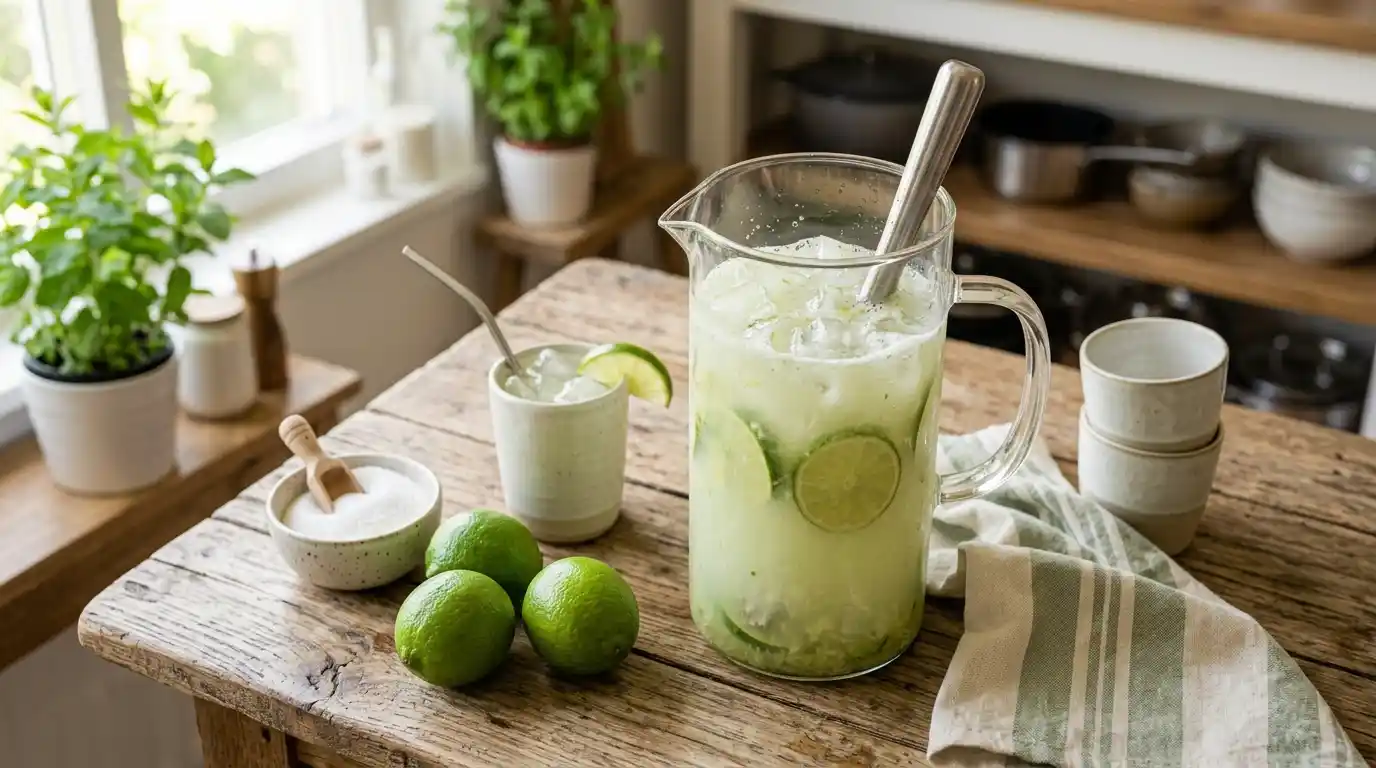
Despite the name, this brazilian lemonade recipe is not made with lemons at all. In Brazil, “limão” refers to limes, so what English speakers call Brazilian lemonade is really a blended limeade. The whole lime, including a bit of the peel, gets blitzed with water and sugar, then strained and finished with sweetened condensed milk. The result is pale green, slightly cloudy, and richer than a typical limeade.
This drink shows up at Brazilian steakhouses across the United States, often served alongside grilled meats to cut through the richness. It’s popular for a reason: the condensed milk rounds out the lime’s sharpness, so you get tang and creaminess in the same sip.
Brazilian lemonade (called limonada suíça in Brazil) is a creamy, tangy limeade made by blending whole limes with water, sugar, and sweetened condensed milk. It’s cloudy, refreshing, and tastes nothing like the lemonade you grew up with.
- Prep Time: 10 minutes
- Cook Time: 0 minutes
- Total Time: 10 minutes
- Servings: 6 (about 8 oz each)
- Calories (Estimated): 140 per serving
Ingredients
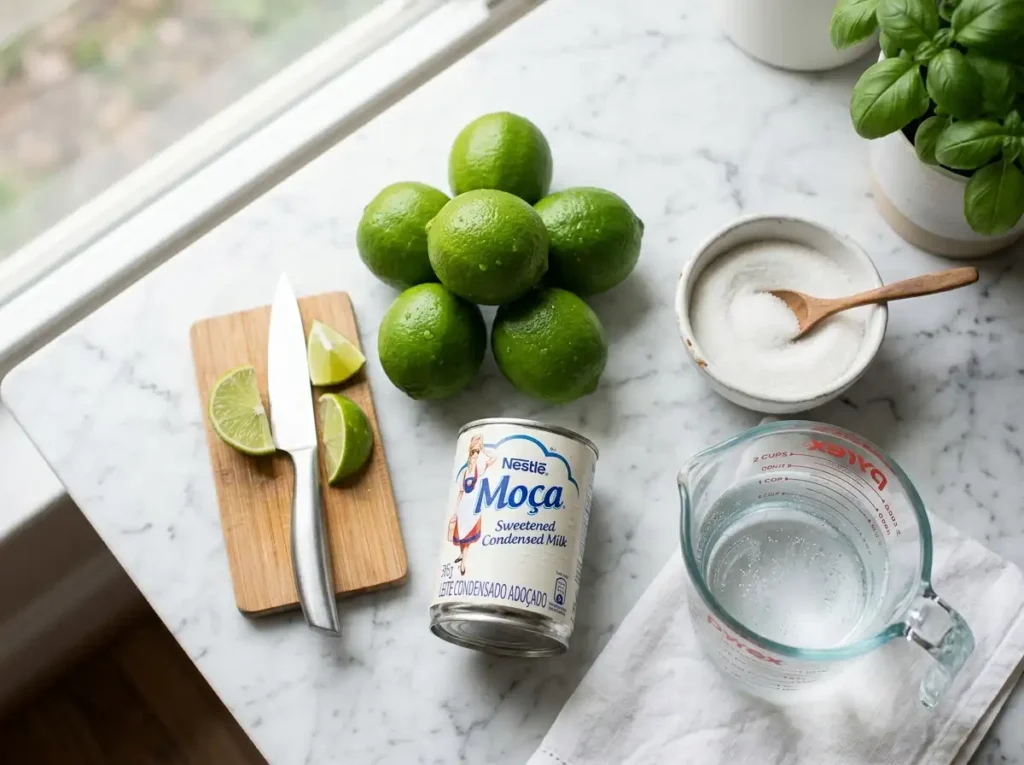
- 4 medium limes, washed and quartered
- 4 cups cold water
- 3/4 cup granulated sugar
- 1/2 cup sweetened condensed milk
- 2 cups ice, plus more for serving
- Fresh mint leaves, for garnish (optional)
Quick Instructions
- Add limes, water, and sugar to a blender. Pulse for 10-15 seconds only.
- Strain the mixture through a fine-mesh strainer into a pitcher.
- Whisk in the sweetened condensed milk until smooth.
- Pour over ice and serve immediately.
Notes
Never blend the limes for longer than 15 seconds. The white pith and green skin turn bitter fast, and that’s the single most common reason this drink fails at home. Short pulses, not a long blend.
Table of Contents
Why You’ll Love This Recipe
You need five ingredients and about ten minutes, most of which is just waiting for the blender to finish. There’s no cooking involved, no simple syrup to make ahead, and no juicer to clean afterward. You blend the whole lime, strain it once, and stir in condensed milk. That’s the entire process.
It’s also forgiving. If it comes out too tart, add a splash more condensed milk. Too sweet, add a squeeze of fresh lime juice. Because you’re working with whole limes rather than pre-measured juice, small adjustments are easy and the drink rarely turns out wrong.
Ingredient Notes
Limes: Choose limes that feel heavy for their size and have smooth, slightly glossy skin. Heavier limes usually hold more juice. Persian limes (the common grocery-store variety) work best here; they’re less bitter than Key limes and easier to quarter. Store extra limes at room temperature for up to a week, or in the crisper drawer for up to three weeks.
Water: Cold, filtered water gives the cleanest flavor. Tap water works fine too, but if your tap water has a strong mineral taste, it will come through in the finished drink since there’s no other liquid to mask it.
Sugar: Granulated white sugar dissolves quickly in the blender and keeps the flavor neutral. You can substitute an equal amount of superfine sugar for slightly faster dissolving, or reduce the amount if you plan to rely more on the condensed milk for sweetness.
Sweetened condensed milk: This is what separates Brazilian lemonade from a standard limeade. It adds creaminess, a mild caramel note, and body that water and sugar alone can’t provide. Buy the standard 14-ounce can and refrigerate any leftover portion in an airtight container for up to two weeks.
Ice: Use fresh ice for serving rather than reusing old freezer ice, which can carry off-flavors. Some people blend a portion of the ice directly into the drink for a slushier texture; both methods are included below in the variations section.
Kitchen Equipment
You’ll need a standard blender, a fine-mesh strainer (a cheesecloth-lined sieve also works), a pitcher for serving, and a cutting board with a sharp knife for quartering the limes. No specialty tools required.
Step-by-Step Instructions
Step 1: Prepare the limes
Wash the limes well, then trim off both ends. Quarter each lime and remove any visible seeds, since seeds left in the blender can add unwanted bitterness.
What to Look For: The limes should be cut into roughly even quarters so they blend at the same rate. If a lime looks unusually dry or shriveled, swap it out; it likely won’t yield much juice.
Step 2: Blend
Add the lime quarters, cold water, and sugar to the blender. Pulse in short bursts, about 10 to 15 seconds total, until the limes are broken down but not fully pulverized.
What to Look For: The liquid should look pale green and slightly foamy on top, with visible small flecks of lime pulp. If you taste a hint of bitterness at this stage, you’ve blended too long; strain right away to stop the flavor from developing further.
Step 3: Strain
Pour the blended mixture through a fine-mesh strainer set over a pitcher, pressing gently with the back of a spoon to release the liquid. Discard the solids left behind.
What to Look For: The strained liquid should run smooth and pourable, with no large pulp fragments. A little fine pulp passing through is normal and adds texture.
Step 4: Add the condensed milk
Whisk the sweetened condensed milk into the strained lime mixture until fully combined and the color turns a soft, creamy pale green.
What to Look For: There should be no streaks of undissolved condensed milk pooling at the bottom of the pitcher. A quick taste here tells you if you want it sweeter or tangier before serving.
Step 5: Serve
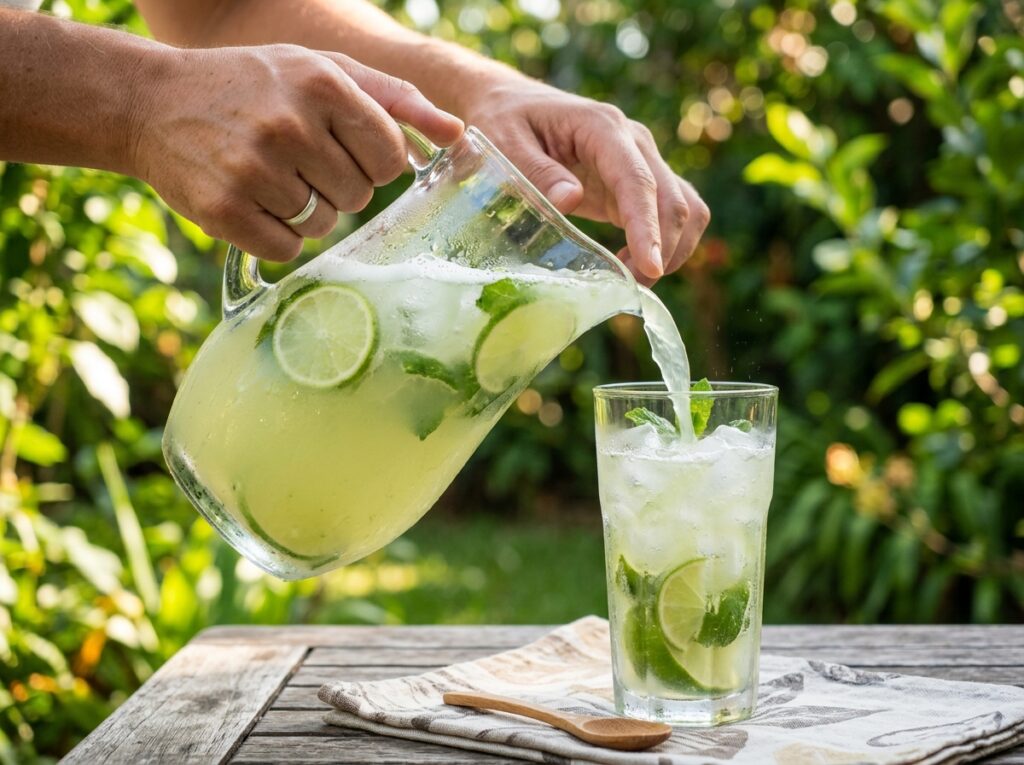
Fill glasses with ice and pour the lemonade over the top. Garnish with a sprig of fresh mint or a lime wheel if you like.
What to Look For: The finished drink should look pale, slightly cloudy, and creamy rather than fully transparent. That cloudiness is a sign you made it correctly.
Expert Tips
- Blend in short pulses rather than one continuous run. A blender left running for 30 seconds or more pulverizes the lime peel and pith, which turns the drink bitter.
- Chill your limes in the fridge for an hour before blending. Cold limes keep the finished drink cooler without diluting it with extra ice.
- Taste before you strain. It’s much easier to adjust sugar or condensed milk while the mixture is still in the blender than after it’s poured into glasses.
- Use a cheesecloth-lined strainer if you want an ultra-smooth, restaurant-style texture with zero pulp.
- Roll limes firmly on the counter with your palm before cutting them. This loosens the internal membranes and helps release more juice during blending.
- Don’t skip the strain step, even if you like pulp. Unstrained lime skin fragments turn gritty and bitter, unlike the fine pulp that survives straining.
- Make it a day ahead if needed, but stir well before serving since the condensed milk can settle toward the bottom.
- If your limes taste unusually sour, cut the sugar back slightly and lean on the condensed milk for sweetness instead; it balances acidity more smoothly than plain sugar.
- Serve in a chilled pitcher or glasses for a steakhouse-style presentation. A few minutes in the freezer before serving makes a noticeable difference.
- Double the recipe for a crowd, but blend it in batches rather than overloading the blender jar, which prevents even blending.
Common Mistakes
Over-blending the limes. This is the top reason people give up on this recipe. Long blending times force oil out of the lime peel, and that oil is bitter. Stick to short pulses.
Skipping the strainer. Even a quick blend leaves behind pith fragments. Straining is what gives Brazilian lemonade its signature smooth-but-cloudy texture instead of a gritty one.
Adding condensed milk before straining. Condensed milk is thick and can clog a fine-mesh strainer. Always strain the lime mixture first, then whisk in the condensed milk.
Using warm water. Warm water doesn’t ruin the drink, but it does mean you’ll need more ice to cool it down, which dilutes the flavor. Start cold.
Easy Variations
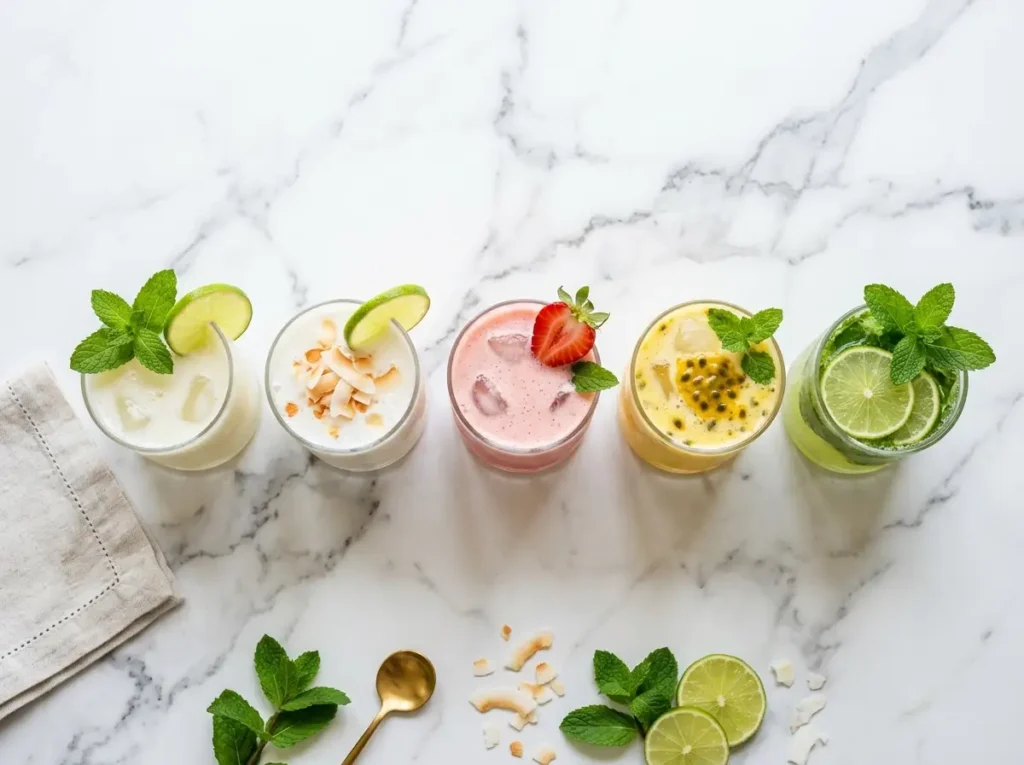
Frozen version: Add 2 cups of ice directly to the blender along with the other ingredients for a slushy, frozen texture instead of a pourable drink.
Dairy-free version: Swap the sweetened condensed milk for an equal amount of sweetened condensed coconut milk, available at most grocery stores.
Less sweet version: Cut the sugar to 1/2 cup and use only 1/3 cup condensed milk for a tangier, lighter drink.
Sparkling version: Make the base as directed, then top each glass with a splash of chilled club soda right before serving for a lighter, fizzy finish.
Mint version: Blend a small handful of fresh mint leaves along with the limes for a cooling, herbal note.
Best Serving Ideas
Brazilian lemonade is best enjoyed ice-cold on a hot afternoon, but it also works well as a palate-cleansing drink alongside a rich meal. It pairs naturally with grilled meats, barbecue, and smoky flavors, since the tang and creaminess cut through fat the same way a squeeze of lime does on its own. It’s also a natural fit for backyard cookouts, pool days, and casual summer entertaining, where a big pitcher can serve a crowd without much fuss.
If you’re planning a full drinks menu for a get-together, this recipe sits nicely next to something like a gin and juice drink for guests who want something with a little more kick, while the lemonade covers everyone who wants a non-alcoholic option that still feels special.
Storage Tips
Store leftover Brazilian lemonade in an airtight pitcher or jar in the refrigerator for up to 2 days. The condensed milk will settle over time, so give it a good stir or shake before serving again. This drink doesn’t freeze well as a liquid because the condensed milk changes texture when thawed, so it’s best enjoyed fresh or within a day or two.
Frequently Asked Questions
Is Brazilian lemonade made with lemons or limes?
It’s made with limes. The name comes from the Portuguese word “limão,” which translates to lime in this context, even though it sounds like “lemon” in English.
Can I make this without a blender?
You can use a juicer to extract lime juice instead, then whisk it with water, sugar, and condensed milk. You’ll lose some of the pulp texture, but the flavor stays close to the original.
Why does my Brazilian lemonade taste bitter?
Bitterness almost always comes from blending the limes too long, which releases oil from the peel and pith. Keep blending time to 15 seconds or less and strain promptly.
Can I use bottled lime juice instead of fresh limes?
Fresh limes give the best flavor and the characteristic cloudy texture, since some peel is blended into the drink. Bottled juice will work in a pinch, but the result will taste flatter and less aromatic.
How long does Brazilian lemonade last in the fridge?
It keeps well for up to 2 days in a sealed container. Stir or shake before each serving, since the condensed milk naturally settles.
Is Brazilian lemonade very sweet?
It’s moderately sweet, similar to a creamy limeade. You can easily scale the sugar or condensed milk up or down to match your preference, as covered in the variations section above.
What can I use instead of sweetened condensed milk?
Sweetened condensed coconut milk is the most popular dairy-free swap and keeps the same creamy texture. Evaporated milk with extra sugar added is another option, though it’s slightly less rich.
Notes
Do not blend the limes for more than 15 seconds; over-blending releases bitter oils from the peel and pith. Stir well before serving if the mixture has been refrigerated, since the condensed milk settles over time. For a dairy-free version, substitute sweetened condensed coconut milk in equal measure.
Nutrition Disclaimer: Nutritional values are estimated and may vary based on specific brands and portion sizes used. For general guidance on sugar intake and hydration, see the USDA MyPlate guidelines.
Final Thoughts
This brazilian lemonade recipe earns its place in a regular drink rotation because it asks so little and gives back so much. Five ingredients, one blender, and ten minutes turn into a pitcher of something genuinely different from ordinary lemonade. Once you get the short-blend, quick-strain rhythm down, it becomes one of those recipes you can make from memory, no measuring cups required.