
Quick Overview
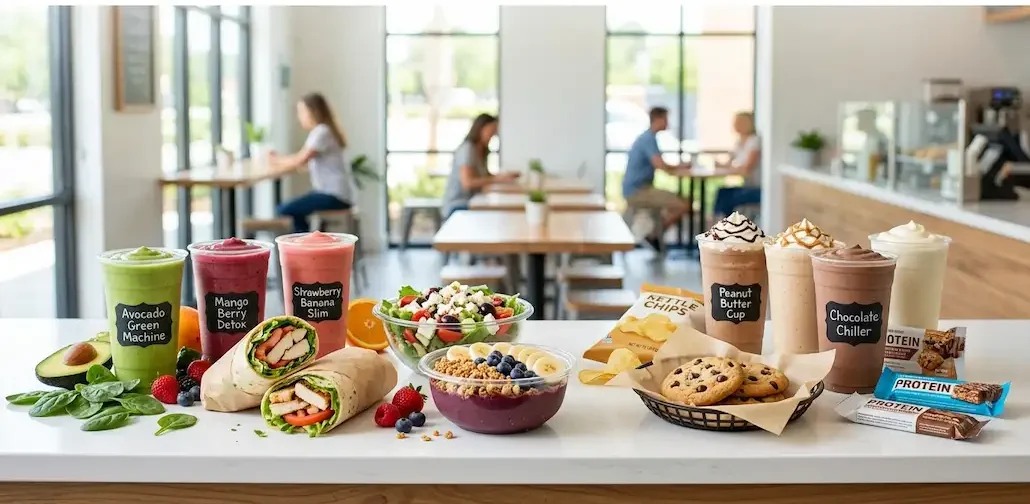
- Short answer: Tropical Smoothie Cafe can absolutely fit a healthy diet, but the menu spans a wide range — from 180-calorie greens-and-fruit blends to 700-plus-calorie dessert smoothies loaded with added sugar. It comes down to what you order, not the brand itself.
- Best for: People who want a quick, customizable smoothie or light meal and are willing to ask for a few simple swaps.
- Main benefits: Real fruit bases, easy protein and veggie add-ins, clear allergen labeling, and several genuinely low-sugar options.
- Watch out for: Turbinado sugar, whipped toppings, oversized “supplement” boosts, and dessert-style smoothies that read more like a milkshake than a snack.
- Quick takeaway: Stick to fruit-and-veggie or protein-forward smoothies, skip the added sugar, and Tropical Smoothie Cafe becomes one of the easier fast-casual stops to eat well at.
Table of Contents
Is Tropical Smoothie Cafe Healthy? The Short Answer
Is Tropical Smoothie Cafe healthy? It depends entirely on what lands in your cup. That’s the honest, slightly unsatisfying truth behind the is Tropical Smoothie Cafe healthy question that keeps popping up in health forums and diet groups. The chain built its whole identity around fruit smoothies, and fruit is genuinely good for you. But smoothies are also easy to turn into 600-calorie, sugar-heavy treats without anyone intending to.
A lot of nutrition confusion around fast-casual smoothie chains comes from marketing language. “Superfood,” “detox,” and “boost” sound healthy, and often the ingredients back that up. But the same shop can also serve a smoothie closer to a gin and juice drink in sugar content than a nutrient-dense snack, just without the alcohol. Knowing the difference before you order is what actually determines whether your visit supports your goals or quietly works against them.
The good news: Tropical Smoothie Cafe makes it fairly easy to eat well if you know what to look for. This guide breaks down exactly which smoothies to order, which to limit, and how to customize almost anything on the menu into a smarter choice.
What Makes Some Smoothies Healthier Than Others?
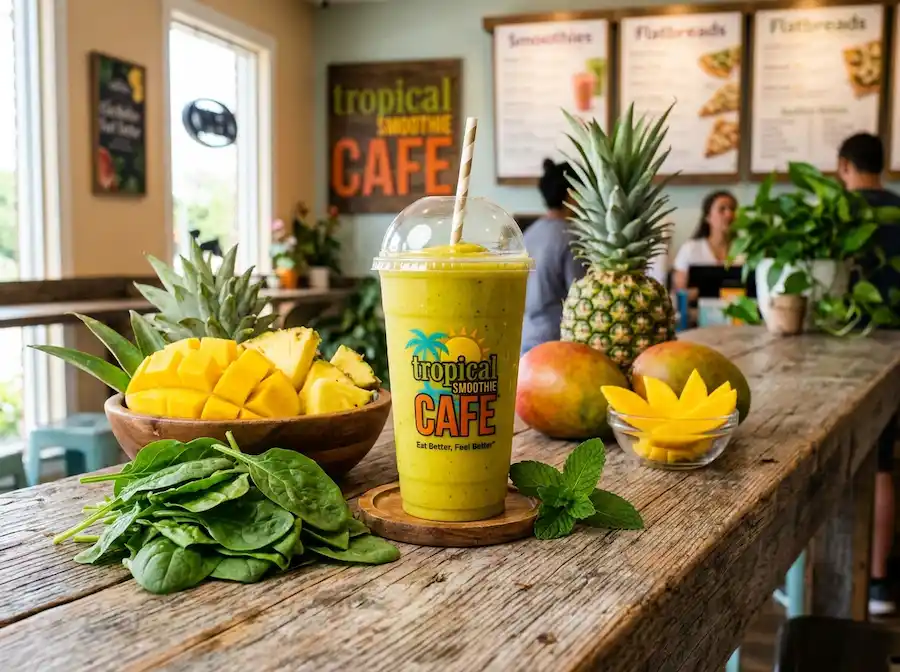
Not all smoothies are created equal, even within the same menu. Four factors separate a genuinely nutritious order from a dessert in disguise:
- Added sugar. Many chains, including Tropical Smoothie Cafe, blend in a sweetener like turbinado sugar by default. Fruit alone provides natural sugar and fiber; added sugar stacks extra calories with none of the nutritional benefit.
- Portion size. A 24-ounce smoothie can easily pack two servings of fruit and sweetener into one sitting, which adds up fast even with “healthy” ingredients.
- Base ingredients. Smoothies built around Greek yogurt, spinach, kale, or protein powder tend to keep you fuller and steadier than ones built around juice, sherbet, or sweetened purees.
- Add-ins. Peanut butter, whey protein, and chia seeds can make a smoothie more balanced. Whipped cream, candy toppings, or extra turbinado push it the other way.
Once you know these levers, you can custom-build almost any smoothie on the menu into something that fits your goals, whether that’s weight management, muscle recovery, or simply not crashing an hour later.
Best Smoothies to Order
These are the categories that consistently come out ahead on nutrition, according to Tropical Smoothie Cafe’s own published nutrition information:
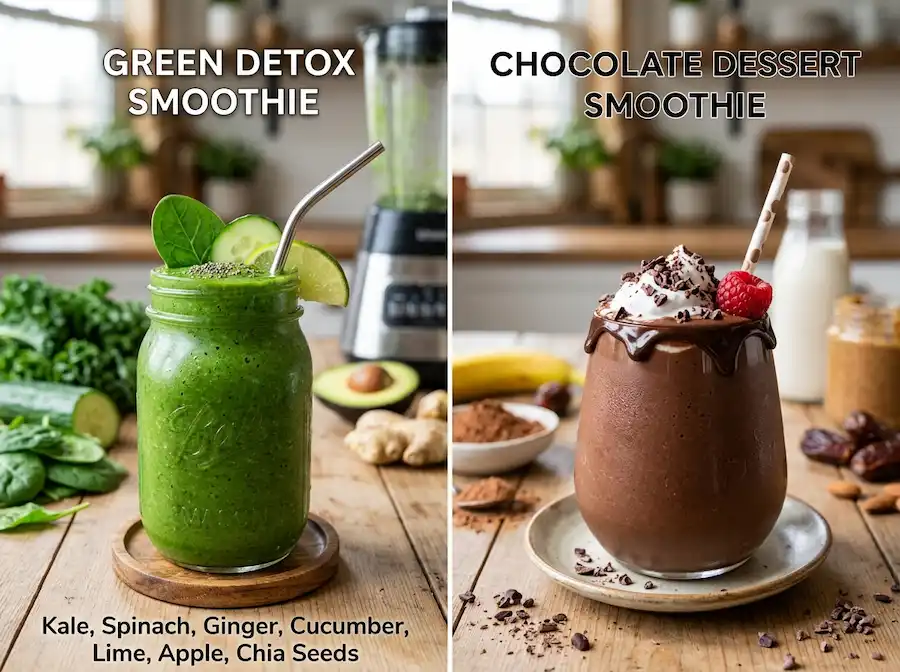
- Detox Island Green. Built on spinach, kale, mango, pineapple, and banana with no added sugar. It’s the closest thing on the menu to a straightforward green smoothie, and it’s consistently one of the lowest-calorie options available.
- Supergreen smoothies without added sugar. Ask for any fruit-and-greens blend “no turbinado” and you strip out a meaningful amount of sugar and calories without losing much flavor, since the fruit still carries plenty of natural sweetness.
- Protein-boosted fruit smoothies. Adding whey or plant-based protein to a fruit base slows digestion, helps you feel full longer, and turns a snack-sized smoothie into something closer to a balanced mini-meal.
- Acai-based bowls or smoothies, ordered light. Acai brings antioxidants and fiber, but ask about granola and honey portions since bowls can carry more added sugar than the smoothies do.
As a rule, if a smoothie’s name emphasizes fruits and greens rather than candy, dessert, or “paradise,” it’s usually the safer nutritional bet.
Smoothies to Limit or Skip
A few menu categories are worth treating as occasional treats rather than everyday orders:
- Dessert-style smoothies built around peanut butter cups, chocolate, or caramel. These often land at the higher end of the calorie and sugar range and are designed to taste like dessert because, nutritionally, that’s close to what they are.
- Large sizes of any sweetened smoothie. Sizing up doubles the sugar and calories, not just the volume, so a “healthy” smoothie in a large size can rival a fast-food milkshake.
- Smoothies with multiple add-ins stacked together. Peanut butter, chocolate chips, and whipped topping on the same order compounds quickly.
- Breakfast items paired with a full-sugar smoothie. A wrap or bowl plus a sweetened smoothie can push a single meal well past what most people need in one sitting.
None of these are “bad” foods — they’re just better suited to a once-in-a-while order than a daily habit.
Calories, Sugar, and Protein Explained
Smoothie calories at Tropical Smoothie Cafe span a wide range, and the exact numbers shift periodically as recipes and portions are updated. As a general guide, smoothies fall roughly between the high-100s for the lightest, no-added-sugar green blends and the 600–700 range for the largest dessert-style options. Protein and fiber content vary similarly, with yogurt- or protein-boosted smoothies delivering meaningfully more staying power than juice-forward blends.
Because recipes, sizes, and regional menus can change, always check the official Tropical Smoothie Cafe nutrition page for current, location-specific numbers before you order if exact figures matter to you — for example, if you’re tracking macros closely or managing a medical condition.
For general context, the USDA Dietary Guidelines for Americans use 2,000 calories a day as a common reference point for adults. A single smoothie in the 300–450 calorie range fits comfortably into that framework as a snack or light meal, while smoothies near 600–700 calories start to look more like a full meal’s worth of calories in liquid form.
It also helps to think about where those calories are coming from. A 350-calorie smoothie built from fruit, greens, and a protein add-in is delivering fiber, vitamins, and staying power along with its calories. A 350-calorie smoothie built mostly from juice, sherbet, and added sugar is delivering a similar calorie count with far less nutritional return. Two smoothies can look identical in size and calorie count on paper while behaving very differently once you’re actually eating and drinking through your day — one keeps you satisfied, the other leaves you reaching for a snack an hour later.
Sugar content follows a similar logic. Natural sugar from whole fruit arrives packaged with fiber, which slows how quickly it hits your bloodstream. Added sugar, like turbinado blended straight into the base, doesn’t come with that buffer. This is exactly why the “no added sugar” customization matters more than it might seem — it’s not about avoiding sugar entirely, it’s about avoiding the kind that spikes and crashes without offering anything nutritionally in return.
How Tropical Smoothie Cafe Compares to Homemade Smoothies
One useful way to think about Tropical Smoothie Cafe is as a convenience trade-off. A homemade smoothie gives you full control over every ingredient, from the exact amount of sweetener to the specific ratio of fruit to greens to protein. Tropical Smoothie Cafe gives up some of that precision in exchange for speed, consistency, and not having to own a blender.
That trade-off doesn’t have to mean a worse nutritional outcome. Because the menu allows substitutions — dropping added sugar, adding protein, choosing a smaller size — you can get reasonably close to a homemade result without the prep or cleanup. The main difference is that you have to actively make those requests rather than have them built in by default, which is the opposite of how most homemade smoothies work, since you control every ingredient from the start.
If you enjoy the customization side of smoothie-making and want more control over sugar and carb content specifically, it’s worth keeping a rotation of homemade recipes on hand for the days you’re not near a location. Having both options — a few go-to homemade blends and a reliable customized order at Tropical Smoothie Cafe — covers most situations without much extra thought.
Can Tropical Smoothie Cafe Fit Weight Loss Goals?
Yes, with some intention. Smoothies are easy to underestimate because they’re liquid, and liquid calories don’t register the same way solid food does. If weight management is the goal, a few habits make a real difference:
- Choose a fruit-and-greens smoothie without added sugar as your default order.
- Stick to the smallest available size rather than upsizing out of habit.
- Add protein or fiber-rich mix-ins (chia, protein powder) to help the smoothie hold you over instead of leaving you hungry an hour later.
- Treat a smoothie as a snack or part of a meal, not automatically a whole meal on its own, unless it’s paired with protein.
None of this requires giving up smoothies altogether. It just means being the one who decides what goes in the cup, rather than defaulting to the sweetest version on the menu board.
Best Options for High Protein
If you’re trying to hit a protein target — after a workout, for example, or as part of a higher-protein eating pattern — a few approaches work well here:
- Add whey or plant-based protein to any fruit smoothie. This is typically available as a customization across the smoothie menu.
- Choose smoothies that already include Greek yogurt as a base rather than a juice or sherbet base.
- Pair a smaller smoothie with a protein-forward food item, like an egg white wrap, rather than relying on the smoothie alone for protein.
Protein add-ins are one of the simplest ways to convert a fruit-only smoothie into something with real staying power, and they don’t meaningfully change the flavor of most blends.
Best Low Sugar Choices
For anyone watching added sugar, three habits make the biggest difference at Tropical Smoothie Cafe:
- Order any smoothie “no turbinado” or “no added sugar” — most fruit-based smoothies can be made this way, letting the fruit itself provide sweetness.
- Default to the Detox Island Green or a similar greens-and-fruit blend, which is built without added sweetener from the start.
- Skip dessert-inspired smoothies that lean on chocolate, caramel, or candy-style mix-ins, since these typically carry the most added sugar on the menu.
If you’re looking for more everyday inspiration beyond this menu, a good roundup of low carb healthy smoothies covers homemade options that use the same no-added-sugar principle.
Best Add-Ins
A handful of add-ins consistently improve a smoothie’s nutritional profile without overhauling the flavor:
- Chia seeds — fiber and a mild omega-3 boost, with almost no flavor impact.
- Whey or plant-based protein — turns a fruit smoothie into a more filling, balanced option.
- Spinach or kale — adds micronutrients and volume with minimal calories, and the sweetness of the fruit typically masks the flavor.
- Peanut butter, in moderation — adds protein and healthy fat, though it also adds calories, so it’s best in smaller smoothies rather than stacked onto an already large order.
If you’re building your own smoothies at home and want ideas for higher-calorie, nutrient-dense options, a solid resource on healthy smoothies for weight gain is worth keeping on hand.
Ingredients to Watch
A few ingredients are worth double-checking before you order, especially if you’re managing sugar intake, allergies, or a specific diet:
- Turbinado sugar — the default sweetener added to many smoothies unless you request otherwise.
- Sherbet or ice cream bases — used in some dessert-style smoothies, adding dairy and sugar beyond what fruit alone would contribute.
- Common allergens — Tropical Smoothie Cafe’s kitchens handle dairy, tree nuts, peanuts, soy, and other major allergens, so cross-contact is possible even in items that don’t list an allergen directly. If you have a food allergy, it’s worth asking staff directly or checking the official allergen guide before ordering.
Tips for Ordering a Healthier Smoothie
A few small requests at the counter make a noticeably different smoothie:
- Ask for “no added sugar” or “no turbinado” on any fruit smoothie.
- Choose the smallest size that will satisfy you, rather than defaulting to the largest.
- Add a protein boost if you want the smoothie to double as a meal rather than a snack.
- Skip whipped topping and candy-style mix-ins on dessert smoothies if you’re ordering one as a treat.
- When in doubt, lead with greens-and-fruit smoothies over anything named after a dessert.
Frequently Asked Questions
Is Tropical Smoothie Cafe healthy overall?
It can be. The menu includes several genuinely nutritious, low-sugar options alongside dessert-style smoothies that are closer to a treat. The chain itself isn’t inherently unhealthy — the outcome depends on what you order and how it’s customized.
What is the healthiest smoothie at Tropical Smoothie Cafe?
The Detox Island Green is generally considered the lightest, lowest-sugar option, since it’s built around spinach, kale, and fruit with no added sweetener by default.
Are Tropical Smoothie Cafe smoothies high in sugar?
Some are. Many recipes include added turbinado sugar unless you request otherwise, and dessert-style smoothies tend to be the highest in sugar. Requesting “no added sugar” meaningfully lowers the sugar content of most fruit blends.
Can I get a high-protein smoothie there?
Yes. Whey and plant-based protein add-ins are typically available across the smoothie menu, and several smoothies already use Greek yogurt as a base.
Is it possible to eat low-carb at Tropical Smoothie Cafe?
It’s more limited, since most smoothies are fruit-based and naturally higher in carbohydrates. Choosing smaller sizes, skipping added sugar, and leaning on food-menu items like salads or wraps without sugary sides is the most practical approach for lower-carb needs.
Does size affect how healthy a smoothie is?
Yes, significantly. Sizing up doesn’t just mean more volume — it means more of everything in the recipe, including added sugar. A smaller size of a well-chosen smoothie is often a better nutritional choice than a large size of the same one.
Are there any smoothies with no added sugar at all?
Several fruit-and-greens blends, including the Detox Island Green, are made without added sweetener by default. Most other smoothies can also be ordered “no turbinado” on request, which removes the added sugar while keeping the fruit’s natural sweetness.
Final Verdict
So, is Tropical Smoothie Cafe healthy? The most accurate answer is that it’s what you make it. The menu genuinely includes better-for-you options — fruit-and-greens blends, protein-boosted smoothies, and simple no-added-sugar customizations that put you in control. It also includes indulgent, dessert-style smoothies that are fine as an occasional treat but shouldn’t be mistaken for a daily health food.
If you walk in knowing which category you want — light and green, or protein-forward — and you’re comfortable asking for a small tweak like “no turbinado,” Tropical Smoothie Cafe becomes one of the more flexible fast-casual stops for eating well on the go.