
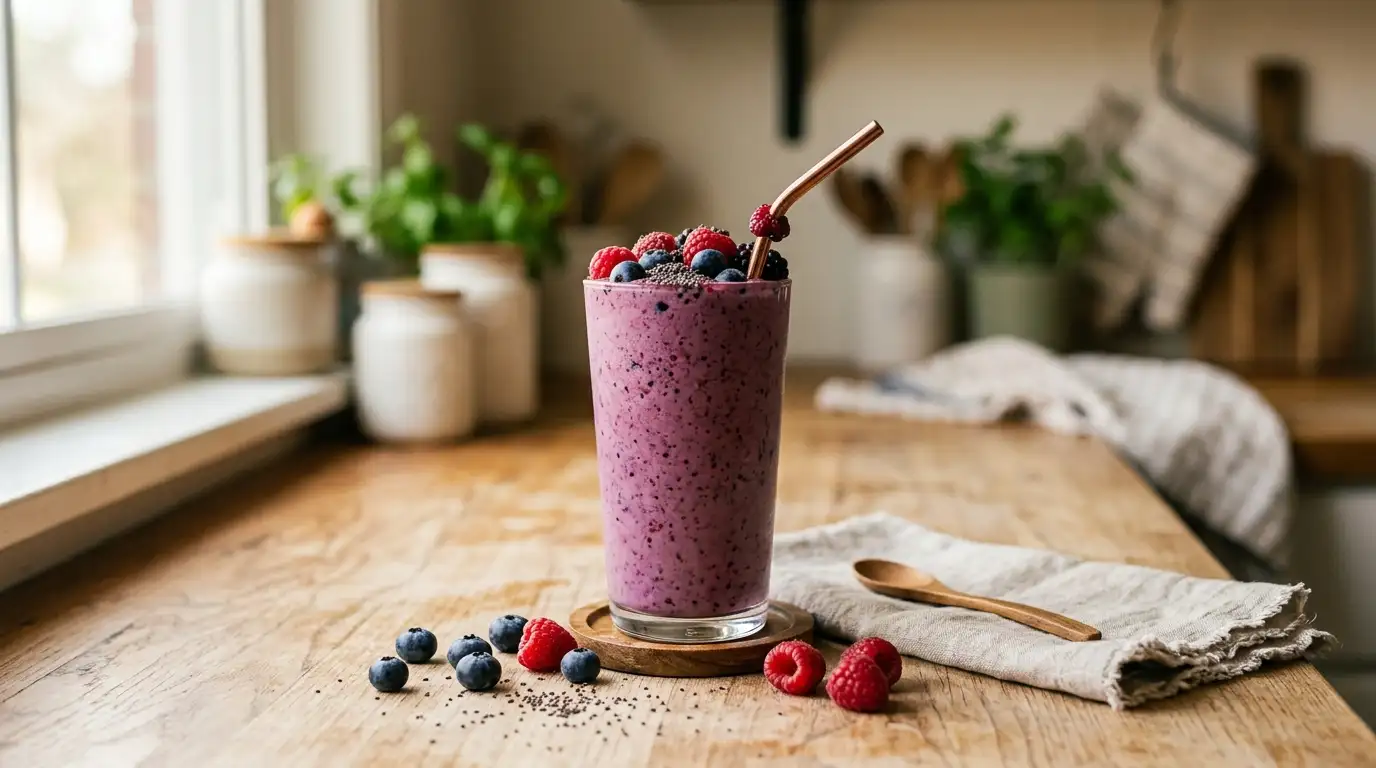
Why This Protein Smoothie Belongs in Your Weight-Loss Routine
If you’ve ever finished a smoothie and felt hungry again twenty minutes later, you know the problem: fruit alone doesn’t stick with you. This protein smoothie recipe for weight loss fixes that by pairing fiber-rich berries with a real dose of protein from Greek yogurt and protein powder, so you get natural sweetness plus staying power in the same glass.
It’s built for real mornings, not a fantasy meal-prep routine. You blend it, you drink it, you’re out the door. And because it’s flexible, you can swap ingredients based on what’s in your fridge without wrecking the balance of protein, fiber, and healthy fat that makes it work as a weight-loss-friendly meal or snack.
This isn’t a miracle drink, and no single recipe replaces a balanced diet. But when a smoothie keeps you full until lunch instead of sending you back to the pantry by mid-morning, it’s doing its job. If you like the flavor combination of tart citrus and something a little more grown-up, the gin and juice drink on this site shows how the same fresh-fruit approach works outside of smoothie form, too.
Quick Overview: This protein smoothie recipe for weight loss blends Greek yogurt, protein powder, and a mix of fresh and frozen berries into a thick, satisfying drink that keeps you full for hours. It comes together in one blender, needs no cooking, and works equally well as breakfast, a post-workout refuel, or an afternoon snack that keeps cravings in check.
- Prep Time: 5 minutes
- Cook Time: 0 minutes (no cooking required)
- Total Time: 5 minutes
- Servings: 1 large smoothie (about 16 oz)
- Calories: Approximately 310 kcal per serving (estimated)
Ingredients
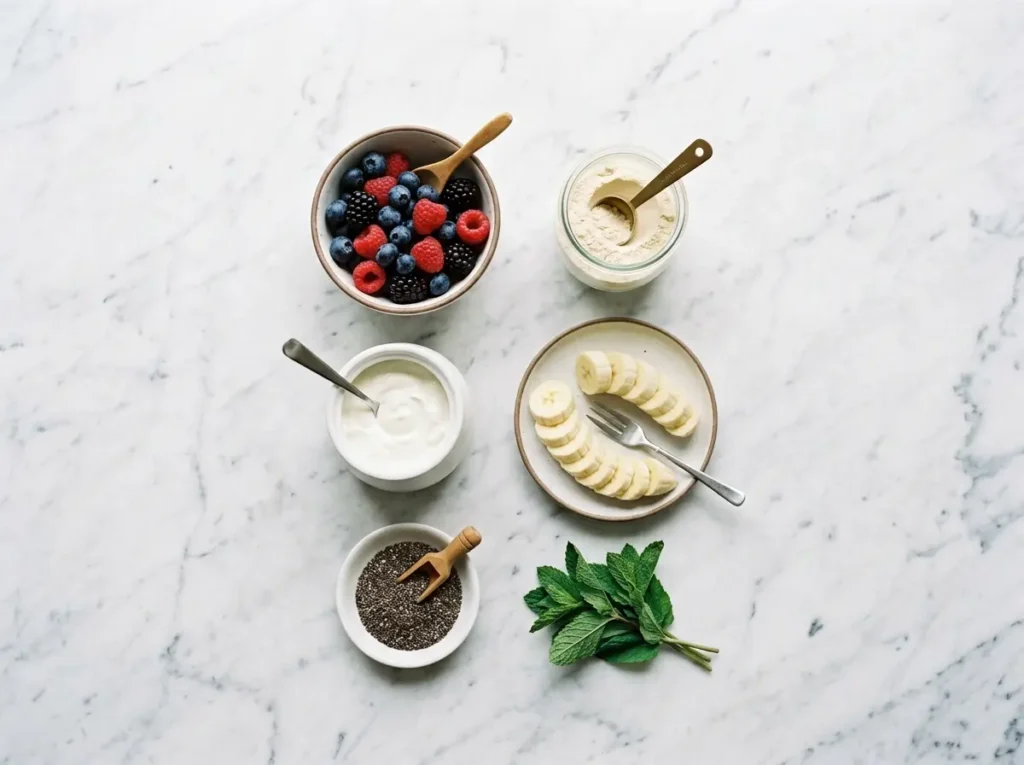
- 1 cup unsweetened almond milk (or milk of choice)
- 1/2 cup plain nonfat Greek yogurt
- 1 scoop (about 25g) vanilla protein powder
- 1 cup mixed berries (strawberries, blueberries, raspberries), fresh or frozen
- 1/2 small banana (optional, for creaminess)
- 1 tablespoon chia seeds or ground flaxseed
- 3-4 ice cubes (skip if using frozen berries)
Quick Instructions
- Add the almond milk and Greek yogurt to the blender first.
- Add the protein powder, berries, banana, and chia seeds.
- Blend on high for 45-60 seconds until smooth and creamy.
- Add ice if you want it thicker and colder, then blend again briefly.
- Pour into a glass and serve immediately.
Notes
Frozen berries give the smoothie a naturally thick, milkshake-like texture without needing extra ice, which also helps keep the calorie count down. If you’re new to protein powder, start with half a scoop and work your way up so your stomach adjusts.
Table of Contents
Why You’ll Love This Smoothie
It takes five minutes, uses one blender, and doesn’t require you to track down a single exotic ingredient. Every component is something you can find at a regular grocery store, and the recipe scales easily if you’re making two servings instead of one.
The berries do double duty here: they add natural sweetness so you don’t need added sugar, and their fiber slows down how quickly your body absorbs the smoothie’s sugars, which helps keep your energy steadier through the morning.
Why Protein Matters in a Weight-Loss Smoothie
Protein is the ingredient that turns a fruit smoothie from a sugar bomb into an actual meal. It slows digestion, which means you feel full longer, and it takes slightly more energy for your body to process than carbs or fat do. That’s a meaningful difference when you’re trying to manage your weight without feeling like you’re constantly hungry.
According to the USDA MyPlate guidelines, protein foods should make up a regular part of a balanced plate, and dairy-based proteins like Greek yogurt count toward that target while also supplying calcium. Aiming for roughly 20-30 grams of protein per smoothie, which this recipe hits, puts you in a solid range for a satisfying breakfast or snack.
Ingredient Notes
Greek yogurt: This is the backbone of the recipe’s protein and creaminess. Plain nonfat Greek yogurt has roughly double the protein of regular yogurt with a fraction of the sugar. If you can’t find nonfat, low-fat works fine; just skip flavored versions, which sneak in extra sugar you don’t need.
Protein powder: Whey isolate blends smoothly and mixes well with berries, while plant-based blends (pea or rice protein) are a solid choice if you’re dairy-free. Vanilla is the most versatile flavor here, but unflavored works too if you’d rather control the sweetness yourself.
Mixed berries: Strawberries add sweetness, blueberries add a deep color and mild flavor, and raspberries add tartness and fiber. Frozen berries are picked and flash-frozen at peak ripeness, so they’re often just as nutritious as fresh and much cheaper year-round.
Banana: Half a banana adds natural creaminess and a touch of sweetness without overpowering the berry flavor. Leave it out entirely if you’re watching carbs more closely, and use extra ice or yogurt to keep the texture thick.
Chia or flax seeds: These add fiber and healthy omega-3 fats, and they help thicken the smoothie slightly as it sits. Buy them ground if you want the smoothest texture, since whole chia seeds stay slightly crunchy.
Almond milk: Unsweetened almond milk keeps the sugar and calorie count low. Regular dairy milk or oat milk both work too; just adjust for the extra calories and sugar if you swap.
Kitchen Equipment
You need a blender with enough power to crush frozen fruit and ice smoothly, a tall glass for serving, and measuring cups or a kitchen scale if you like to be precise with your protein powder scoop. A personal-size blender cup works fine for single servings and cuts down on cleanup.
Step-by-Step Instructions
Step 1: Add the liquid and yogurt first.
Pour the almond milk into the blender, then add the Greek yogurt. Adding liquid first helps the blades catch everything else more evenly.
What to Look For: The yogurt should sit loosely in the milk rather than clumping at the bottom; if it’s very thick, give it a quick stir with a spoon before blending.
Step 2: Layer in the protein powder, berries, banana, and seeds.
Add these on top of the liquid rather than dumping them in all at once.
What to Look For: The protein powder should sit on top of the liquid, not clumped against the dry blender wall, which means it will blend in without leaving powdery streaks.
Step 3: Blend on high for 45-60 seconds.
Run the blender until the mixture looks completely smooth, stopping once halfway through to scrape down the sides if needed.
What to Look For: You’re done when there are no visible berry seeds’ worth of chunks and the color is a uniform pale purple with no streaks of yogurt or powder.
Step 4: Add ice for thickness, if needed.
If you used fresh berries instead of frozen, add 3-4 ice cubes now and blend again for 15-20 seconds.
What to Look For: The texture should coat the back of a spoon and hold its shape briefly when you tilt the glass, similar to a thick milkshake rather than a thin juice.
Step 5: Pour and serve immediately.
Pour into a tall glass and drink right away for the best texture, since smoothies separate slightly the longer they sit.
What to Look For: A properly blended smoothie should be pourable but still cling to the sides of the glass, not run off like water.
Expert Tips
- Freeze your berries ahead of time in a single layer on a baking sheet before bagging them, so they blend without clumping into a solid block.
- Add protein powder before liquid gets fully mixed in if your blender is on the weaker side; this keeps it from sticking to the blades.
- Weigh your protein powder scoop once with a kitchen scale to know exactly how many grams you’re actually getting, since scoops vary by brand.
- Blend the liquid and yogurt alone for 10 seconds before adding solids for an extra-smooth result with older or lower-powered blenders.
- Keep a batch of pre-portioned smoothie freezer bags on hand with your berries, chia seeds, and banana measured out, so all you add each morning is milk, yogurt, and protein powder.
- Taste before adding sweetener. Ripe berries and banana often provide all the sweetness you need, and unsweetened protein powders can surprise you with how sweet they already are.
- Use a narrow blender cup instead of a wide pitcher for single servings; it blends smaller amounts more evenly and is easier to clean.
- Let frozen berries sit at room temperature for 5 minutes before blending if your blender struggles, to reduce strain on the motor.
- Rinse the blender immediately after use. Protein residue hardens quickly and becomes much harder to scrub off once it dries.
- Add a small pinch of salt if the smoothie tastes flat. It won’t make it salty, but it will sharpen the berry flavor.
Common Mistakes
Using too much fruit and not enough protein. This is the single biggest reason “healthy” smoothies stop working for weight loss. Keep the protein source as the anchor and treat fruit as flavoring, not the main event.
Skipping the fat and fiber. A smoothie that’s just fruit and protein powder digests fast, meaning you’re hungry again soon. The chia seeds and a little yogurt fat help slow that down.
Not measuring the protein powder. Eyeballing scoops leads to wildly inconsistent protein content between servings, which makes it hard to know if the smoothie is actually keeping you full for the reason you think it is.
Over-blending until it’s warm. Blending too long generates heat and can make the smoothie thinner and less refreshing. Stick to short bursts and stop as soon as it’s smooth.
Easy Variations
High-Protein Version: Add an extra half-scoop of protein powder or a tablespoon of nut butter for an additional 8-10 grams of protein, and thin with a splash more milk if it gets too thick.
Dairy-Free Version: Swap Greek yogurt for a plain dairy-free yogurt alternative and use a plant-based protein powder, keeping everything else the same.
Vegan Version: Use the dairy-free swaps above along with a pea or rice protein powder, and replace honey (if using any) with a small amount of maple syrup.
Low-Carb Version: Skip the banana, cut the berries down to 1/2 cup, and use an unsweetened almond milk with a low-carb protein powder to bring the carb count down significantly.
Berry Blast Version: Double the berries and skip the banana entirely for a lighter, more tart smoothie that leans hard into the fruit flavor.
Tropical Version: Swap half the berries for pineapple and mango, and use coconut milk in place of almond milk for a beachy twist.
Chocolate Version: Use a chocolate protein powder instead of vanilla and add a teaspoon of cocoa powder. This pairs particularly well with the darker berries like blackberries, and if you want even more chocolate protein smoothie ideas, cocoa powder plus a few frozen cherries is worth trying next.
Best Protein Powder Options
Whey isolate is the easiest option for a smooth blend and mixes well with fruit without leaving a gritty texture. Casein protein works too but tends to thicken the smoothie considerably, so use slightly less liquid if you go that route. For dairy-free diets, a pea-rice protein blend gives a similar creaminess to whey without the lactose.
If you regularly order smoothies out and want something similar at home, a smoothie king gladiator protein-style blend (heavy on whey and slightly higher in protein per scoop) is a good benchmark for how much protein powder to use here — roughly 25-30 grams per serving keeps this recipe in that same satisfying range.
Optional Add-Ins
Spinach or kale blend in almost invisibly and add extra fiber and micronutrients without changing the berry flavor much. A tablespoon of nut butter adds healthy fats and makes the smoothie noticeably more filling. Cinnamon or a small splash of vanilla extract can round out the flavor if your protein powder tastes flat on its own.
Serving Suggestions
This smoothie works best first thing in the morning or within 30-45 minutes after a workout, when your body is primed to use the protein and carbs for recovery. It also makes a solid afternoon snack if you tend to hit a slump around 3 p.m.
For breakfast, pair it with a slice of whole-grain toast or a hard-boiled egg if you want more staying power. As a post-workout option, it’s filling enough on its own, though a small handful of nuts alongside it adds extra protein and healthy fat.
Storage Tips
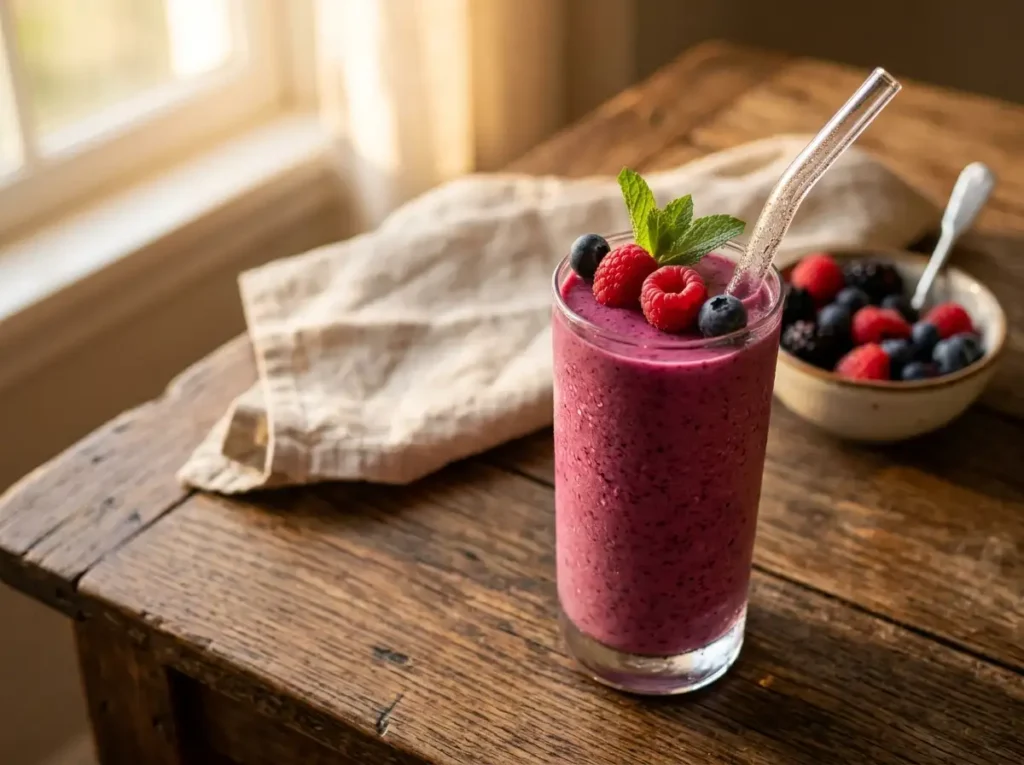
This smoothie is best enjoyed fresh, but if you need to store it, keep it in an airtight jar in the refrigerator for up to 24 hours and give it a good shake or stir before drinking, since separation is normal. For longer storage, portion the unblended ingredients (minus the liquid) into freezer bags so all you have to do each morning is dump, add liquid, and blend.
Notes
Use frozen berries for a thicker texture without extra ice. Start with half a protein scoop if you’re new to protein powder, and adjust liquid as needed for your preferred consistency.
Nutrition Disclaimer: Nutritional values are estimates based on standard ingredient data and can vary depending on specific brands and substitutions used. For personalized nutrition guidance, consult a registered dietitian or refer to resources from the Academy of Nutrition and Dietetics.
Frequently Asked Questions
Can I make this protein smoothie recipe for weight loss ahead of time?
Yes, but it’s best within 24 hours. Store it in an airtight container in the fridge and shake well before drinking, since the fruit and protein will settle.
How much protein does this smoothie actually have?
With one scoop of protein powder and Greek yogurt combined, you’re typically looking at 25-30 grams of protein per serving, depending on your specific brands.
Can I use frozen berries instead of fresh?
Absolutely, and frozen often works better since it thickens the smoothie naturally without needing much extra ice.
Is this smoothie good for meal replacement?
It can work as a light meal replacement occasionally, especially paired with a small side like toast, but it shouldn’t replace every meal since whole foods offer variety a smoothie alone can’t.
What if I don’t like protein powder?
You can lean more heavily on Greek yogurt and add cottage cheese for extra protein without using powder at all, though the texture will be slightly less smooth.
Will this smoothie spike my blood sugar?
The combination of protein, fiber, and fat alongside the berries helps blunt how quickly sugar hits your bloodstream compared to fruit juice or a plain fruit smoothie.
Can kids drink this smoothie too?
Yes, it’s a kid-friendly recipe, though you may want to reduce or skip the protein powder for younger children and let their pediatrician guide protein powder use.
Final Thoughts
A good protein smoothie recipe for weight loss doesn’t need to be complicated or expensive to work. This one leans on real, recognizable ingredients, comes together in the time it takes to boil water for coffee, and actually keeps you full because it’s built around protein and fiber instead of just sugar and ice. Make it a few mornings in a row and you’ll notice it’s a lot easier to stick with than something that takes twenty minutes and six specialty ingredients.