
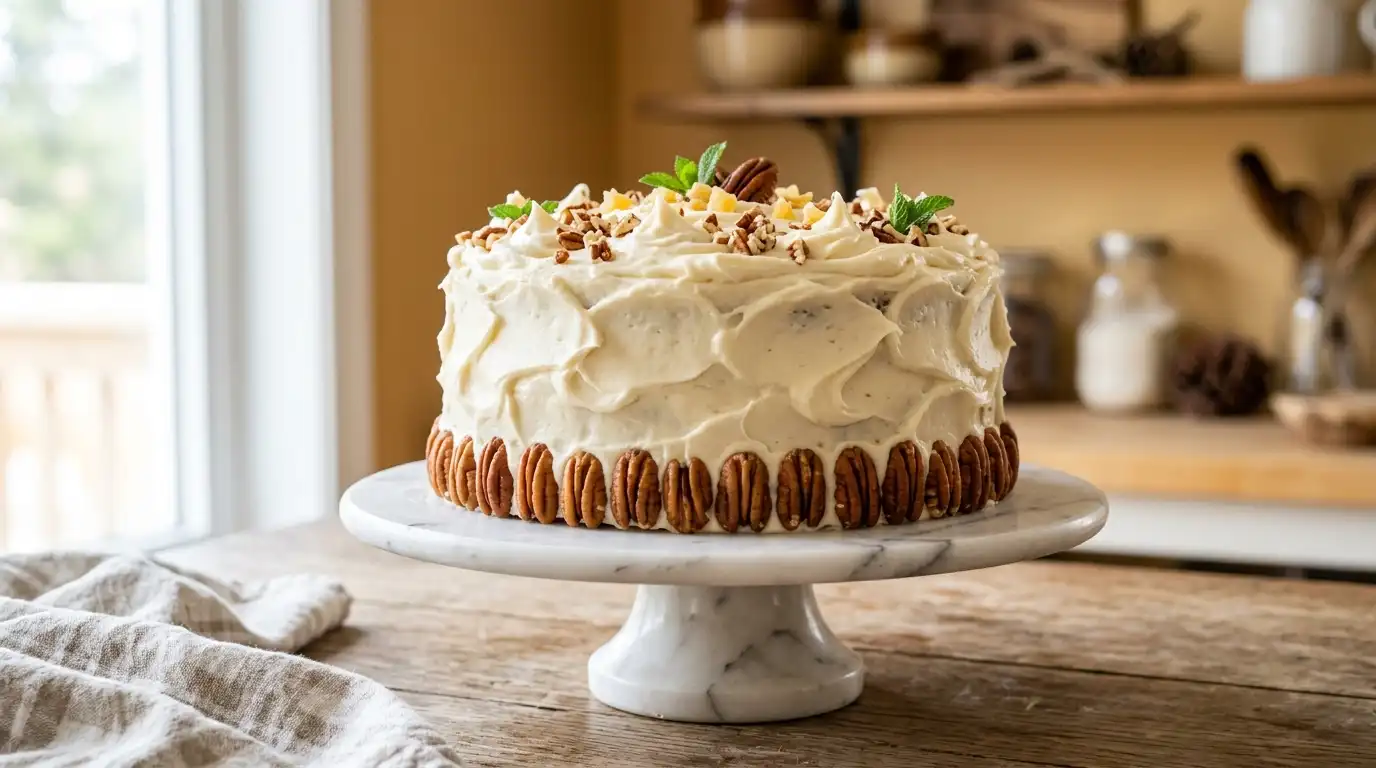
Quick Instructions
- Whisk the dry ingredients together, then fold in eggs, oil, vanilla, bananas, and pineapple until just combined.
- Stir in the pecans and divide the batter evenly among three greased 9-inch pans.
- Bake at 350°F for 25 to 30 minutes, then cool completely before frosting.
- Beat cream cheese and butter until smooth, add powdered sugar and vanilla, then frost and stack the layers.
A quick look: This hummingbird cake recipe combines ripe bananas, crushed pineapple, warm cinnamon, and toasted pecans into a cake so moist it barely needs the frosting — though the tangy cream cheese frosting is what makes it unforgettable. It’s a Southern classic that comes together in one bowl, no mixer required for the batter.
- Prep Time: 25 minutes
- Bake Time: 30 minutes
- Total Time: 1 hour 55 minutes
- Cooling Time: 1 hour
- Servings: 12 slices
- Calories (Estimated): 560 per slice
Ingredients
- 3 cups all-purpose flour
- 2 cups granulated sugar
- 1 teaspoon baking soda
- 1 teaspoon salt
- 1 tablespoon ground cinnamon
- 3 large eggs, room temperature
- 1 cup vegetable oil
- 1 1/2 teaspoons vanilla extract
- 2 cups mashed ripe bananas (about 4 medium)
- 1 can (8 ounces) crushed pineapple, undrained
- 1 cup chopped toasted pecans, plus extra for garnish
- 16 ounces cream cheese, softened
- 1 cup unsalted butter, softened
- 6 cups powdered sugar
- 1 teaspoon vanilla extract (for frosting)
Table of Contents
Notes
Use bananas with plenty of brown spots for the best flavor, and make sure every layer is fully cool before frosting or the cream cheese will slide right off.
If you’ve never made a hummingbird cake recipe before, you’re in for a genuinely happy surprise. This isn’t a cake that relies on fancy technique or a long list of hard-to-find ingredients — it’s a humble, one-bowl batter that turns into something so moist and richly spiced that people usually ask for the recipe before they’ve finished their slice.
Ripe bananas and crushed pineapple work together to keep every crumb tender for days, while a generous hit of cinnamon and toasted pecans give it warmth and crunch. The tangy cream cheese frosting ties it all together, cutting through the sweetness instead of piling more on top. If you’re also baking for someone avoiding wheat, this gluten free dessert recipe is worth bookmarking too. Let’s get into why this cake has earned its cult following.
What Is Hummingbird Cake?
Hummingbird cake is a spiced banana-pineapple layer cake that originated in Jamaica before becoming a beloved staple of Southern American baking in the 1970s. Nobody is entirely sure why it’s named after the hummingbird — some say it’s because the cake is so sweet it should attract them, others say the name simply traveled with the recipe from the Caribbean. Either way, it’s built on a foundation of overripe bananas, crushed pineapple, brown sugar, warm spices, and pecans, all folded into an oil-based batter that stays moist far longer than a butter cake typically would.
Why You’ll Love This Recipe
This cake earns its spot in permanent rotation for a few simple reasons. First, the batter comes together in one bowl with a whisk — no stand mixer, no creaming butter, no fuss. Second, because it’s oil-based rather than butter-based, it stays soft and moist for three or four days, which makes it an excellent make-ahead dessert for parties. Third, the combination of banana, pineapple, cinnamon, and pecans creates layers of flavor that taste more complex than the short ingredient list suggests. And finally, that cream cheese frosting is tangy enough to balance the sweetness of the cake, so every bite feels balanced instead of cloying.
Ingredient Notes
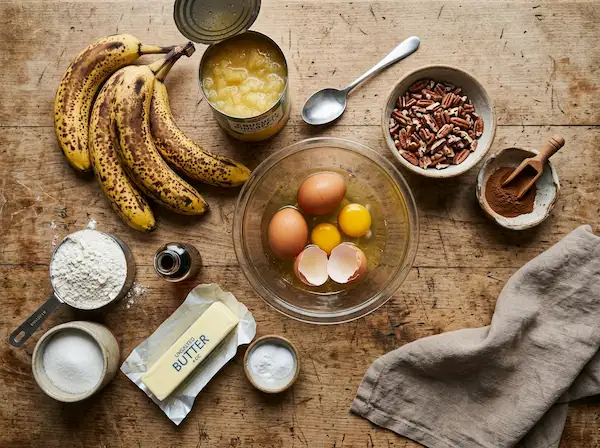
A few ingredient choices make a real difference in how this cake turns out, so it’s worth understanding what to look for at the store.
Ripe bananas: You want bananas that are heavily speckled with brown spots, almost past the point you’d eat them plain. The starches have converted to sugar by this stage, which means more natural sweetness and a softer, more mashable texture that blends smoothly into the batter.
Crushed pineapple: Use canned crushed pineapple packed in juice rather than syrup, and don’t drain it. That juice adds moisture and a subtle tang that balances the banana’s sweetness. Pineapple chunks or rings will work in a pinch if you pulse them briefly in a food processor first.
Toasted pecans: Raw pecans are fine, but toasting them in a dry skillet for four or five minutes deepens their flavor considerably and adds a pleasant crunch that holds up even after baking.
Cream cheese: Stick to full-fat block cream cheese rather than the spreadable tub kind, which contains more water and can make the frosting too loose to hold its shape.
Butter quality: Use a good quality unsalted butter for the frosting so you can control the salt level and let the cream cheese tang come through clearly.
Cinnamon and vanilla: Ground cinnamon should smell strong and fresh; if it’s been sitting in your pantry for over a year, it’s worth replacing. Pure vanilla extract, rather than imitation, adds a rounder flavor to both the cake and the frosting.
Flour choices: Standard all-purpose flour gives the best structure here. If you need a wheat-free version, a 1:1 gluten-free baking blend with xanthan gum works as a substitute, though the crumb will be slightly denser.
Buying and storage: Buy pecans in small quantities since their natural oils can turn rancid within a few months; store any extras in the freezer to keep them fresh longer.
Kitchen Equipment
- Three 9-inch round cake pans
- Large mixing bowl and a separate medium bowl
- Whisk and a rubber spatula
- Electric hand mixer or stand mixer (for the frosting)
- Wire cooling racks
- Offset spatula for frosting
Step-by-Step Instructions
Step 1: Prep Your Pans and Oven
Preheat your oven to 350°F. Grease three 9-inch round cake pans and line the bottoms with parchment paper circles, then grease the parchment too. This double layer of insurance keeps the cake from sticking, since the batter is dense with fruit and sugar.
What to Look For: The pans should feel completely non-stick to the touch, with no dry, ungreased patches near the edges.
Step 2: Whisk the Dry Ingredients
In a large bowl, whisk together the flour, sugar, baking soda, salt, and cinnamon until evenly combined. Whisking here, rather than just stirring, helps distribute the leavening evenly so you don’t end up with dense pockets in the finished cake.
What to Look For: The mixture should look uniform in color, with no visible streaks of cinnamon or clumps of baking soda.
Step 3: Combine the Wet Ingredients
In a separate bowl, whisk the eggs, oil, and vanilla together until smooth and slightly frothy. Add the mashed bananas and the entire can of crushed pineapple, juice included, and stir until combined.
What to Look For: The mixture should be pourable but thick, with visible flecks of pineapple throughout.
Helpful Tip: Mash the bananas with a fork rather than a blender — a few small lumps actually help create pockets of extra-moist texture inside the baked cake.
Step 4: Fold Wet Into Dry
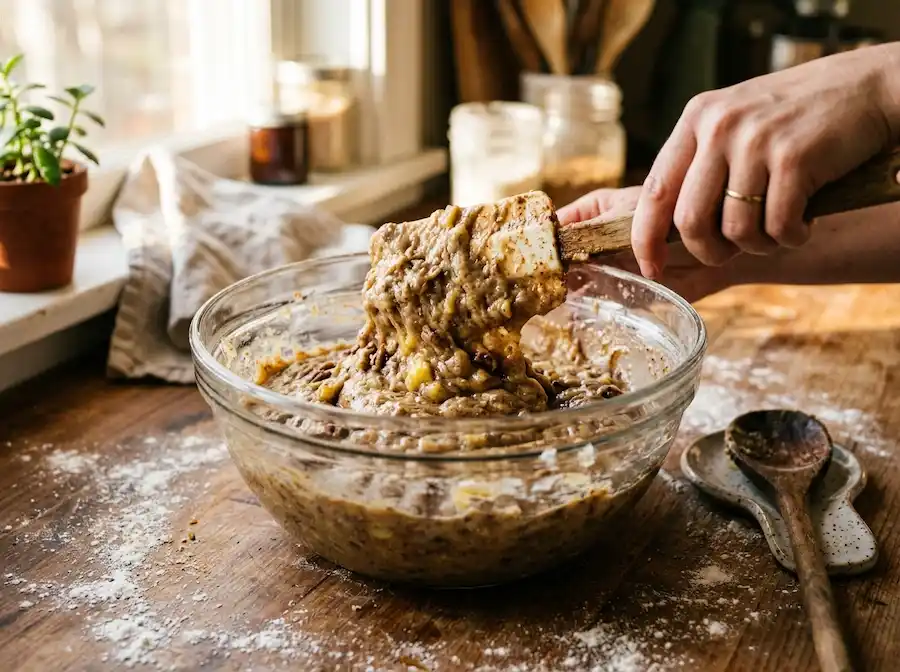
Pour the wet mixture into the bowl of dry ingredients. Using a rubber spatula, fold the two together with a gentle scooping motion, turning the bowl as you go, until just combined.
What to Look For: Stop folding the moment you no longer see streaks of dry flour. The batter will look thick and slightly lumpy, which is exactly right.
Helpful Tip: Overmixing at this stage develops the gluten in the flour, which leads to a tougher, less tender crumb once baked. Twenty to thirty folds is usually enough.
Step 5: Fold in the Pecans
Add the chopped toasted pecans and fold them through the batter with just three or four more strokes of the spatula.
What to Look For: Pecans should be evenly distributed without any further overworking of the batter.
Step 6: Divide the Batter Evenly
Divide the batter evenly among the three prepared pans. Using a kitchen scale to weigh each pan gives you the most reliable result, but eyeballing it works fine if you pour slowly and compare levels as you go.
What to Look For: Each pan should be filled to roughly the same height, and you can gently tap each pan on the counter once to release any large air bubbles.
Step 7: Bake the Layers
Bake all three layers at 350°F for 25 to 30 minutes, rotating the pans halfway through if your oven bakes unevenly.
What to Look For: The cake is done when the top springs back lightly when pressed and a toothpick inserted in the center comes out with a few moist crumbs, not wet batter. The edges will also just begin to pull away from the sides of the pan.
Helpful Tip: Avoid opening the oven door in the first 20 minutes, as a sudden temperature drop can cause the cakes to sink slightly in the middle.
Step 8: Cool Completely
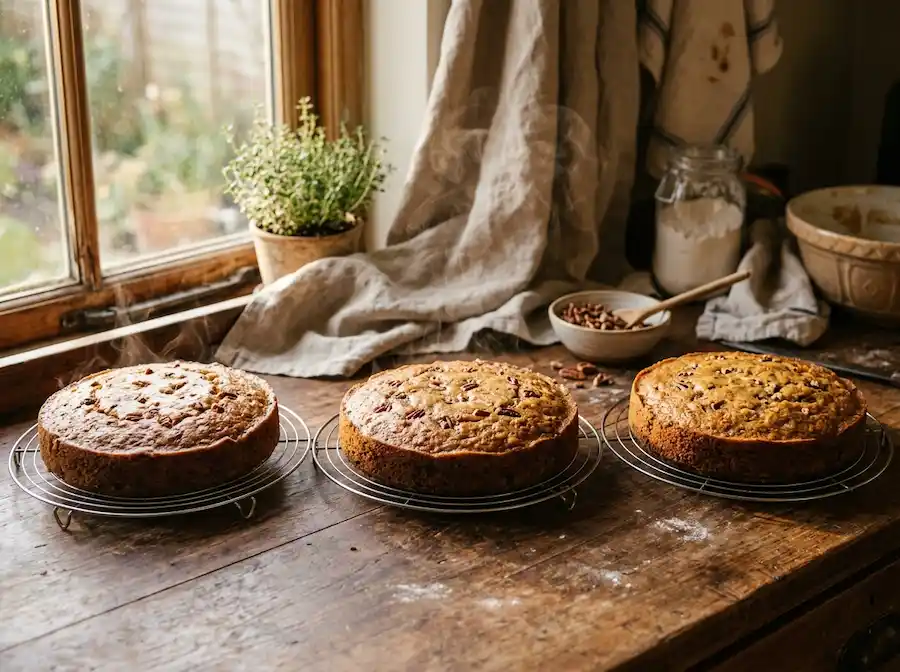
Let the cakes rest in their pans for 10 minutes, then turn them out onto wire racks to cool completely, at least an hour, before frosting.
What to Look For: The pans should feel just barely warm, not hot, before you invert them, and the cake layers should feel cool to the touch all the way through before frosting begins.
Helpful Tip: Frosting a warm cake is one of the most common mistakes bakers make with this recipe — the cream cheese frosting will melt and slide right off the sides.
Step 9: Make the Cream Cheese Frosting
In a large bowl, beat the softened cream cheese and butter together on medium speed until completely smooth and lump-free, about 2 minutes. Add the powdered sugar one cup at a time, beating on low speed after each addition to prevent a sugar cloud, then stir in the vanilla.
What to Look For: The frosting should look glossy and hold soft peaks when you lift the beaters, similar to a thick, spreadable buttercream.
Helpful Tip: If the frosting looks too soft to hold its shape, refrigerate it for 15 minutes before spreading; it firms up quickly once chilled.
Step 10: Frost and Stack the Layers
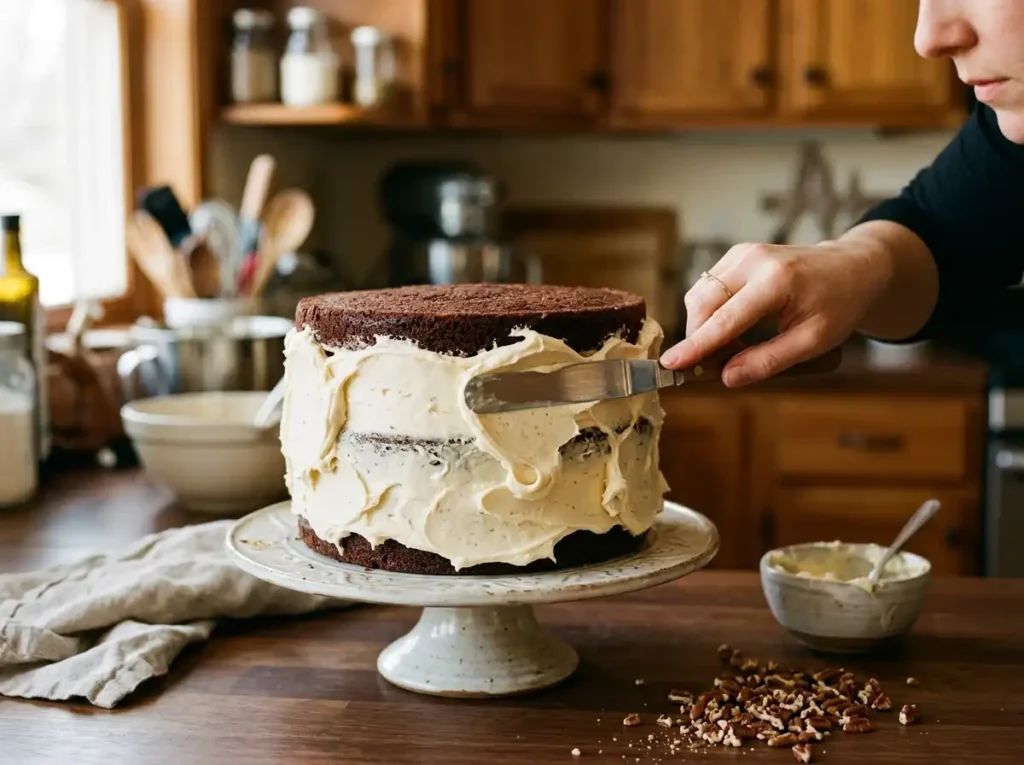
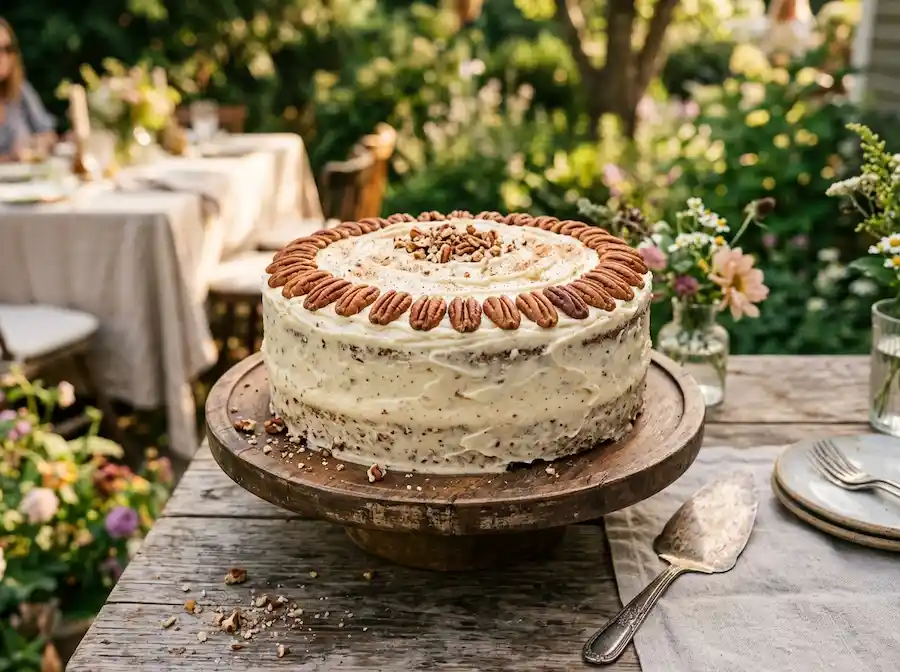
Place the first cake layer on your serving plate and spread an even layer of frosting on top, going almost to the edge. Add the second layer and repeat, then top with the third layer. Frost the top and sides using an offset spatula, working in smooth, even strokes.
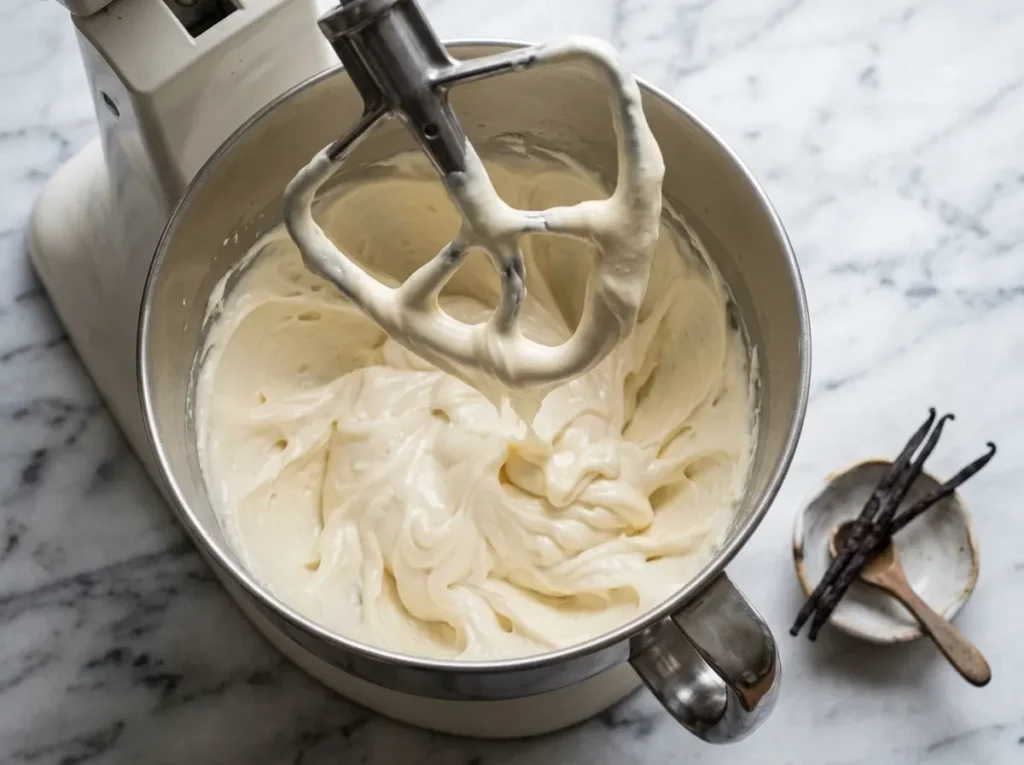
What to Look For: The layers should stack evenly without sliding, and the frosting should form a clean, unbroken coat around the whole cake.
Helpful Tip: For clean layers, run a serrated knife lightly across the top of each cooled cake to level it before stacking.
Step 11: Decorate
Press chopped toasted pecans around the base of the cake, and if you like, arrange whole pecan halves in a ring around the top edge for a finished, bakery-style look.
What to Look For: Pecans should stick easily to the still-soft frosting; if they aren’t adhering, the frosting has likely set too firm and needs a few minutes at room temperature.
Expert Baking Tips
- Weigh your flour with a kitchen scale (375 grams per cup) for the most consistent results every time you bake.
- Toast pecans in a dry skillet over medium heat for 4 to 5 minutes, stirring often, to deepen their flavor before adding them to the batter.
- Bring your eggs and cream cheese to true room temperature; cold ingredients blend unevenly and can leave lumps in the frosting.
- Use a kitchen scale to divide the batter evenly between pans so all three layers bake in the same amount of time.
- Rotate your pans halfway through baking if your oven has hot spots, which most home ovens do.
- Let the cake layers cool completely on a wire rack, not in the pan, to avoid trapped steam making the bottom soggy.
- Chill frosted layers for 15 minutes between stacking if the frosting feels soft, so the layers stay put instead of sliding.
- Use a bench scraper for the final smoothing pass around the sides for a clean, professional finish.
- Store leftover cake in the refrigerator, since the cream cheese frosting is perishable, but let slices sit at room temperature for 20 minutes before serving for the best texture.
- Freeze unfrosted cake layers wrapped tightly in plastic if you want to bake ahead of a big event.
- Add a pinch of nutmeg alongside the cinnamon for a slightly deeper spice profile without changing the recipe’s character.
- Slice with a long serrated knife dipped in hot water and wiped clean between cuts for neat, bakery-style slices.
Common Baking Mistakes
Using underripe bananas: Yellow bananas without brown spots lack the sweetness and soft texture this cake depends on. Wait until they’re heavily speckled, or speed-ripen them in a paper bag for a day or two.
Overmixing the batter: Stirring too vigorously develops gluten and leads to a dense, rubbery cake. Fold just until the flour disappears.
Using warm cream cheese: Cream cheese that’s too soft or slightly melted won’t whip properly and can make the frosting runny. Soften it at room temperature for about 30 minutes rather than microwaving it.
Frosting before the cake cools: Even slightly warm cake layers will melt the frosting and cause it to slide. Give the layers a full hour on a wire rack.
Overbaking: Because this batter is so moist, it’s tempting to leave it in longer to be safe, but overbaking dries out the crumb. Check at the 25-minute mark and pull it as soon as the toothpick shows moist crumbs.
Incorrect pan size: Using pans smaller than 9 inches without adjusting bake time can lead to overflow and undercooked centers. Stick with three 9-inch pans, or adjust the recipe if using a different size.
Frosting Tips
For the smoothest cream cheese frosting, sift the powdered sugar before adding it to avoid lumps that no amount of beating will remove. Beat on low speed once the sugar goes in, since high speed will send powdered sugar everywhere and can also make the frosting airy rather than dense and spreadable. If your kitchen runs warm, chill the finished frosting for 10 to 15 minutes before you start spreading, which makes it much easier to control.
Easy Variations
Walnut Version: Swap the pecans for toasted walnuts for a slightly earthier, more assertive nutty flavor.
Coconut Version: Fold in half a cup of sweetened shredded coconut with the pecans, and press extra coconut onto the frosted sides for a tropical finish.
Layer Cake: This recipe is already written as a three-layer cake, but you can make it a taller four-layer cake by baking in slightly thinner rounds and reducing bake time by about 5 minutes.
Cupcakes: Divide the batter among lined muffin tins and bake at 350°F for 18 to 20 minutes for a portable, party-friendly version.
Bundt Cake: Pour the full batter into a well-greased 10-cup bundt pan and bake for about 55 to 60 minutes, then drizzle with a thinned version of the cream cheese frosting instead of a full frosted coat.
Less Sweet Frosting: Reduce the powdered sugar to 4 cups and add an extra ounce of cream cheese for a tangier, less sweet frosting that still holds its shape.
Decorating Ideas
For birthdays, press a ring of whole pecan halves around the top edge and finish with a few thin banana chip slices in the center for a nod to the cake’s key ingredient. For holiday tables, a light dusting of cinnamon over the top frosting adds warmth without extra work. Brunch gatherings look beautiful with a scattering of toasted coconut flakes and pineapple slices fanned out on the serving plate. For a simple family dinner, just a generous ring of chopped pecans around the base gives the cake a finished, intentional look in under a minute.
Serving Suggestions
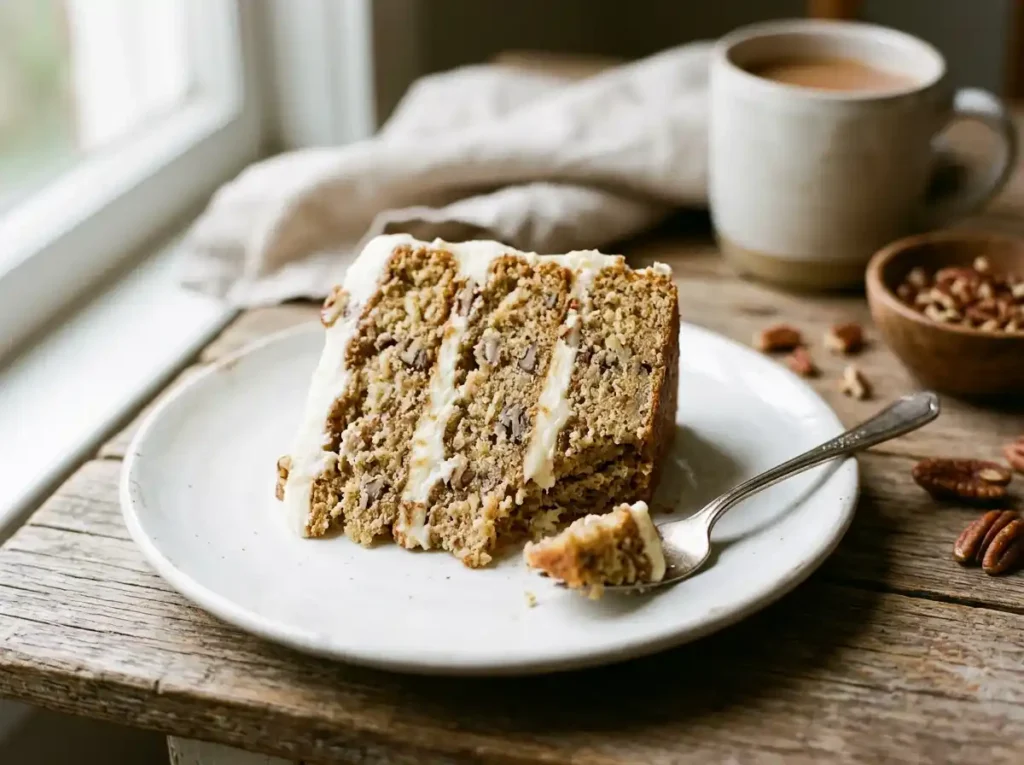
This cake pairs beautifully with a strong cup of drip coffee or a lightly spiced chai, both of which echo the cinnamon in the batter. For an afternoon treat, a chilled glass of sweet tea makes an easy, classic Southern pairing. At holiday gatherings, serve slices alongside a small scoop of vanilla bean ice cream to balance the richness of the frosting. For brunch spreads, thin slices plated with fresh pineapple and a few extra pecans tie the whole presentation together.
Storage and Freezing
Because the frosting contains cream cheese, store the finished cake covered in the refrigerator for up to 5 days. Let individual slices sit out for about 20 minutes before serving so the cake softens back to its ideal texture.
To freeze, wrap unfrosted cake layers tightly in plastic wrap and foil, and they’ll keep well for up to 3 months; thaw overnight in the refrigerator before frosting. Frosted cake can also be frozen in slices, wrapped individually, though the texture is best when frozen unfrosted.
Frequently Asked Questions
Can I make hummingbird cake ahead of time?
Yes. You can bake the layers up to two days ahead and store them wrapped tightly at room temperature, then frost the day you plan to serve it. The frosted cake also keeps well in the refrigerator for several days.
Why is my hummingbird cake dense instead of light?
Dense results usually come from overmixing the batter or using bananas that weren’t ripe enough. Fold gently and use bananas with plenty of brown spots for the lightest texture.
Can I use fresh pineapple instead of canned?
Canned crushed pineapple is preferred because its consistent moisture content is part of what keeps this cake so reliably moist. If you use fresh pineapple, pulse it finely and include a couple tablespoons of its juice.
What size pans work best for this recipe?
Three 9-inch round pans give you the classic three-layer look and even baking time. You can use two 9-inch pans instead, but expect a slightly longer bake time of around 35 minutes.
Can I make this cake without pecans for allergies?
Yes, simply omit the pecans from the batter and skip the pecan garnish. The cake will still be flavorful thanks to the banana, pineapple, and cinnamon.
How do I keep the frosting from sliding off the cake?
Make sure every cake layer is completely cool before frosting, and chill the frosting briefly if your kitchen is warm. Warm cake and soft frosting are the two most common causes of sliding.
Is hummingbird cake very sweet?
It’s a sweeter dessert, similar to carrot cake, but the tangy cream cheese frosting helps balance the sugar so it doesn’t taste one-note.
Final Thoughts
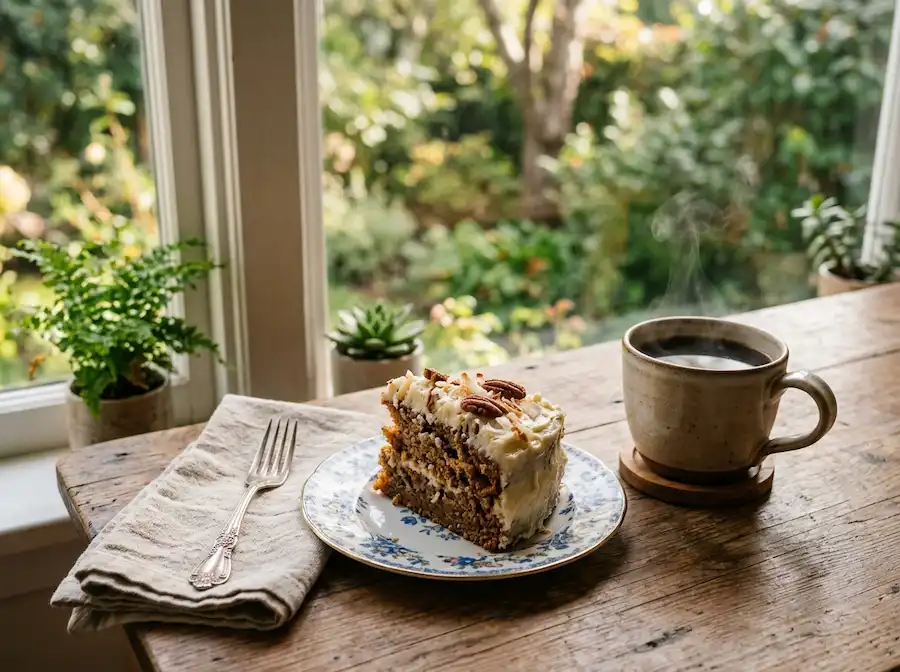
This hummingbird cake recipe is the kind of dessert that turns into a repeat request the moment people taste it. It’s forgiving enough for a first-time baker, yet special enough for a birthday centerpiece or a holiday dessert table.
Once you’ve made it once, you’ll understand exactly why this humble Southern classic has stuck around for decades.
Notes
For the moistest results, use very ripe, heavily spotted bananas and don’t drain the crushed pineapple. Make sure all layers are fully cooled before frosting to prevent sliding.
Nutrition Disclaimer: Nutritional information is an estimate only and will vary based on specific ingredients and brands used.