
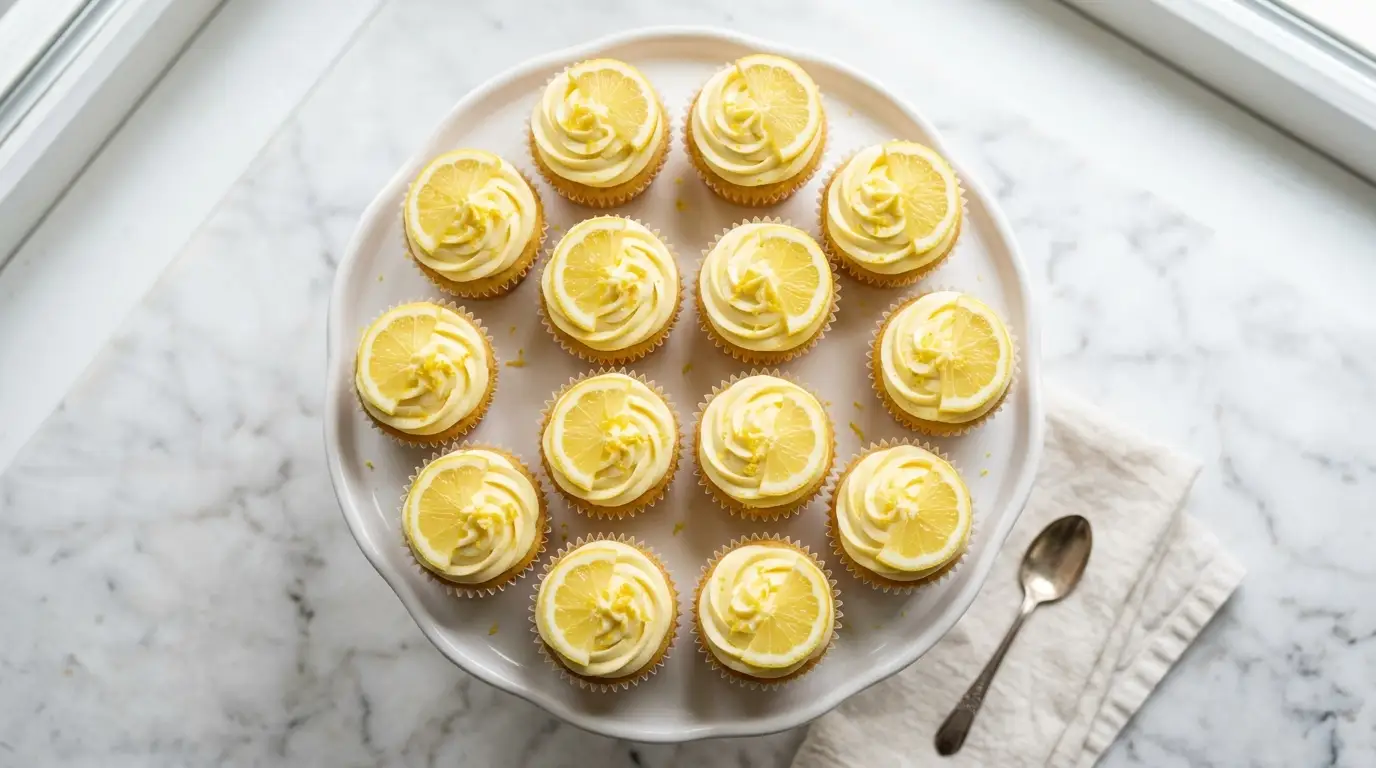
This lemon cupcake recipe bakes up soft, moist, and bursting with bright citrus flavor, then gets topped with a fluffy lemon buttercream that’s tangy and sweet in equal measure. It’s an easy from-scratch treat for spring gatherings, birthdays, or whenever you’re craving something sunny.
- Prep Time: 20 minutes
- Bake Time: 18 minutes
- Cooling Time: 45 minutes
- Total Time: 1 hour 23 minutes
- Servings: 12 cupcakes
- Estimated Calories: 310 per cupcake
Ingredients at a Glance
- 1 1/2 cups all-purpose flour
- 1 1/2 tsp baking powder
- 1/4 tsp salt
- 1/2 cup unsalted butter, softened
- 1 cup granulated sugar
- 2 large eggs
- 1/3 cup fresh lemon juice
- 1 tbsp lemon zest
- 1/2 cup whole milk
- 1 cup unsalted butter, softened (for buttercream)
- 3 1/2 cups powdered sugar
- 2 tbsp fresh lemon juice (for buttercream)
- 1 tsp lemon zest (for buttercream)
Quick Instructions
- Cream butter and sugar, then beat in eggs, lemon juice, and zest.
- Alternate adding dry ingredients and milk.
- Divide batter into a lined muffin pan and bake at 350°F.
- Cool completely, then beat butter, powdered sugar, lemon juice, and zest into buttercream.
- Pipe or spread buttercream over cooled cupcakes.
Notes: Use fresh lemon juice and zest, not bottled juice, for the brightest flavor in both the cupcakes and the frosting.
Table of Contents
Why This Lemon Cupcake Recipe Works
A good lemon cupcake recipe needs real lemon flavor in both the cake and the frosting, not just a hint of it. This version uses fresh lemon juice and zest in the batter, then doubles down with more zest and juice in the buttercream, so every bite tastes bright and citrusy rather than just sweet.
The batter comes together with simple pantry staples and bakes into a soft, tender crumb that holds up well under a generous swirl of frosting. If you’re baking for guests who need something wheat-free, this gluten free dessert recipe is a solid addition to the same dessert table.
Why You’ll Love This Recipe
- Real lemon flavor. Fresh juice and zest in both the cake and frosting.
- Simple ingredients. Nothing you won’t find at a regular grocery store.
- Soft, moist crumb. Thanks to butter, milk, and careful mixing.
- Make-ahead friendly. Bake the cupcakes a day early and frost before serving.
- Crowd-pleasing. A classic flavor that works for nearly any occasion.
Ingredients
This lemon cupcake recipe uses two ingredient lists: one for the cupcakes and one for the buttercream. Exact amounts and substitution ideas are covered in the ingredient notes below, and the full printable recipe card is near the end of this article.
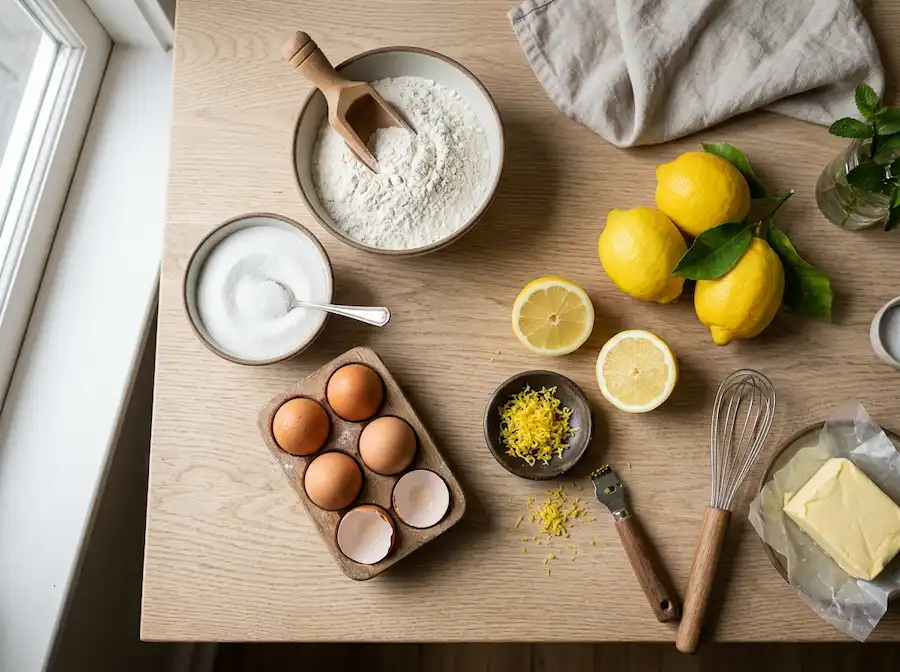
For the Cupcakes
- All-purpose flour
- Baking powder
- Salt
- Unsalted butter
- Granulated sugar
- Eggs
- Fresh lemon juice and zest
- Whole milk
For the Lemon Buttercream
- Unsalted butter
- Powdered sugar
- Fresh lemon juice and zest
Ingredient Notes
All-Purpose Flour
Standard all-purpose flour gives these cupcakes the right structure without becoming dense. Spoon the flour into your measuring cup and level it off, rather than scooping directly from the bag, to avoid packing in too much and drying out the batter.
Butter
Unsalted butter lets you control the salt level precisely in both the cupcakes and the frosting. Let it soften at room temperature for about an hour before creaming — cold butter won’t trap the air needed for a light crumb.
Fresh Lemon Juice and Zest
Fresh lemons are essential here. Bottled lemon juice tastes flat and slightly metallic compared to the real thing, and it won’t give you any zest for that concentrated citrus punch. One medium lemon usually yields about 2 to 3 tablespoons of juice and roughly a tablespoon of zest.
Eggs
Room-temperature eggs blend into the batter more evenly than cold eggs straight from the fridge, which helps prevent a curdled-looking mixture when they’re added to the creamed butter and sugar.
Milk
Whole milk adds moisture and helps keep the crumb soft. Lower-fat milk works in a pinch, though the texture turns out slightly less rich.
Powdered Sugar
Powdered sugar is what gives the buttercream its smooth, fluffy texture. Sift it before adding if it’s clumpy, since lumps won’t fully dissolve once the butter is already whipped.
Substitutions and Buying Tips
Buttermilk can replace the whole milk for a slightly tangier crumb that pairs nicely with the lemon flavor. Meyer lemons, when in season, give a softer, less tart flavor if you prefer a milder cupcake.
Storage Overview
Frosted cupcakes keep well in an airtight container in the refrigerator for up to 4 days. Bring them to room temperature for about 20 minutes before serving for the best texture and flavor.
Kitchen Equipment
- 12-cup muffin pan
- Paper cupcake liners
- Hand or stand mixer
- Mixing bowls
- Zester or fine grater
- Ice cream scoop or measuring cup for portioning batter
- Piping bag and tip (optional, for frosting)
Step-by-Step Instructions
Step 1: Preheat and Prep
Preheat your oven to 350°F and line a 12-cup muffin pan with paper liners.
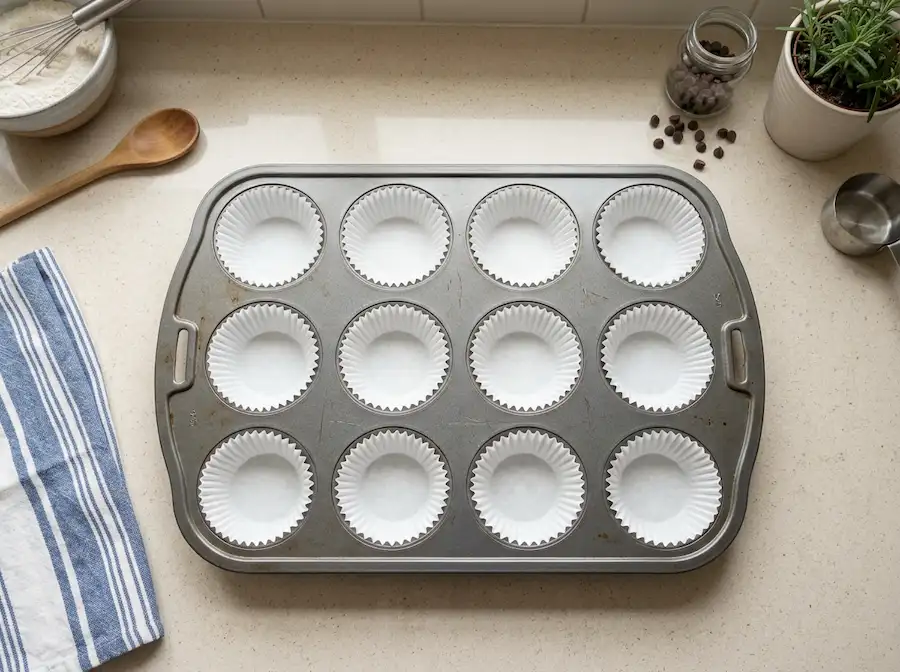
What to Look For: The oven should be fully preheated before the cupcakes go in — an oven thermometer helps confirm this if yours runs hot or cool.
Helpful Tip: Line the pan before you start mixing so the batter isn’t sitting around losing its leavening power.
Step 2: Cream the Butter and Sugar
Beat the softened butter and granulated sugar together on medium speed for about 3 minutes, until pale and fluffy.
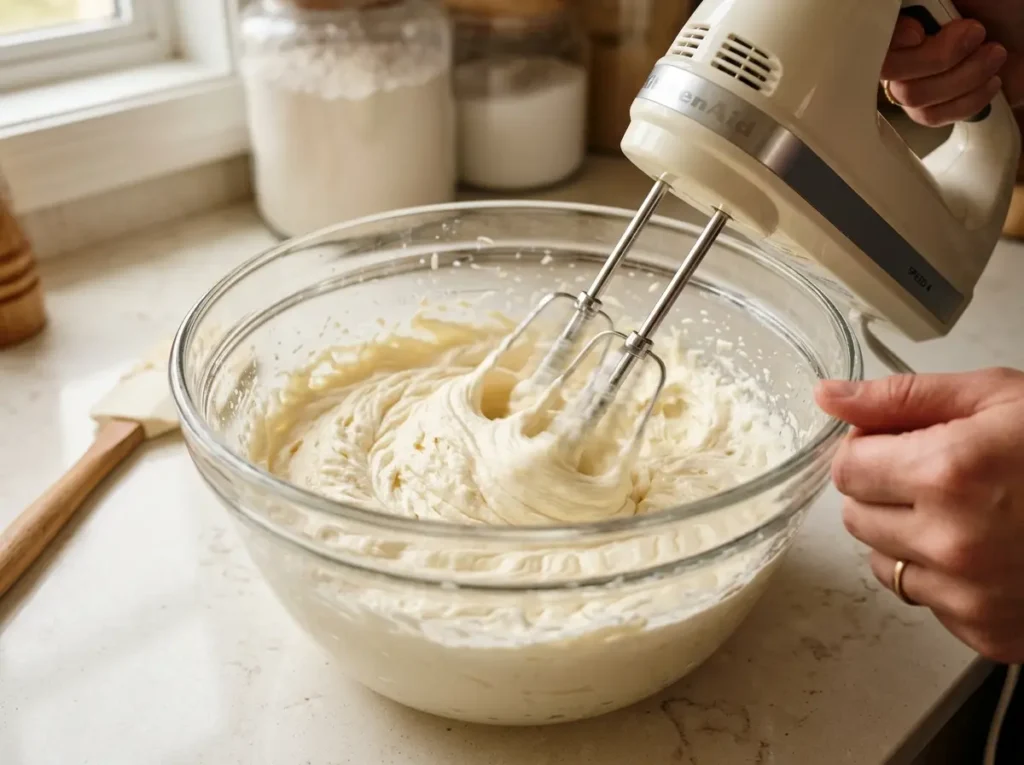
What to Look For: The mixture should look noticeably lighter in color and increase slightly in volume, with a fluffy, airy texture.
Helpful Tip: Don’t rush this step — properly creamed butter and sugar is what gives the cupcakes their light texture.
Step 3: Add Eggs, Juice, and Zest
Beat in the eggs one at a time, then mix in the fresh lemon juice and zest until combined.
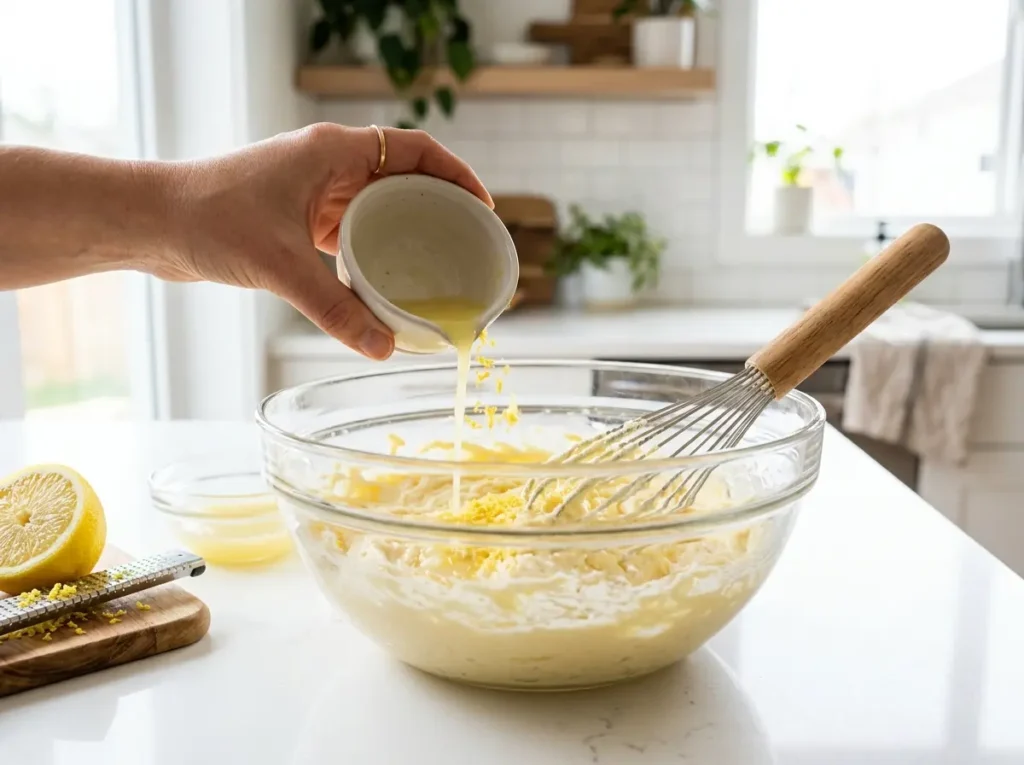
What to Look For: The mixture should look smooth and pale yellow, without any streaks of unmixed egg.
Helpful Tip: Scrape down the sides of the bowl after adding the eggs to make sure everything blends evenly.
Step 4: Alternate Dry Ingredients and Milk
Whisk the flour, baking powder, and salt together in a separate bowl. Add this dry mixture to the wet ingredients in three additions, alternating with the milk in two additions, beginning and ending with the flour mixture.
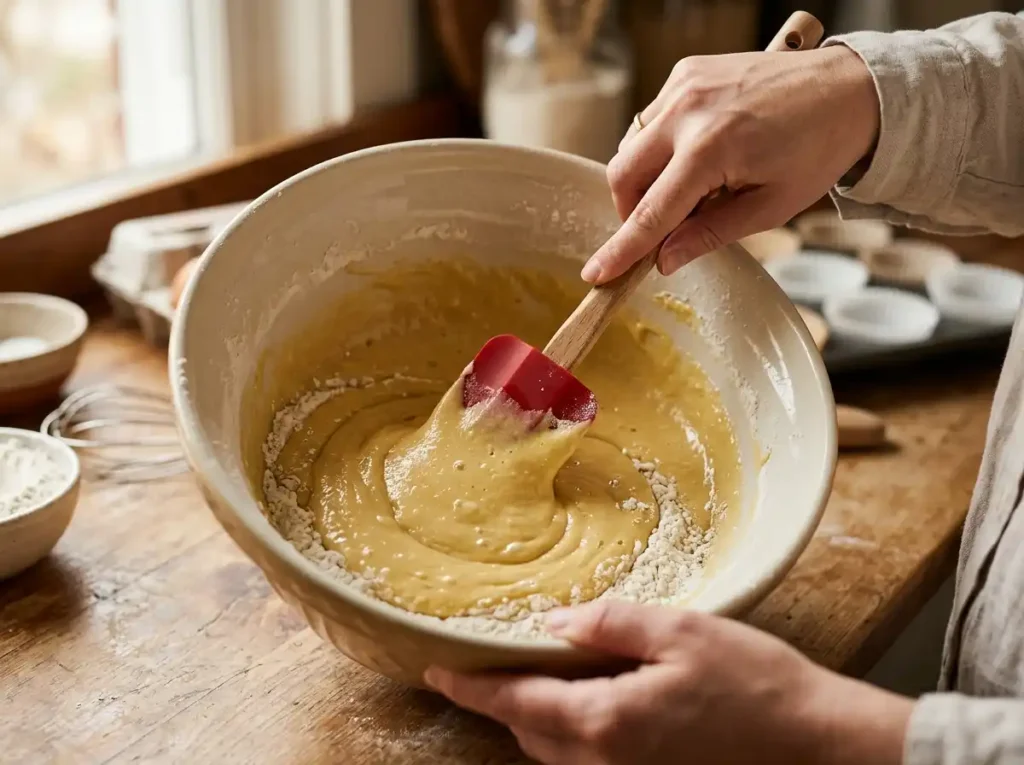
What to Look For: The batter should look smooth and thick but pourable, with no visible streaks of flour.
Helpful Tip: Mix on low speed and stop as soon as the flour disappears — overmixing at this stage leads to tough, dense cupcakes.
Step 5: Fill the Liners
Divide the batter evenly among the 12 liners, filling each about two-thirds full using an ice cream scoop or measuring cup.
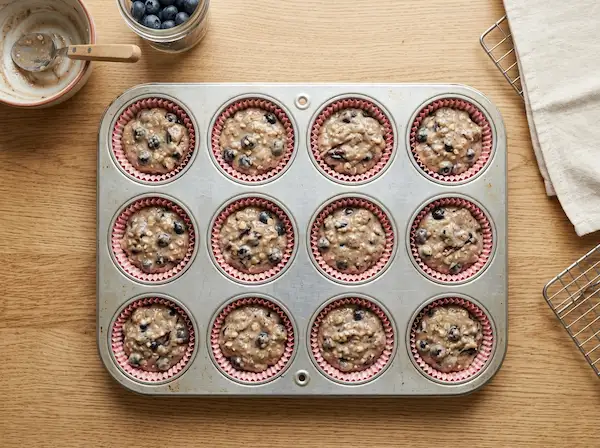
What to Look For: Each liner should have roughly the same amount of batter, with enough room left for the cupcakes to rise without overflowing.
Helpful Tip: A spring-loaded ice cream scoop keeps portions consistent, so all the cupcakes bake evenly.
Step 6: Bake
Bake at 350°F for 16 to 18 minutes, until the tops spring back lightly when touched and a toothpick inserted in the center comes out clean.
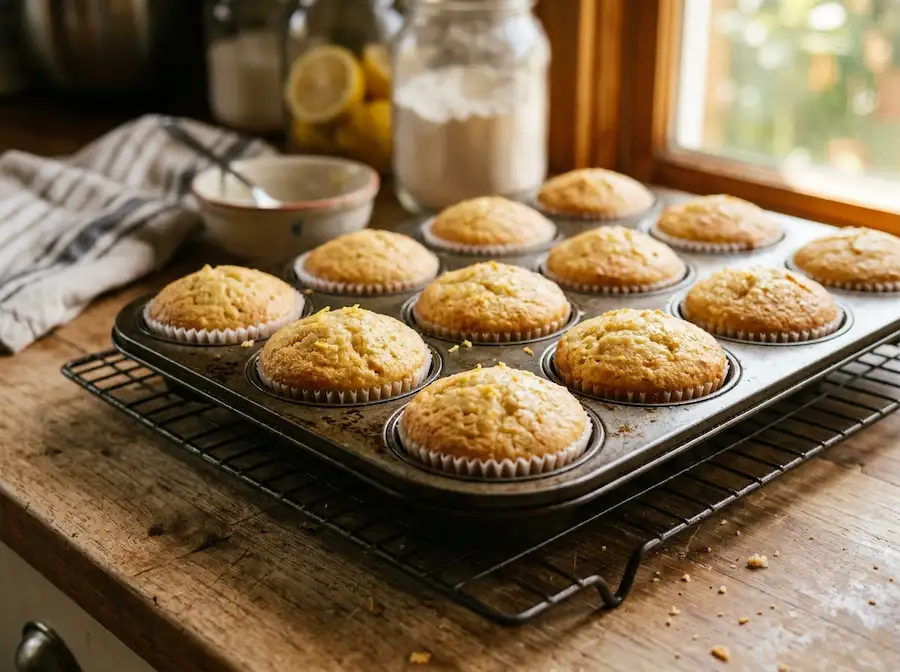
What to Look For: The tops should look pale golden and domed, not sunken or wet-looking in the center.
Helpful Tip: Start checking at 16 minutes, since oven temperatures vary and overbaking dries out the crumb quickly.
Step 7: Cool Completely
Let the cupcakes cool in the pan for 5 minutes, then transfer them to a wire rack to cool completely, about 40 minutes.
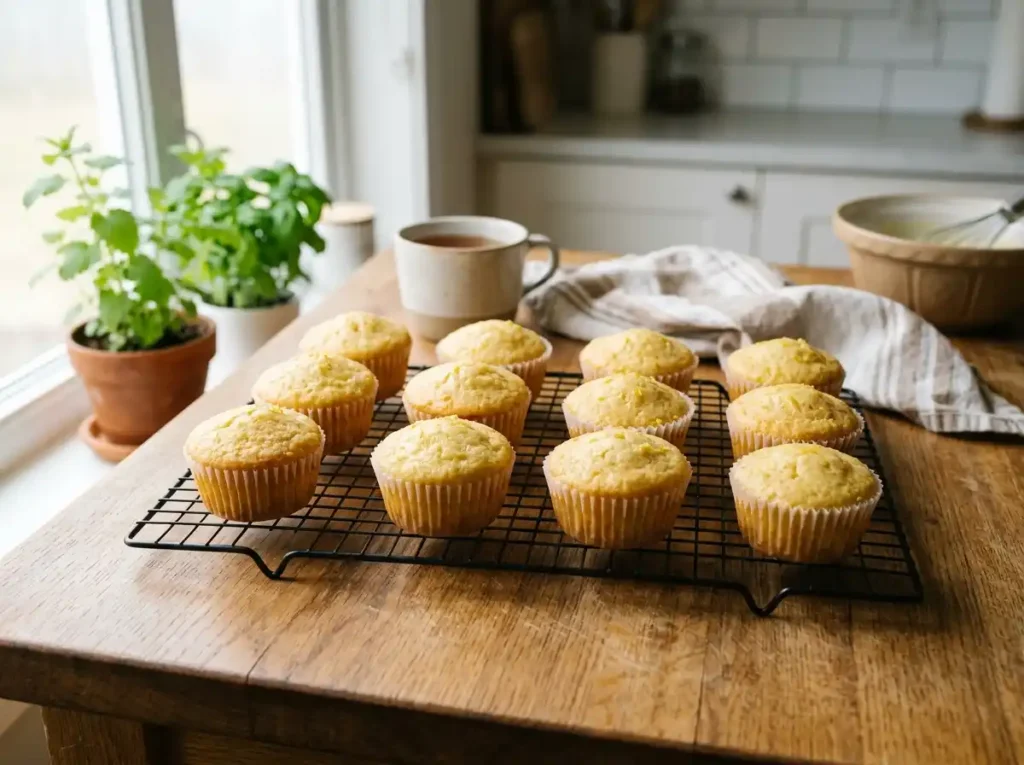
What to Look For: The cupcakes should feel completely cool to the touch before frosting — even slightly warm cupcakes will melt the buttercream.
Helpful Tip: Resist frosting early — a warm cupcake turns fluffy buttercream into a melted mess.
Step 8: Make the Lemon Buttercream
Beat the softened butter on medium speed until smooth, then gradually add the powdered sugar, lemon juice, and zest, beating until light and fluffy.
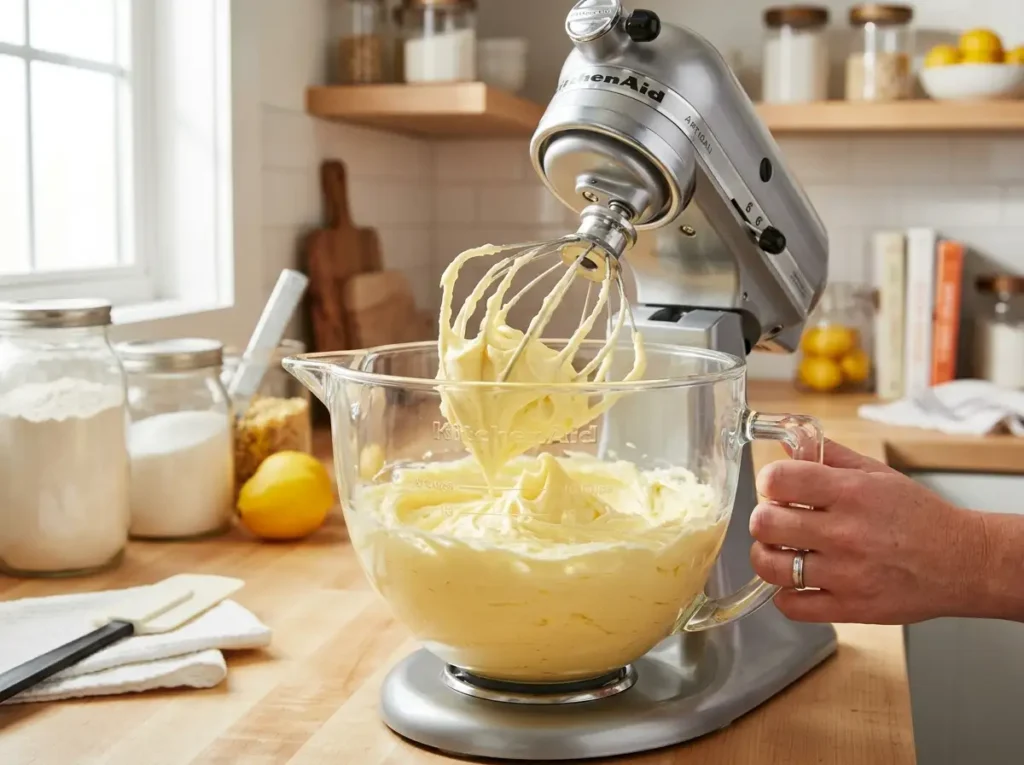
What to Look For: The buttercream should look pale, smooth, and hold soft peaks when you lift the beater.
Helpful Tip: Add the powdered sugar gradually on low speed to avoid a cloud of sugar dust across the kitchen.
Step 9: Frost and Decorate
Pipe or spread the lemon buttercream over each completely cooled cupcake, then garnish with a small twist of lemon zest or a thin lemon slice if desired.
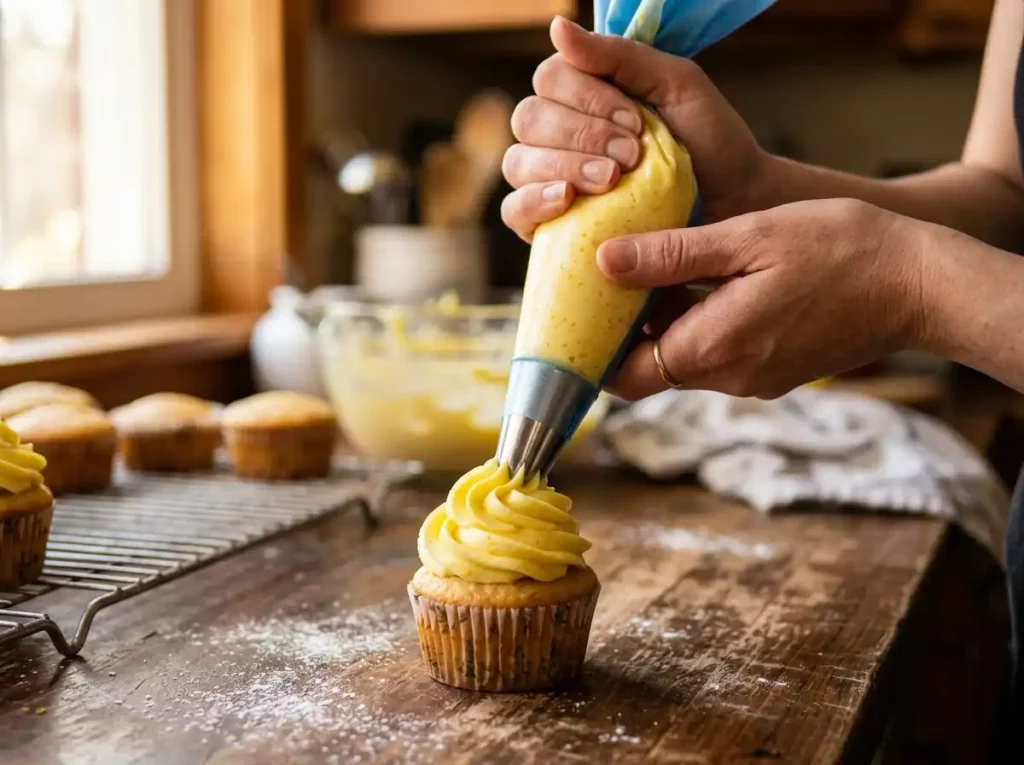
What to Look For: The frosting should hold its shape in swirls or peaks without sliding off the cupcake.
Helpful Tip: If the buttercream feels too soft to pipe, chill it in the fridge for 10 minutes before frosting.
Expert Tips
These tried-and-true tips will help your lemon cupcake recipe turn out perfectly every time.
- Use room-temperature butter and eggs for the smoothest, most evenly mixed batter.
- Zest your lemons before juicing them — it’s much easier than trying to zest a juiced, floppy lemon.
- Measure flour by spooning it into the cup and leveling it off, not scooping directly from the bag.
- Don’t overmix once the flour goes in — stop as soon as the streaks disappear.
- Use an oven thermometer if you’re unsure whether your oven runs hot or cool.
- Fill liners no more than two-thirds full to avoid overflowing domed tops.
- Cool cupcakes completely before frosting, or the buttercream will melt right off.
- Chill soft buttercream for a few minutes if it’s too loose to hold a clean pipe.
- Add lemon zest last to the buttercream so its oils stay bright and fragrant.
- Use a light hand when folding to keep the batter airy and the crumb tender.
- Store extra lemon zest in the freezer if you have leftovers from a big batch of lemons.
- Let cupcakes sit at room temperature for 20 minutes before serving from the fridge.
Common Mistakes to Avoid
Dense, Heavy Cupcakes
This usually comes from overmixing the batter once the flour is added, which develops too much gluten. Mix just until the flour disappears.
Sunken Centers
An underbaked cupcake or an oven that’s too hot can cause the centers to sink as they cool. Check doneness with a toothpick and confirm your oven temperature with a thermometer.
Flat, Metallic Lemon Flavor
Bottled lemon juice lacks the brightness of fresh juice and zest. Always use fresh lemons for the best flavor in both the batter and the frosting.
Melted or Sliding Frosting
Frosting cupcakes before they’re fully cool melts the buttercream and causes it to slide right off. Wait the full cooling time, even if it feels slow.
Overly Sweet Buttercream
Skipping the lemon juice in the frosting leaves it one-note sweet. The acidity from fresh lemon juice balances the powdered sugar and keeps the flavor from feeling flat.
Uneven Baking
Unevenly portioned batter bakes unevenly, with some cupcakes done early and others underbaked. Use a scoop to keep portions consistent across the pan.
Easy Variations
Lemon Raspberry Cupcakes
Fold a handful of fresh raspberries into the batter, or add a swirl of raspberry jam to the center of each cupcake before baking.
Lemon Poppy Seed Cupcakes
Stir 2 tablespoons of poppy seeds into the batter for a classic lemon poppy seed flavor and a bit of texture.
Lemon Lavender Cupcakes
Add a teaspoon of finely ground culinary lavender to the batter for a fragrant, slightly floral twist.
Mini Cupcakes
Use a mini muffin pan and reduce the bake time to about 10 to 12 minutes for bite-sized party treats.
Cream Cheese Frosting Version
Swap the buttercream for a lemon cream cheese frosting if you prefer a tangier, less sweet topping.
Storage
Counter Storage
Unfrosted cupcakes can sit covered at room temperature for up to 2 days. Once frosted, they’re best moved to the refrigerator because of the butter in the buttercream.
Refrigeration
Store frosted cupcakes in an airtight container in the refrigerator for up to 4 days. Let them come to room temperature before serving for the best texture.
Freezing
Unfrosted cupcakes freeze well for up to 3 months when wrapped tightly. Thaw at room temperature before frosting. The buttercream also freezes separately in an airtight container for up to a month; thaw and rewhip briefly before using.
Serving Suggestions
These cupcakes fit almost any spring or summer gathering, from birthday parties to backyard cookouts. They also make a cheerful addition to a brunch spread alongside coffee or iced tea. For a lighter dessert table option, a gluten free cupcake recipe pairs nicely alongside these, and a banana cupcakes recipe offers a different flavor for guests who want variety.
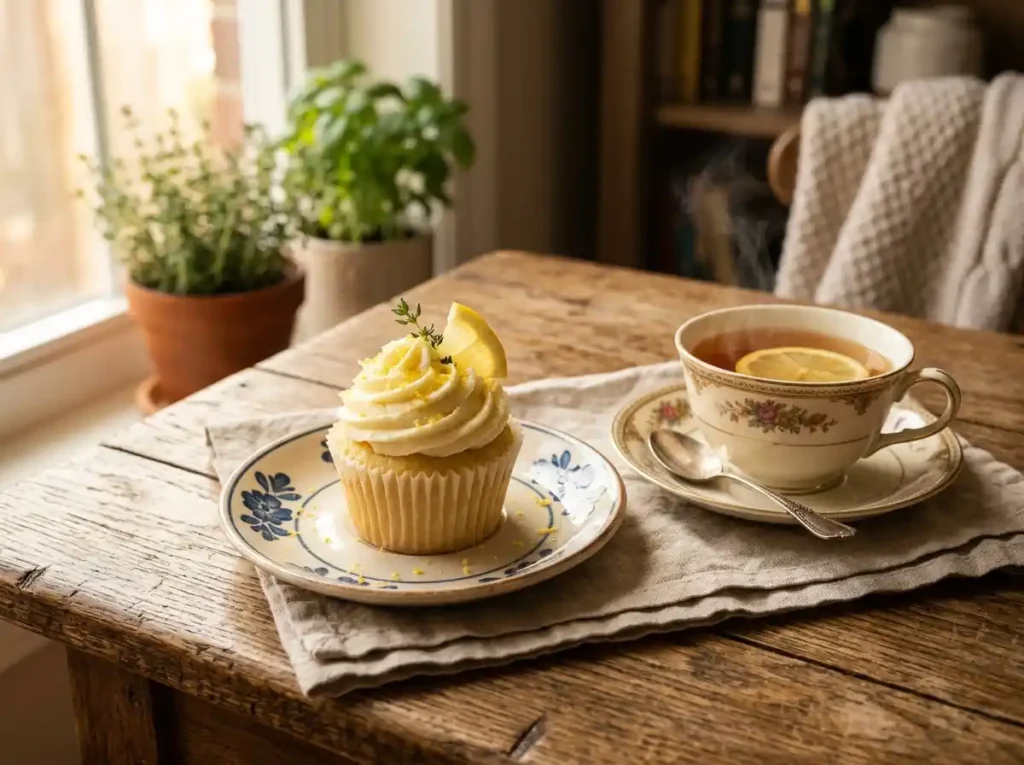
Pair a cupcake with a cup of hot tea, a glass of iced lemonade, or a light sparkling water for a refreshing finish to a meal.
Frequently Asked Questions
Can I make this lemon cupcake recipe ahead of time?
Yes — bake the cupcakes up to 2 days ahead and store them unfrosted at room temperature, then make the buttercream and frost them the day you plan to serve.
Why did my cupcakes turn out dense?
Overmixing the batter after adding the flour is the most common cause. Mix on low speed and stop as soon as the streaks of flour disappear.
Can I use bottled lemon juice instead of fresh?
Fresh lemon juice and zest give a noticeably brighter flavor. Bottled juice will work in a pinch, but the cupcakes won’t taste as vibrant.
How do I keep the buttercream from being too runny?
Make sure your butter isn’t overly soft or melted, and add the lemon juice gradually. If it’s still too loose, chill it in the fridge for 10 to 15 minutes before piping.
Can I freeze these cupcakes?
Yes — freeze the unfrosted cupcakes for up to 3 months, and freeze the buttercream separately. Thaw both before assembling and serving.
Do I need a stand mixer to make this recipe?
A hand mixer works perfectly well for both the batter and the buttercream, though a stand mixer does save some arm work during the creaming step.
Can I make this lemon cupcake recipe gluten-free?
Yes — substitute a 1:1 gluten-free all-purpose flour blend in place of the regular flour, and double-check that your baking powder is labeled gluten-free.
Final Thoughts
This lemon cupcake recipe delivers a soft, tender crumb loaded with real citrus flavor, topped with a fluffy, tangy-sweet buttercream that never feels one-note. It’s simple enough for a first-time baker and reliable enough to become a go-to for birthdays, potlucks, and everyday spring baking.
Notes
Use fresh lemon juice and zest for the best flavor. Store frosted cupcakes in the refrigerator for up to 4 days, or freeze unfrosted cupcakes for up to 3 months.
Nutrition Disclaimer: Nutrition information is an estimate only and will vary based on specific brands and portion sizes used.